On this page
At a home entrance or business frontage, an overview security camera and an identification camera may point towards the same doorway yet produce very different evidence. The first often uses a wide-angle lens to describe the whole scene. The second concentrates detail within a defined identification zone. This camera coverage comparison settles when those roles should be separated and when one carefully positioned camera can reasonably handle both.
Two Cameras, Two Jobs: A Camera Coverage Comparison
An overview view answers broad questions. Who entered the garden? Which direction did a person approach from? Was a delivery left beside the door or carried inside? It records movement and relationships across the scene. That context is useful even when a face occupies only a small part of the frame.
An identification view answers a narrower question: what useful subject detail was visible at a predictable passage point? It gives more of the available image to the doorway, gate opening, counter approach or another small area where people naturally pass.
| Role | Area prioritised | Typical evidence |
|---|---|---|
| Overview | Driveway, lobby, garden or shop frontage | Movement, route, activity and surrounding context |
| Identification | Doorway, gate opening or defined approach | Face angle, clothing detail and carried items at the passage point |
The two recordings can describe the same event differently. An overview image may show that someone arrived from the street, paused near a gate and walked to the front door. The identification view may show the person only while crossing the gate line, but with far more detail devoted to the subject. Neither view replaces the other when both context and identification matter.
Why Wide Views Lose Facial Detail
Every frame contains a finite amount of image detail. A wider field of view spreads that detail across more walls, paving, sky, plants and furniture. A face at the far side of the scene may occupy a very small area, even though the overall picture appears crisp on a phone or monitor.
This is why sharp scenery can be misleading. Straight door frames, textured stone and garden leaves make an image look detailed. They do not show whether enough pixel density falls on a moving face. The useful test is to inspect a person at the expected identification distance, not to judge the scene while it is empty.
Digital zoom in an app enlarges the pixels already recorded. It can make a small face easier to look at, but it cannot recover facial detail that was never present in the frame. The same limitation applies when recorded footage is exported and enlarged later.
Lens selection controls more than how much of the property fits on screen. A wider lens captures more context but makes distant subjects smaller. A tighter view concentrates detail but excludes more of the surroundings. Camera position and subject distance determine whether that tighter view covers the right place.
A wide picture can be visually sharp and still be weak for identification.
Where Should Identification Cameras Be Positioned?
Create a controlled passage through the view
The best position watches a place people are likely to cross at a reasonably stable distance. A pedestrian gate, the narrow part of a garden path, a lobby doorway and the approach to a business entrance are useful examples. The camera does not need to control movement physically. The layout simply needs to make the subject's likely position predictable.
A camera covering an open garden or wide pavement has a harder task because people can remain distant or pass along the edge of the frame. Moving the identification zone to a gate or doorway usually gives the lens a smaller and more consistent target.
Prefer a useful face angle
Mounting too high often produces the top of a head rather than a useful view of the face. A lower, well-protected position can provide a better facial angle, particularly where people naturally look towards a door, intercom or access point. Side angles can work, but they become less reliable when every person turns in a different direction.
The background also matters. Strong sunlight behind the subject can leave the entrance surroundings visible while reducing facial detail. Reframing the camera, changing its angle or placing the target zone where light is more balanced may be more effective than relying only on WDR (wide dynamic range).
What Determines Identification Quality?
Geometry comes before optics
Entrance geometry sets the limits. Note every likely approach route, the point where routes converge and whether a person can bypass the intended identification zone. A good lens cannot compensate for a camera aimed at a place that people rarely cross.
Focal length should then be matched to the target area. The lens must keep the important passage inside the frame while giving the subject enough image area. Excess space above the head, large areas of wall and unused pavement consume detail without helping identification.
Mounting height, horizontal angle and identification distance work together. As distance increases, a face occupies less of the frame. A steep angle hides facial features. An extreme side view records only part of the face. The camera should be aligned for the likely subject position, not merely centred on the architecture.
Light must work inside the target zone
Daylight changes across an Israeli entrance. Strong sun may fall directly on pale paving while the doorway remains shaded, or the subject may stand between the camera and a bright street. Reflective stone, glass and metal gates can add glare. Check the intended view under the distinct lighting conditions the entrance normally experiences.
At night, infrared illumination must reach the identification zone. More illumination is not automatically better. A nearby wall, gate, soffit or glossy foliage can reflect IR into the lens, brightening the foreground while the subject remains dark. The illuminator and camera angle should be tested with the surrounding surfaces in their normal positions.
Applying the Difference in Israel
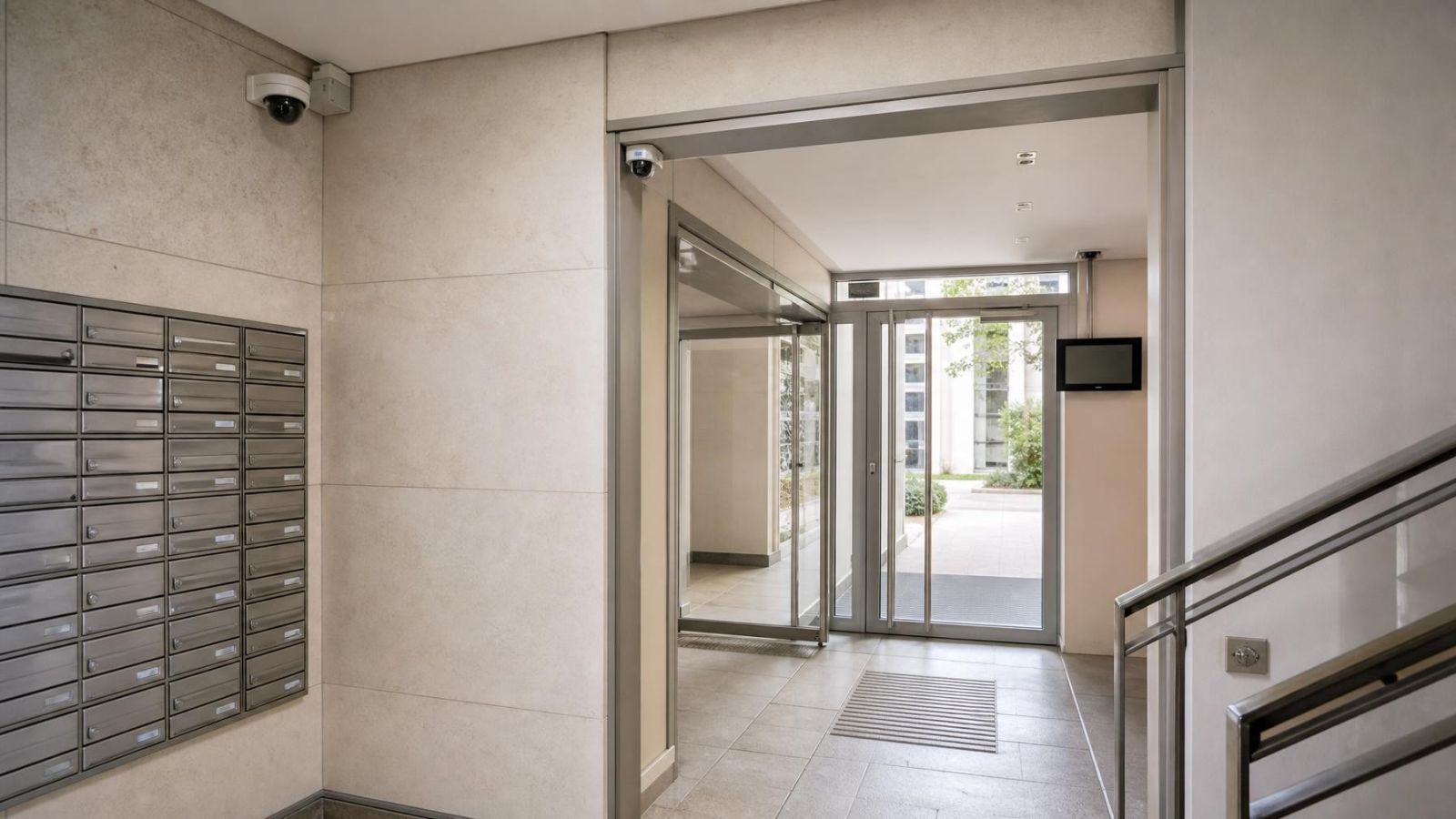
In an apartment building, the shared lobby camera often has to describe several things at once: the main door, lift area, stairs and mailboxes. That makes it useful for overview coverage but can leave faces small. A separate view aimed at the controlled entrance can concentrate on people as they cross the doorway. Camera placement and the area being recorded should be coordinated with the va'ad bayit and other people responsible for the shared space.
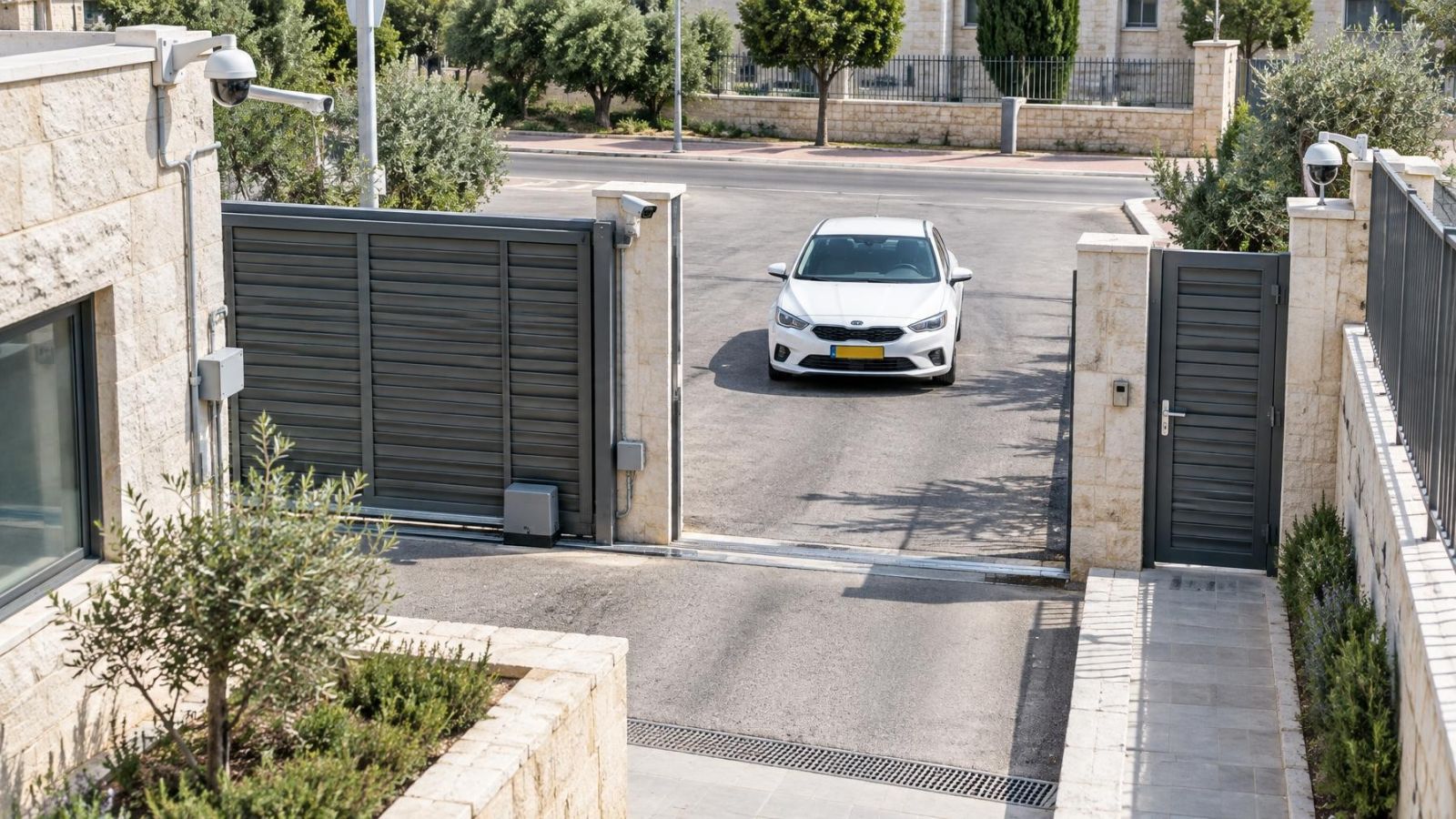
A private home may have three distinct stages: the street gate, the garden path and the front door. An overview camera can show movement between them. An identification view usually belongs where distance and direction become predictable, often at the gate opening or the final approach to the door. A long path seen from the house may provide excellent context while leaving a face at the gate too small.
For a street-front business, the exterior camera can record the frontage, pavement edge and activity around an entrance. A tighter doorway view can record people as they enter. The framing needs care where the interior is darker than the street, because daylight behind an arriving person can produce a clear background and a weak face.
Cable routes can influence the design, especially in finished apartments. A mamad is a normal part of many Israeli floor plans, and its reinforced walls can make an improvised cable path awkward. The practical route may follow existing service areas, ceilings or accessible internal walls rather than the shortest line shown on a plan. Camera position should not be weakened simply to avoid planning the route properly.
Coastal humidity, dust and strong sun also affect installation details. They do not change the optical principles, but they make suitable housings, protected connections, stable brackets and maintainable lens positions important. A lens that is difficult to reach is less likely to be kept free of dust or marks.
When a Single Camera Can Work
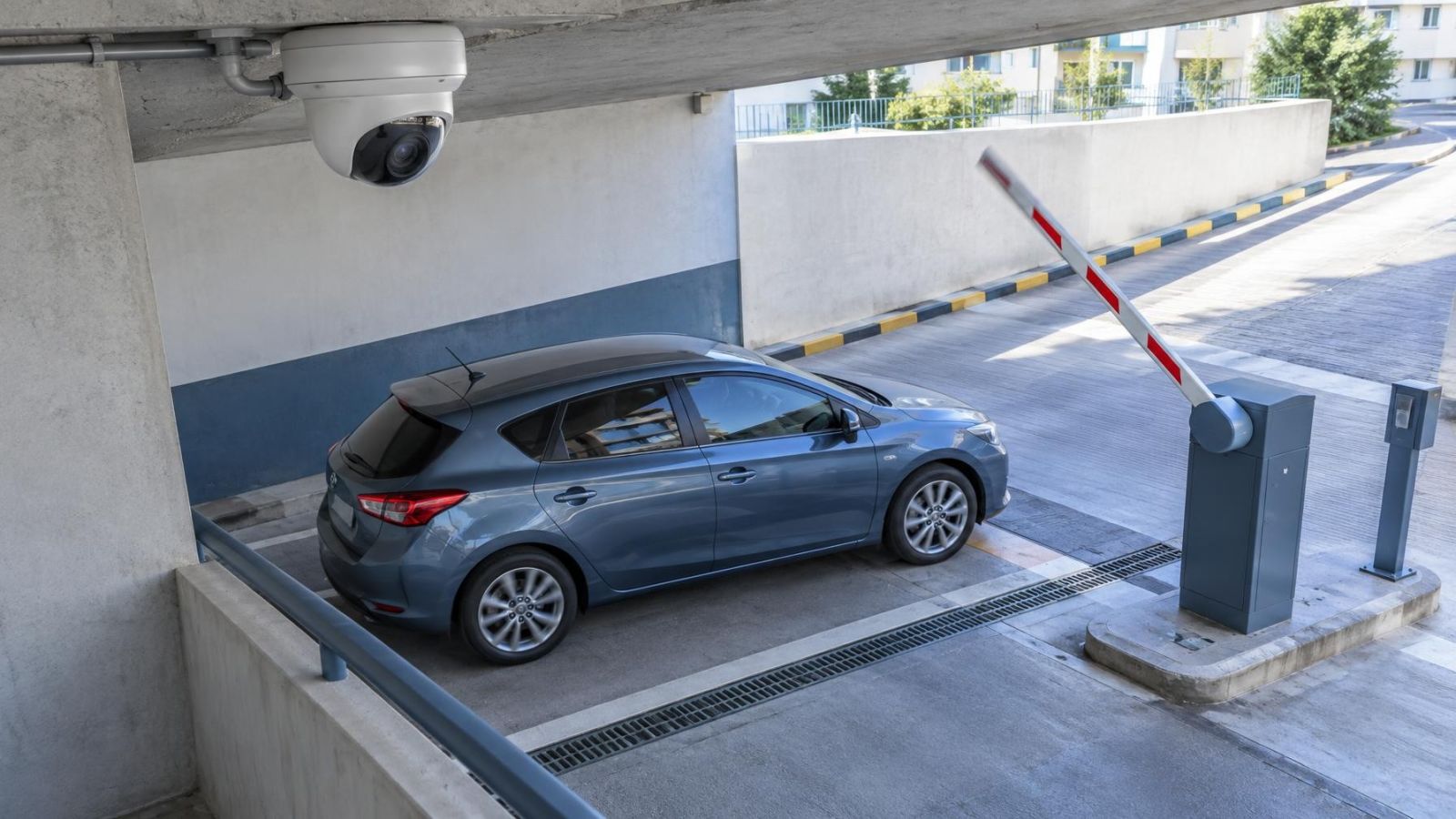
One camera can sometimes provide both context and useful subject detail when the scene is narrow, the passage point is close and people cross within a limited part of the frame. A compact lobby corridor or a short, straight doorway approach may support that compromise.
The compromise becomes weaker when the camera must cover a broad garden, several approach routes or a distant gate. It also fails when subjects can remain near the frame edge, turn away from the lens or pass at very different distances. Expanding the view to include everything reduces the image area available to each face.
Lighting can be the deciding factor. A single view may look balanced in shade but struggle when the entrance opens towards strong sunlight. At night, the same framing may place a reflective wall close to the lens while the actual passage remains farther away.
The decision is not about the number of cameras in isolation. It is about whether one position, one field of view and one exposure can serve both jobs without giving up the detail the owner expects. Where the geometry cannot support that, complementary views are the cleaner design.
Plan the View Before the Hardware
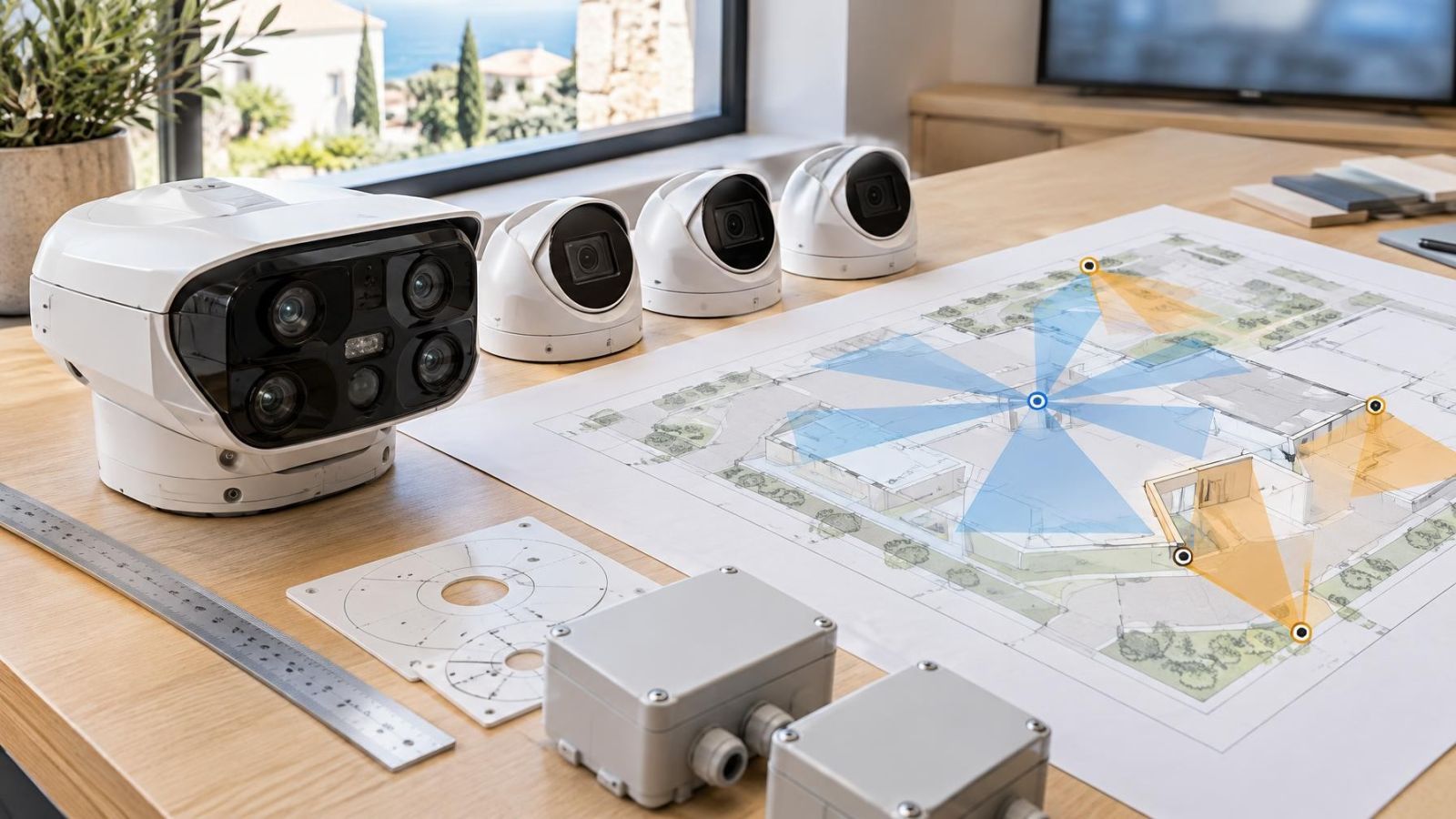
Start with the evidence the property needs, then choose the camera and lens. A device specification cannot reveal where people will walk, which way they will face or how sunlight enters a doorway. A simple marked plan and a live-view test are more useful than selecting equipment from a feature list alone.
- Mark the overview area. Include the parts of the driveway, lobby, garden or frontage needed to understand movement and context.
- Define the identification zone. Choose a gate line, doorway or narrow approach where the subject distance is reasonably consistent.
- Check likely face direction. Observe where a person looks while opening the entrance, using an intercom or approaching a counter.
- Assess daylight and night lighting. Look for backlighting, deep shade, reflective paving, walls, gates and foliage near the lens.
- Choose separate or combined coverage. Keep one view only if the tested framing provides both adequate context and useful subject detail.
Test with recorded footage, not only the live preview. Walk through the zone at a normal pace in ordinary daylight and after dark, then review the relevant frames at their recorded quality. This exposes small faces, motion blur, glare and IR reflection before the final position becomes difficult to change.
A well-planned entrance often uses one view to explain the event and another to record concentrated detail. The hardware matters, but the lasting decisions are where each camera looks, how far it is from the subject and what the light does at that exact point.
Key takeaways
- Overview cameras explain movement, routes and activity across a broad scene.
- Identification cameras concentrate useful subject detail at a planned passage point.
- A sharp wide image does not guarantee that a face occupies enough of the frame for identification.
- Lens choice, camera position, subject distance and lighting must be planned together.
- Entrance geometry determines whether overview and identification roles can be combined effectively.