On this page
An alarm control panel may need to serve wired detectors, wireless detectors, a safe room and a backup battery, while leaving room for a hybrid alarm system. In an Israeli apartment, private home or street-front business, the building itself often decides which approach is sensible. This wired vs wireless alarm comparison settles the practical question: which architecture fits the available cable routes, finished surfaces, radio conditions and maintenance arrangements?
Wired vs Wireless Alarm: How Do They Work?
Both architectures have the same basic purpose. Detectors report events to the control panel. The panel applies the programmed rules, operates the alarm siren and can send notifications through the communication paths provided. The difference is how each field device reaches that panel.
How does a wired alarm system work?
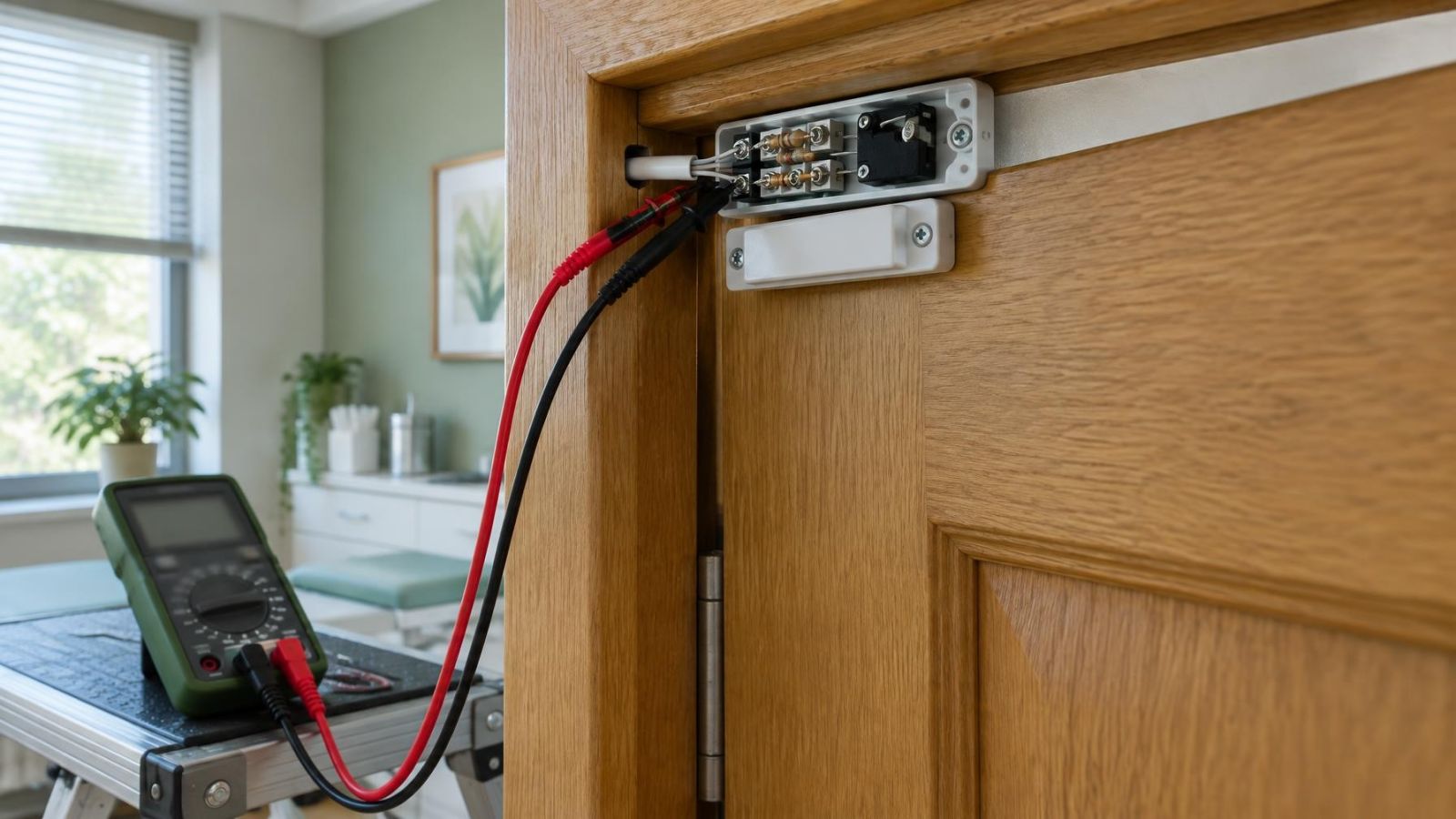
A wired alarm system uses installed cabling between the control panel and devices such as door contacts, motion detectors and keypads. The cable carries the reporting circuit and, depending on the design, may also carry power. Each route must be physically practical, protected from accidental damage and accessible enough to test or repair.
Because communication follows a fixed cable route, walls and reinforced rooms do not weaken the detector’s connection to the panel. Cabling creates a different constraint: every required position must have a usable path back to the control equipment. A good plan therefore starts with the building structure, not with a list of devices.
How does a wireless alarm system work?
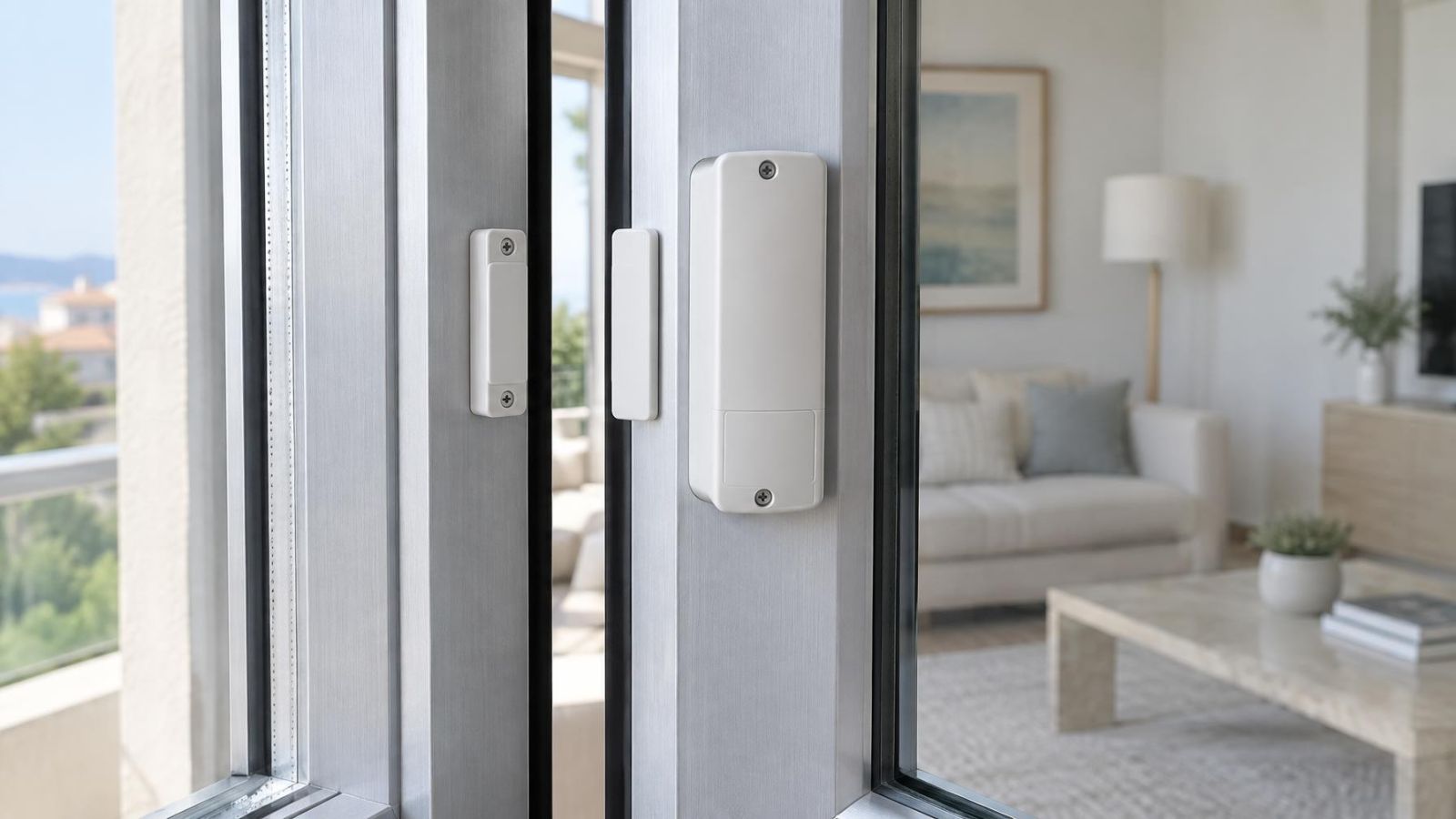
A wireless alarm system uses radio communication between compatible devices and the control panel or a connected radio receiver. Each wireless detector has a local battery. That reduces the need to open walls or run visible cable, but it introduces battery replacement and radio testing as regular maintenance tasks.
Wireless does not necessarily mean internet-dependent. Detector-to-panel radio communication, internet access, mobile app functions and cellular communication are separate parts of the design. The local alarm can be configured to operate even when an external connection is unavailable, while remote messages depend on whichever communication path is installed and active.
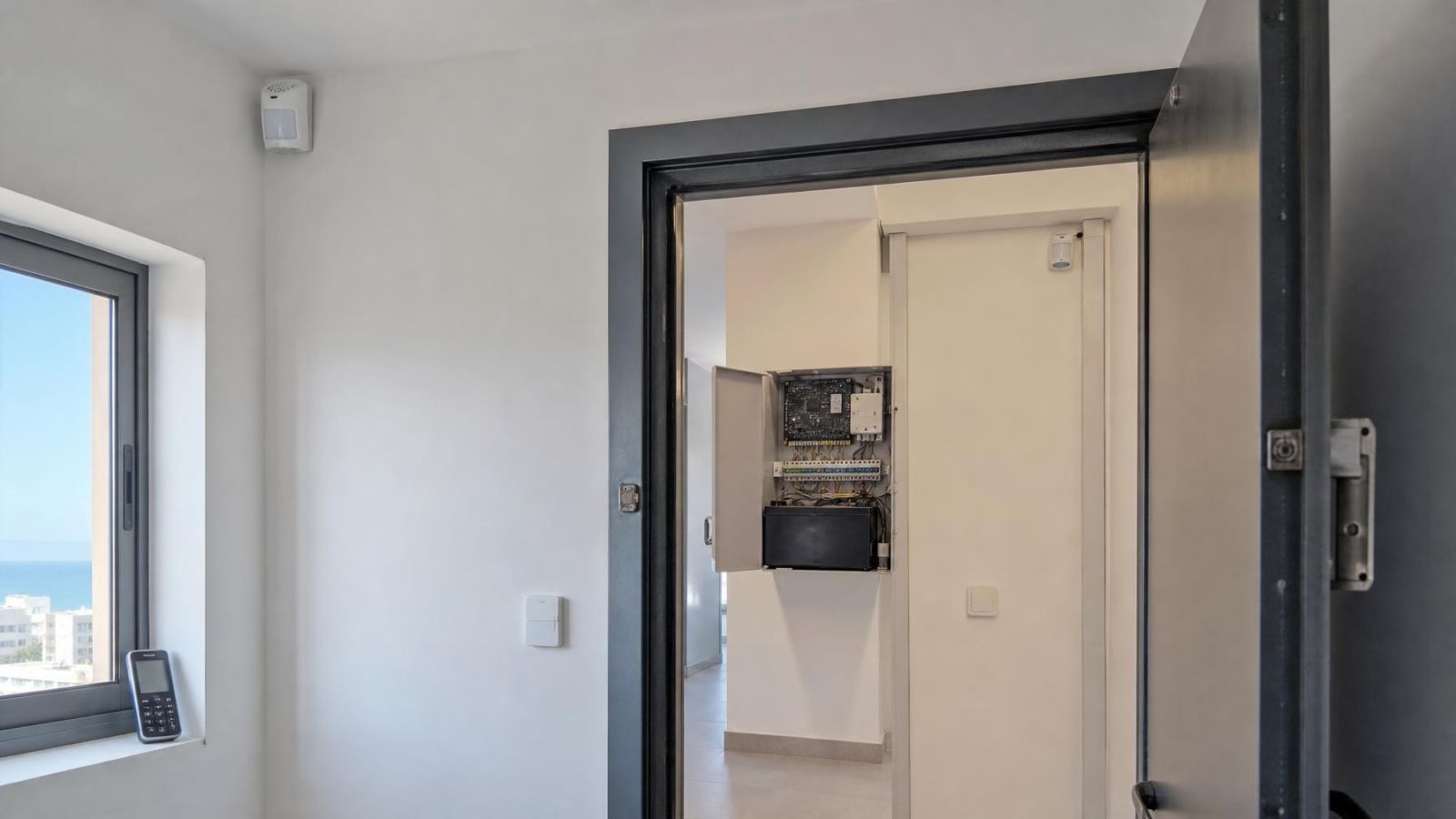
The control panel and communication equipment also need backup power. A backup battery supports operation when mains power is unavailable, although its actual operating period depends on battery condition, system load and maintenance.
The Practical Differences That Matter
The most useful comparison is not a contest between old and new technology. It is a comparison of installation conditions and long-term responsibilities.
| Consideration | Wired | Wireless |
|---|---|---|
| Communication route | Fixed cable between device and panel | Radio signal between device and panel or receiver |
| Routine attention | Cable, connection and backup battery checks | Radio, device battery and backup battery checks |
| Installation impact | May require conduits, ceiling access or surface-mounted cable | Usually limits work on finished walls |
| Later layout changes | Moving a device may require a new cable route | Devices are easier to reposition if radio coverage remains suitable |
| Main site constraint | Physical access for cabling | Reliable radio reach from final device positions |
Installed cable is stable and predictable when the routes and connections are sound. It also avoids a collection of detector batteries spread around the property. The trade-off is physical access. In a finished apartment, a technically simple cable route may still be unacceptable if it crosses decorative plaster, stone, fitted cabinetry or a clean ceiling line.
Wireless devices are less disruptive to install and easier to move when room use changes. They are not maintenance-free. Batteries need to remain identifiable and reachable, and the property owner or service provider needs a clear replacement plan. This matters for remote owners who cannot respond personally to every maintenance alert.
Neither architecture should be selected simply because the property has a router. Internet service may support app access or remote reporting, but local detector communication and local alarm operation should be considered separately.
Which Type Suits an Existing Property?
Which home alarm type suits an existing property?
The right choice depends on what can be reached without damaging finishes and what may change later. Existing conduits, accessible suspended ceilings, service shafts and previous alarm cable can make wired installation straightforward. Old cable should still be inspected and tested rather than accepted because it is already in the wall.
Finished apartments often favour wireless devices where there is no discreet route between windows, doors and the control panel. This is especially relevant after joinery, lighting and wall finishes are complete. If useful conduits are available within the apartment, a wired or hybrid plan may still be cleaner over its service life.
Work affecting a shared entrance, lobby or common ceiling in an apartment building may also involve coordination with the va’ad bayit. That practical boundary should be identified early. A device inside the apartment and a device at the shared building door are not equivalent installation tasks.
A renovation offers the best opportunity to plan cable routes before walls and ceilings are closed. Routes can be brought to likely detector, keypad and siren positions without leaving equipment choices until the final decorative stage. Spare accessible routes are often more valuable than installing unnecessary detectors.
Street-front businesses need the layout considered as carefully as the shell. Display units, storage racks, partitions and counters may move. Fixed door contacts and perimeter devices can use cable where routes are protected, while wireless detectors can serve positions likely to change. The panel should remain accessible for service without being exposed to routine knocks or public handling.
Private homes add gates, gardens, separate floors and external structures. Long outdoor routes, underground conduits and distance from the main building may favour cable where infrastructure exists. Where it does not, radio must be tested across the full route, including exterior walls and any intervening levels.
Safe Rooms, Walls and Radio Reach
An Israeli safe room, commonly called a mamad, has reinforced walls and a substantial door. Those features can reduce or redirect radio communication. Ordinary reinforced concrete, stone cladding, metal cabinets and foil-backed materials elsewhere in the property can also affect the path. A floor plan alone cannot confirm reliable wireless coverage.
The alarm control panel or radio receiver should not be placed in a shielded corner merely because electrical power is nearby. A central, serviceable position is usually more useful. In a multi-floor home or an extended property, the route between floors matters as much as the straight-line distance.
A detector inside or beyond a difficult reinforced area may need a different radio path, a suitable intermediate device within the system design, or a wired connection. The correct response to weak communication is to change the architecture or placement, not to assume that occasional contact is sufficient.
When a Hybrid System Makes Sense
Can wired and wireless alarm sensors be combined?
Wired and wireless alarm devices can be combined when the control equipment supports both device types. A hybrid alarm system often uses cable for the stable core of the property and radio for openings or rooms that are difficult to reach. This avoids forcing one installation method onto every part of a mixed building.
Existing cabling can remain useful if its routes, insulation, connections and identification are serviceable. It should be documented and tested before being assigned to new devices. Unclear or damaged cable is not an asset merely because it disappears into a wall.
The control panel must have suitable input capacity, compatible radio capability and enough room for the intended devices and communication modules. Capacity planning should also account for likely changes, such as a future gate contact, additional room or revised business layout.
Hybrid does not mean two unrelated systems. Wired and wireless devices should share a unified device list, testing procedure, user interface and maintenance plan. The person responsible for the property should be able to see which devices use local batteries and which rely on cable.
Choose Devices Around Real Use
Architecture comes after the detection plan. Start with the openings and movement routes that matter. A door contact reports whether a protected door changes state. A window opening detector does the same for an operable window. A motion detector covers movement within its designed field. These devices provide different information and should not be added repeatedly without a reason.
Detector positions need to reflect daily life. Curtains, pets, moving stock, air movement, direct sunlight and furniture can affect whether a position is useful. In a small business, a detector that works in an empty room may be obstructed after displays or storage are installed. In a home, a device should not make ordinary circulation unnecessarily awkward when the system is partly armed.
Siren placement is also a design decision. The sound should be clearly audible in the occupied parts of the property, while the siren remains reachable for service. Larger homes, separated floors and noisy commercial spaces may need more than one sounder position. The decision should come from the layout and ambient conditions rather than habit.
The main backup battery needs physical access for inspection and replacement. Wireless detector batteries need the same consideration. Mounting a device where it can only be reached by moving fixed joinery turns routine maintenance into avoidable work.
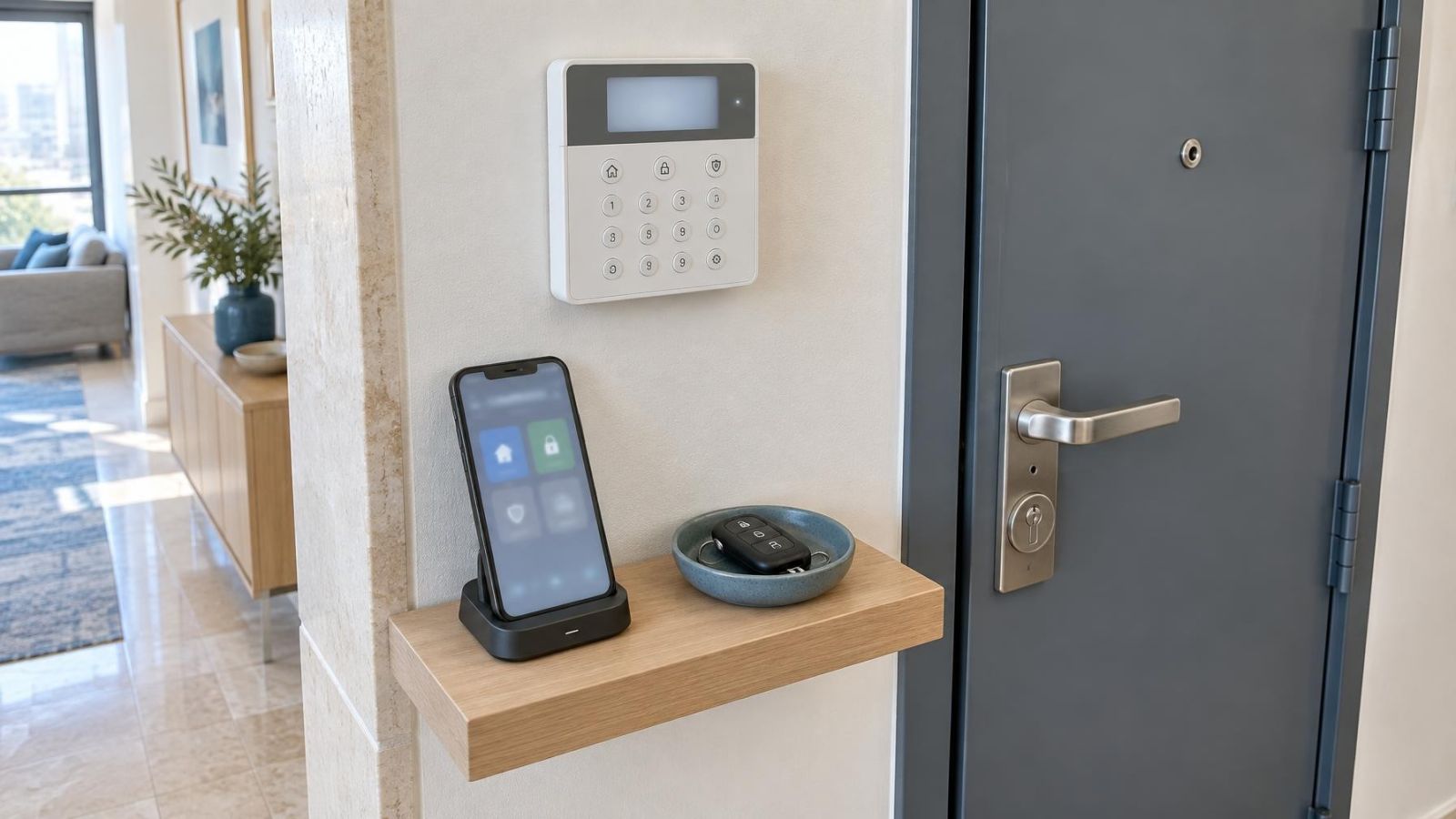
App access and cellular communication should be chosen according to how the property is managed. A remote owner may value status messages and controlled user access. A shop manager may need several authorised users. These functions depend on communication services, but they should not be confused with the panel’s ability to process detectors and operate the local siren.
Make the Final System Decision
The final choice should follow a site survey rather than precede it. Equipment selected before cable routes and radio conditions are understood tends to create compromises at the exact positions that matter.
- Map external doors, operable windows, internal movement routes, gates and any separate structures. Mark the safe room and reinforced boundaries.
- Inspect existing conduits, alarm cable, accessible ceilings, service spaces and wall finishes. Record which routes are genuinely usable and which would require visible or disruptive work.
- Test radio communication at every intended wireless position. Include different floors, extensions, garden boundaries and devices near reinforced construction.
- Confirm access to the control panel, backup battery, detector batteries, sirens and communication equipment. Assign responsibility for routine checks, especially for a remotely managed property.
- Choose wired, wireless or hybrid architecture from the evidence. Use cable where routes are practical, radio where finishes or changing layouts make cable unsuitable, and a hybrid design where both conditions exist.
A wired design is a strong fit for stable layouts with accessible cable routes. A wireless design is useful when preserving finished surfaces is the main constraint and battery maintenance can be organised. A hybrid design is often the most disciplined answer to a property that contains both conditions.
The building should determine the alarm architecture; the architecture should not be forced onto the building.
Key takeaways
- Wired alarms suit properties with usable cable routes and layouts that are unlikely to change.
- Wireless alarms reduce work on finished surfaces but require radio testing and local battery maintenance.
- Safe rooms and other reinforced areas make panel placement and final-position radio testing especially important.
- Hybrid systems can use reliable existing cable while adding wireless devices in difficult or changing locations.
- The property layout should determine whether the alarm architecture is wired, wireless or hybrid.