On this page
Map Real Routes Before Alarm Keypad Placement
An alarm keypad beside the front entrance may seem obvious, but the real route could begin at a rear or service entrance, through a garden gate, or from a shared stairwell. The control panel may be elsewhere, while the entry delay starts as soon as a protected door opens. Good alarm keypad placement settles one practical question: where can an authorised user disarm or arm the system naturally, without crossing unnecessary protected areas?
Start by watching ordinary arrivals and departures. Do not map the route people are expected to use. Map the one they use when carrying shopping, opening the property for staff, returning with children or locking up at the end of the day. The most formal entrance is not always the main alarm entry route.
- Private homes: Check whether residents come through the front door, a parking-side door, a garden entrance or a utility area.
- Apartments: Plan from the private apartment door, even when the building has a shared entrance with its own access system.
- Street-front businesses: Separate the customer entrance from the staff opening and closing route.
- Properties with service access: Consider cleaners, deliveries and maintenance routines without assuming that every visitor needs keypad access.
In an Israeli apartment building, the shared entrance is part of the journey but not part of the private alarm boundary. A resident may pass an intercom, lift and common corridor before reaching the apartment door. The useful keypad position is therefore planned around what happens after that private door opens. Decisions about the shared entrance may also involve the va'ad bayit, but they do not replace planning inside the apartment.
For a small business, write down who arrives first, who leaves last and which door each person controls. A front entrance may be used during opening hours while a rear entrance handles staff arrivals. If both routes are routine, forcing everyone towards one keypad can make daily operation awkward and may require an unnecessarily generous delay.
Where Should I Put My Alarm Keypad?
Should the Keypad Be Near the Front Door?
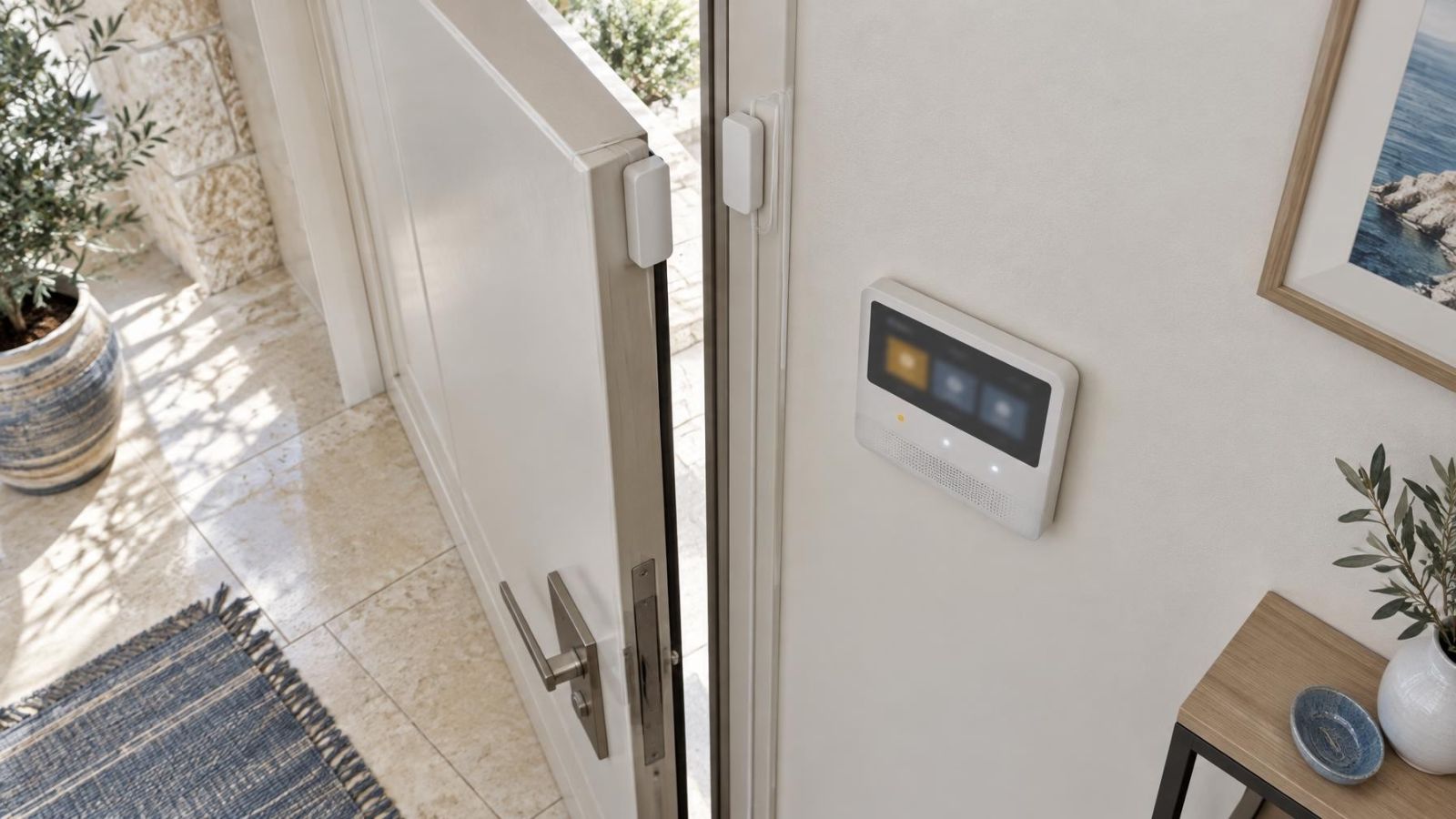
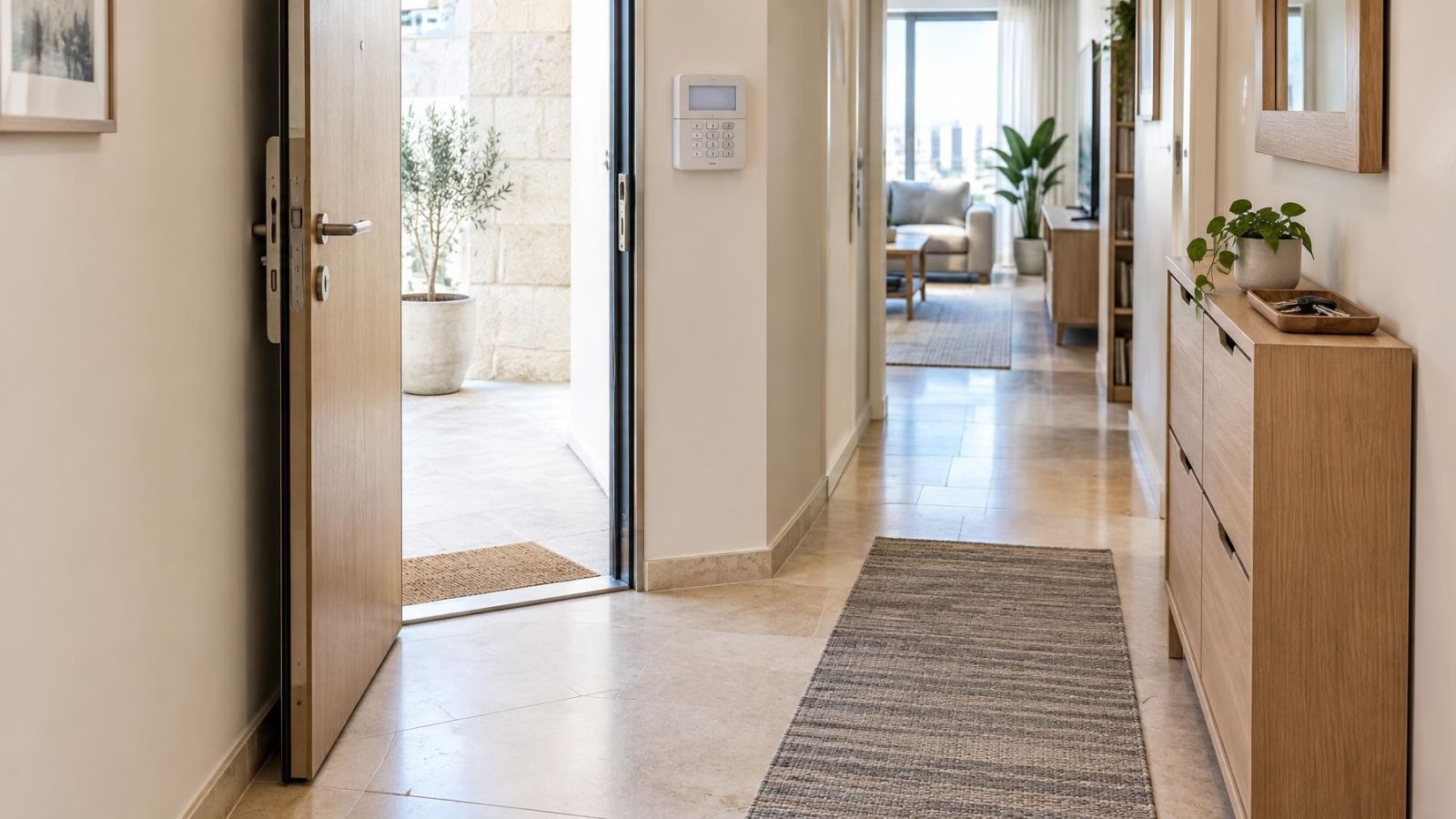
Usually, yes—but it should be inside the protected space, not exposed outside. Position it where the person entering can close the door, turn towards the keypad and operate it before continuing into the property. It does not need to sit directly beside the frame. A short distance along the natural path is often better if the immediate wall is narrow, glazed or blocked by the open door.
Check the full arc of the door. A keypad hidden behind an open door is frustrating during entry and easy to strike with handles, bags or furniture. Also check whether a second leaf, security gate or internal door changes the standing position. The correct wall is the one that remains accessible through the whole routine, not merely when every door is closed.
Where to Install the Keypad Along the Route
The user should reach the keypad before walking through rooms or corridors protected for immediate response. At the same time, the display should not be unnecessarily visible through a window, glazed door or open shopfront. The aim is ordinary visibility for the user and limited visibility from outside—not concealment so complete that residents struggle to find it.
A garden gate does not automatically justify placing the keypad at the gate. The gate may lead to an outdoor path before the protected building entrance. In that arrangement, the keypad normally belongs inside the building entrance where arming and disarming occur. If an exterior control point is genuinely required, it needs to be selected and planned for outdoor conditions rather than treating an indoor keypad as interchangeable.
The best keypad position feels obvious during use, but it is rarely chosen well by looking only at the nearest empty wall.
Match Placement to Entry Timing
Entry delay begins at a defined event, commonly the opening of a protected entrance. From that moment, the relevant distance is not a straight line on the drawing. It is the real walk: opening and closing the door, passing any internal gate, turning a corner, putting down what is being carried and reaching the keypad.
A sensible sequence is to identify the opening that starts the delay, walk from it at an ordinary pace, and note every obstacle or decision along the way. Repeat the walk as it happens in daily life. A resident entering through a narrow apartment doorway with shopping has a different route from a staff member unlocking a clear service entrance.
Exit delay must be considered in the opposite direction. A person arms the system, follows the planned path and closes the final exit door. If the keypad is beside one entrance but people normally leave through another, the exit routine may involve crossing too much of the property or returning past already protected areas.
Do not use a long delay to compensate for poor physical placement. Longer timing may hide an inconvenient route, but it also makes the system slower to complete its normal transition. First shorten and simplify the route where practical. Then configure enough time for calm, repeatable use, including the people who move more slowly.
Make Daily Use Comfortable
Wall height should suit the people who regularly operate the system. The display must be readable without bending or stretching, and the controls should be reachable with the wrist in a natural position. There is no useful universal height if the household includes children who are authorised to use it, a shorter adult, or an older relative with limited shoulder movement.
Check the display under the lighting that exists during real use. Strong sunlight through an entrance can wash out a screen during the day. At night, a keypad facing a dark corridor may feel excessively bright or cause reflections on glossy finishes. Side glare can be as troublesome as direct light, especially near glass doors and pale stone walls.
Leave enough clear wall and standing space for confident code entry. Avoid squeezing the keypad between a door frame and a tall cabinet, above a bank of switches, or where coats and bags cover it. Users should be able to see the display, steady a hand if necessary and enter a code without standing in the door opening.
Language and symbols also matter in multilingual homes and workplaces. English-speaking residents in Israel may share the property with Hebrew-, French- or Russian-speaking family members, employees or carers. The interface and labels should be understandable to everyone who is authorised to operate the alarm; physical placement should allow those instructions to be read without difficulty.
Plan Power, Signal and Conditions
For a wired keypad, decide the cable route before walls are finished wherever possible. The neatest visible location may require an awkward cable path around concrete, stone cladding, built-in furniture or an entrance cabinet. Early planning keeps the user position separate from the route that happens to be easiest for the installer.
A wireless keypad removes the direct data cable, but it does not remove the need to test communication. Reinforced walls can weaken the path between the keypad and the alarm system. A mamad, the reinforced safe room found in Israeli homes, is particularly important to consider. A keypad mounted inside, beside or across from its reinforced walls may communicate differently from one tested in an open corridor.
Keep the keypad away from direct heat, persistent moisture and severe glare. An entrance wall receiving strong afternoon sun can become uncomfortable to touch and difficult to read. Near the coast, humid air and salt carried indoors deserve attention around exposed entrances. Utility areas and garden doors may also introduce damp air, dust and cleaning spray.
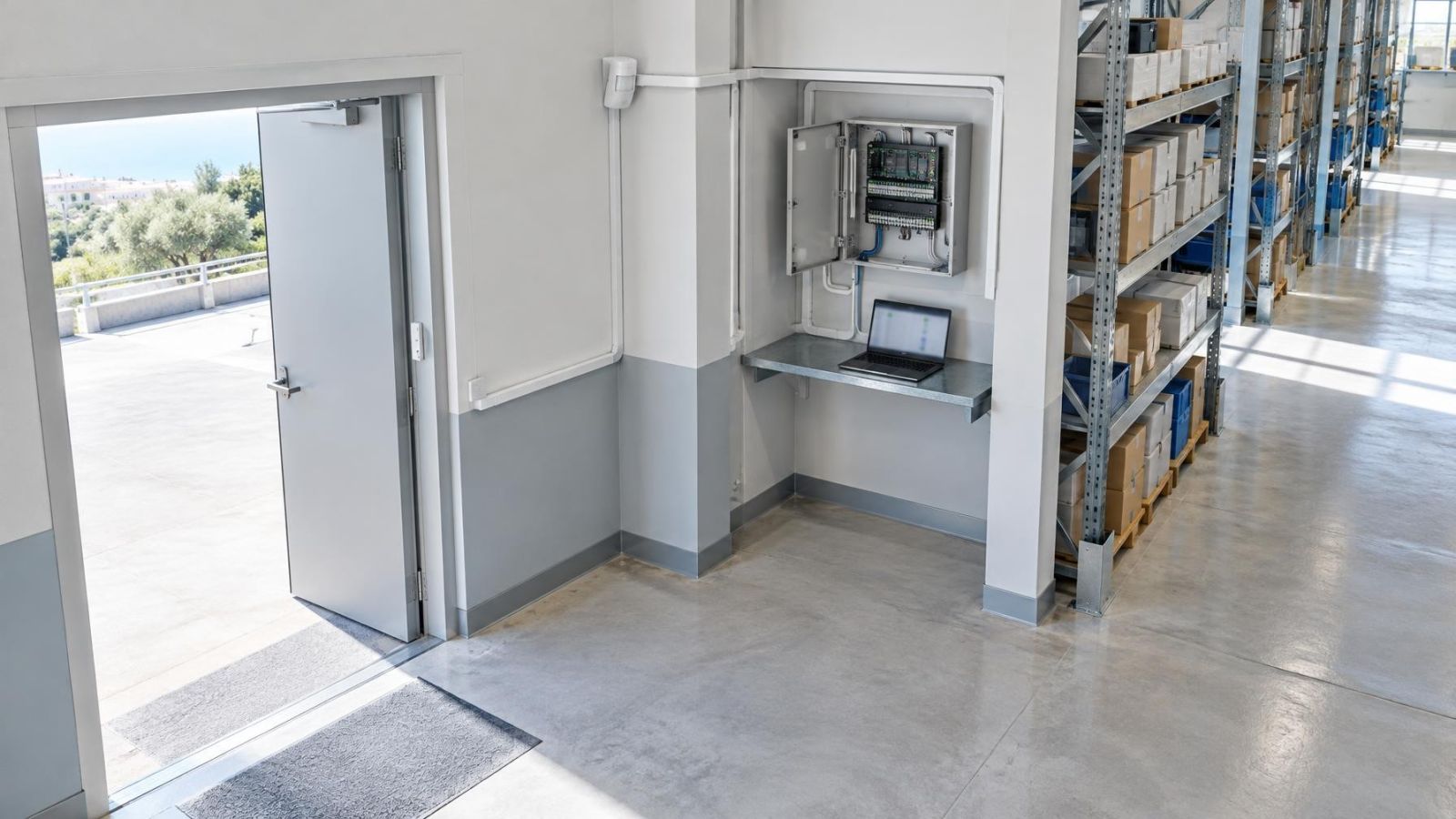
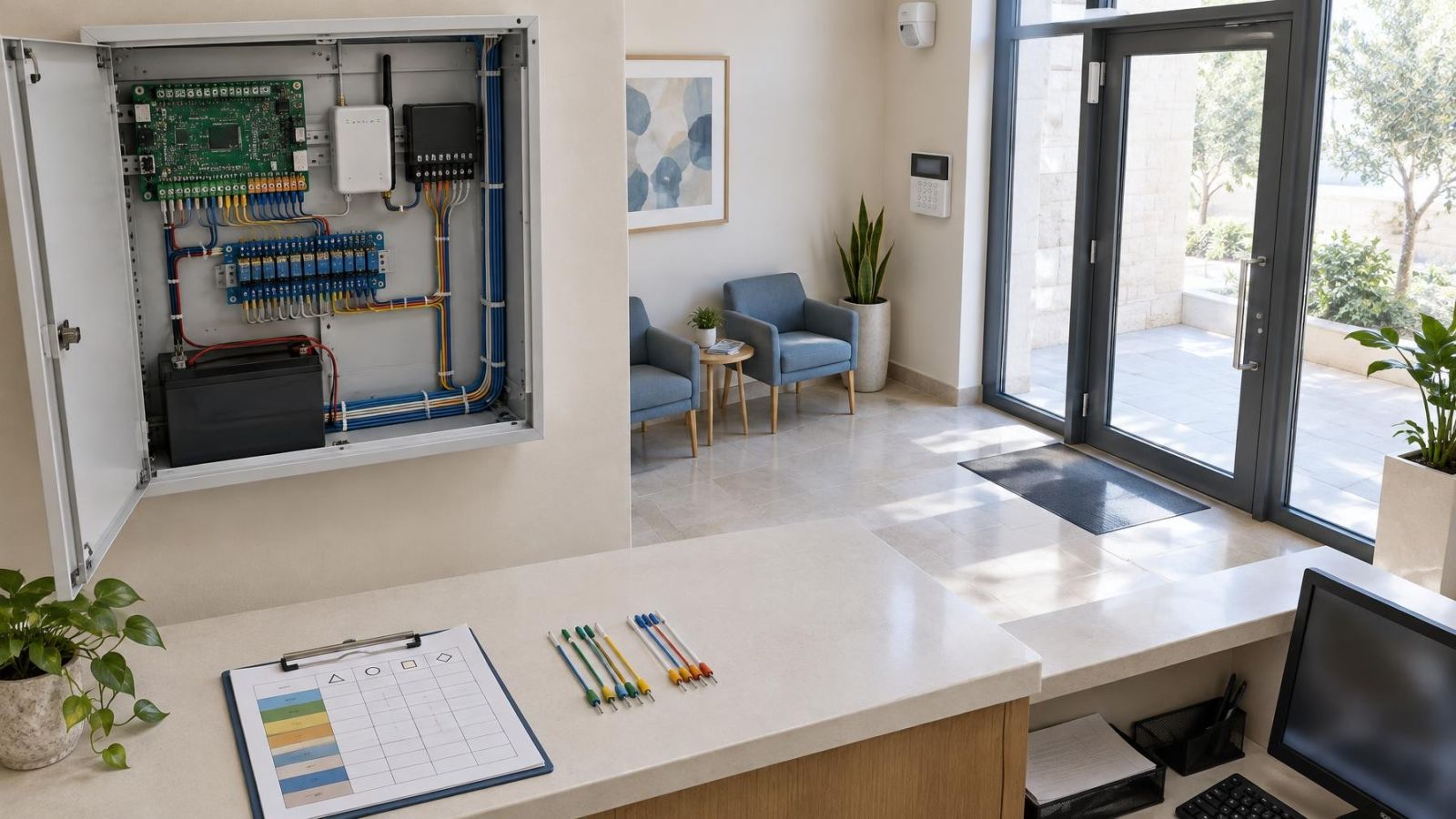
The control panel and keypad serve different purposes and do not need to share a location. The keypad belongs where people use it. The control panel belongs where its power, communication paths, connected detectors and maintenance access can be planned properly. Putting both together simply because they are part of the same system often compromises one of those jobs.
Is a Second Alarm Keypad Worth It?
A second alarm keypad is worthwhile when the property has a genuinely separate routine, not merely a second door. If residents regularly alternate between a front entrance and a parking-side entrance, or staff consistently use a service door away from the customer entrance, another keypad can make each route direct and predictable.
Separate Entrances and Staff Routes
Consider how often the separate route is used and who uses it. An occasional garden door may not justify another fixed control point. A rear entrance used for every staff arrival is different. In a business, separate keypads can support opening and closing from the appropriate door without making employees walk through work areas simply to reach the controls.
Bedroom-Area Arming at Night
A keypad near the bedroom area can be useful when the normal night routine includes checking status or arming selected parts of the property after everyone has gone upstairs or along a distant corridor. Its position should still make sense for regular users and should not create distracting light or sound close to sleeping areas.
Fixed Keypad or App Control?
App control can be convenient for a remote property owner or a manager who is not always on site, but it is not always a complete substitute for a fixed keypad. Phones can be elsewhere, unavailable to a staff member or inconvenient for a visitor with authorised access. A fixed keypad gives the property a consistent control point that does not depend on one person's device.
Avoid deciding from the floor plan alone. Observe the property over normal routines, list the entrances used regularly and identify who needs to arm or disarm from each one. Add another keypad only where it supports a distinct, repeated route or a useful night-time control point. Good placement follows behaviour; extra hardware should not be used to avoid understanding that behaviour.
Key takeaways
- Effective keypad placement begins with observing how family members, staff and service providers actually enter and leave.
- An alarm keypad should normally be indoors and reachable before a user crosses deeper protected areas.
- Entry delay should match the real walk from the opening that starts the delay to the keypad.
- Comfortable reach, readable lighting, wiring access and wireless signal all belong in the placement decision.
- An additional keypad is worthwhile when a separate entrance or night-time routine is used regularly.