On this page
Map Every Temporary Property Access Route
A cleaner needs to enter while you are away. A contractor must reach the mamad, or safe room, without opening private rooms. A delivery needs to pass the garden gate but not the property door. In an apartment, the route may begin at a shared apartment entrance. A smart lock, alarm system, video intercom and entrance camera may all be involved. The question is how to connect these parts into one controlled process: who can enter, by which route, for what purpose and for how long.
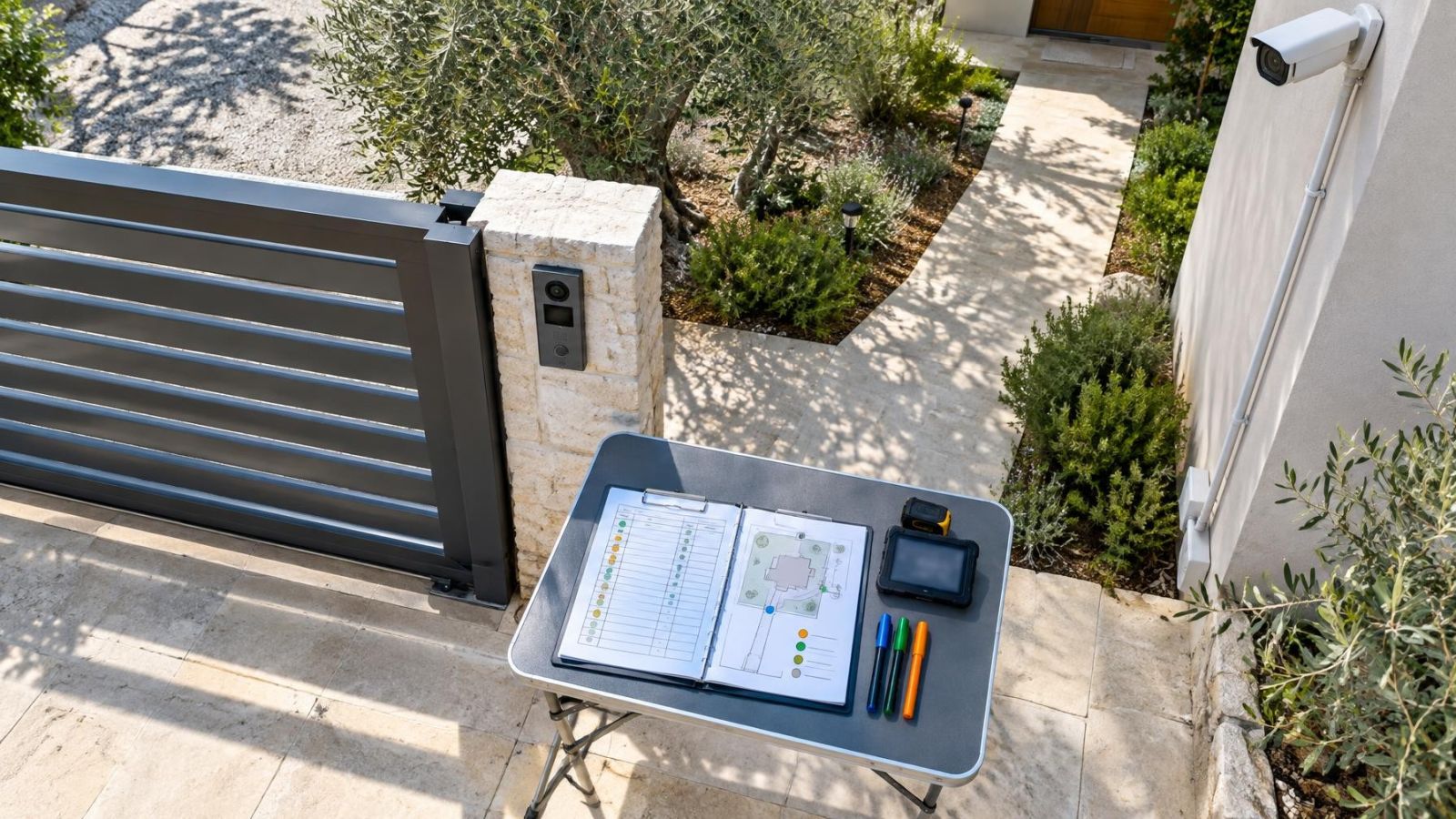
Start with the route rather than the device. Draw the path from the public side of the property to the exact place the visitor needs to reach. In a private home, that might include a pedestrian gate, garden path, external door and alarmed interior. In an apartment building, it may include the common entrance, lift or stairs, apartment door and selected rooms. A street-front business may have separate customer, delivery and staff routes.
- Person: Name the cleaner, contractor, delivery recipient or property manager rather than describing everyone as a guest.
- Purpose: State what the person is there to do and which spaces are relevant to that task.
- Access window: Decide whether entry is one-off, recurring or available only during an agreed period.
- Route: List every barrier from the shared entrance or garden gate to the final work area.
- Method: Record whether each barrier uses a physical key, temporary code, remote unlocking or an intercom call.
This map often reveals gaps that equipment lists hide. A remotely controlled apartment lock is not useful if the visitor cannot pass the building entrance. A garden gate code does not explain how the alarm will be disarmed. An entrance camera can show doorway activity, but it does not grant or limit access.
What Access Does Each Visitor Need?
Give each person the least access needed to complete the task. This is not about making ordinary visits difficult. It is about keeping the arrangement understandable. A cleaner may need the kitchen, living area and bedrooms. A technician may need only a communications cabinet, utility area or mamad. A delivery visitor may need no interior access at all.
How should I plan cleaner access at home?
A recurring cleaner should normally have an individual credential rather than a household code shared with relatives, neighbours or other workers. Separate credentials make it possible to remove one person without changing access for everyone. They also make an access log easier to interpret where the system records credential use.
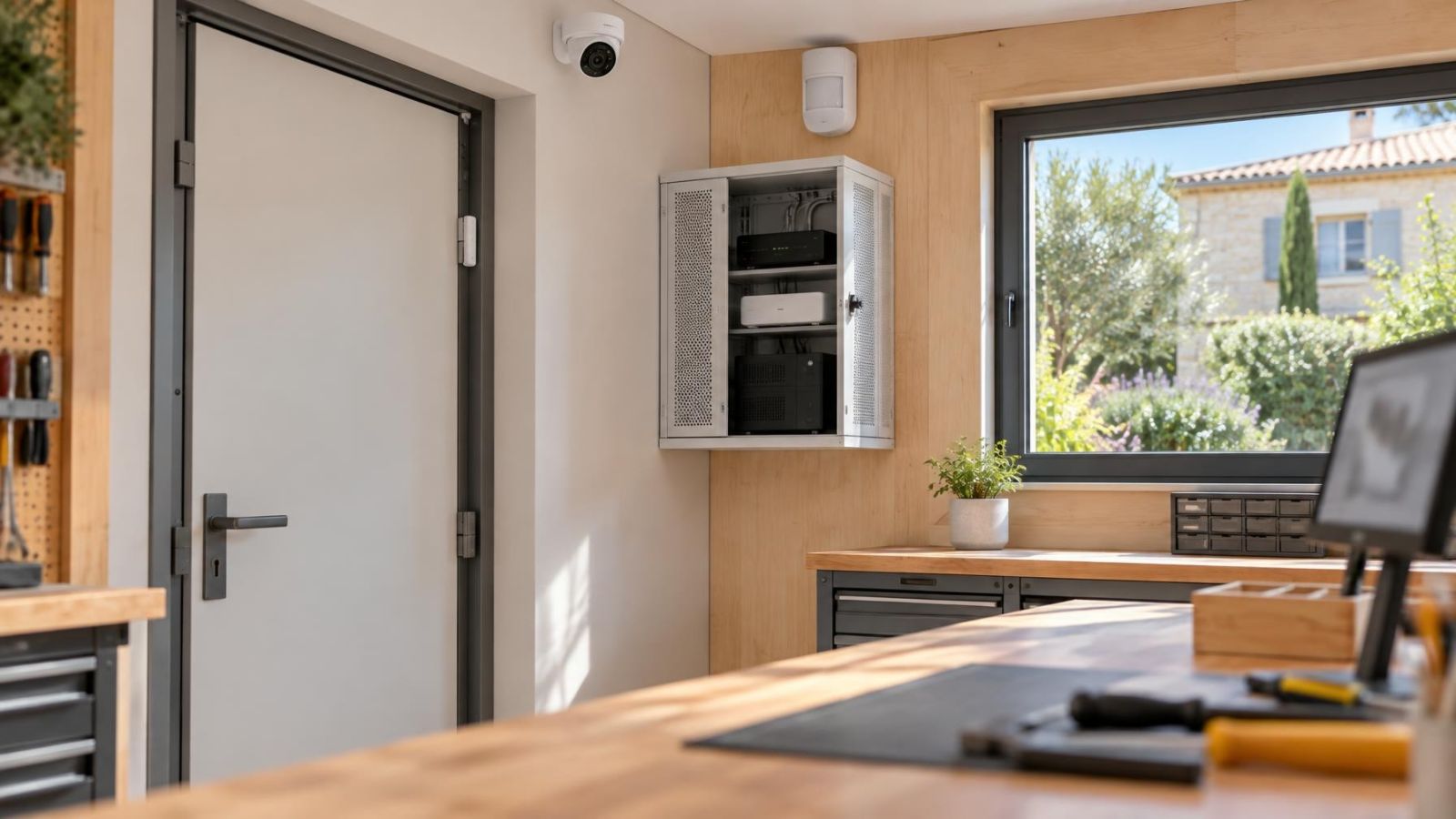
Decide which rooms remain private and whether the cleaner is expected to enter when nobody is present. If the alarm supports separate areas, permissions can be limited to the required zones. A visitor working in one part of the property does not necessarily need authority to disarm every protected area.
- Use supervised entry when the work is unusual, the route is changing or the visitor needs access to a sensitive area.
- Use unattended entry only after the person has clear instructions for the lock, alarm and exit sequence.
- Keep private rooms and storage areas outside the approved route where practical.
- Give each alarm user a separate code or credential rather than sharing the main household permission.
Choose the Right Access Method
The right method depends on frequency, connectivity and how quickly access must be removed. No single method suits every visitor. A recurring cleaner and a one-off contractor have different needs, even if both use the same door.
| Method | Best suited to | Main limitation |
|---|---|---|
| Temporary access code | Recurring or scheduled visitors | Must be individual, limited and removed when no longer needed |
| Remote unlocking | One-off entry while an owner or manager is available | Confirms door release, not the identity of the person who entered |
| Physical key | Doors without electronic access or as a planned fallback | Remains usable until returned or the lock is changed |
| Key safe | Controlled storage of a fallback key | Anyone with the current safe code may be able to take the key |
| Video intercom | Identity checks before remotely releasing an entrance | Requires a clear answering and release procedure |
What matters for contractor access security?
Contractors often need broader physical movement but for a shorter arrangement. Confirm the work area, tools or materials being brought in, and whether other workers may accompany the named person. If several people require independent entry, give them separate credentials. Do not pass one code through a chain of workers if individual control matters.
How can I arrange secure delivery access?
Keep delivery access as shallow as possible. A gate release, lobby handover point or designated external area may be enough. If remote unlocking is used, an intercom conversation or entrance camera can help the person answering understand who is waiting. The door release itself does not confirm who crossed the threshold, whether someone followed them or whether the door closed afterwards.
Coordinate Locks, Alarms and Cameras
Temporary entry fails operationally when each component is planned in isolation. The lock opens, but the visitor cannot disarm the alarm. The alarm is disarmed, but the garden gate remains locked. The camera records an arrival, but nobody knows which credential was used. Plan the complete sequence from the first barrier to the final exit.
- The visitor reaches the shared entrance or garden gate and uses the approved entry method.
- The person passes the private property door using an individual key, code or remote release.
- The alarm is disarmed only for the permitted area, using a separate alarm user code where supported.
- The visitor follows the approved route to the work area without entering restricted rooms.
- On leaving, the visitor closes the relevant doors, rearms the required zones and confirms completion to the responsible person.
An entrance camera should cover the point where arrivals pause and interact with the door, gate or intercom. It records visible activity at that location. It does not replace a lock, access credential or alarm permission. Positioning also matters more than headline resolution: a face in deep shadow against a bright Israeli street may be less useful than a balanced view from a better angle. WDR (wide dynamic range) can help with strong contrast.
Zone arming can keep unrelated parts of a home or business protected while work continues elsewhere. The practical test is whether the visitor understands which area may be entered and what must be rearmed. Instructions should use ordinary names such as “front office” or “upstairs rooms”, not only technical zone labels.
A good access plan is one continuous entry-and-exit routine, not a collection of unrelated devices.
How Should Shared Entrances Be Handled?
In an Israeli apartment building, the common entrance and the apartment door are separate control points. The common door may be managed collectively through the va'ad bayit, the residents’ committee, or by building management. Your private smart lock does not solve access to that first door, and a building entry method should not automatically grant entry to your apartment.
Coordinate any change affecting the common entrance with the people responsible for the building. Clarify whether visitors use an intercom call, a building credential, a staffed entrance or another agreed method. For remote owners, decide where intercom calls are routed and who may release the door when the owner is unavailable.
- Keep common-door credentials separate from apartment credentials.
- Avoid leaving keys, equipment or delivery items where they obstruct neighbours’ normal route.
- Angle private entrance cameras towards the relevant doorway rather than unnecessarily covering neighbouring doors or shared living areas.
- Explain both stages of entry to the visitor; do not assume an international arrival understands how the local building intercom works.
- Assign a fallback contact for building entry without giving that person broader apartment access than needed.
Plan for Israeli Property Conditions
The local setting changes equipment placement and the reliability of remote entry. Street-facing entrances can move from shade to strong glare during the day. Test the actual view with the door open and closed, and with a person standing where visitors naturally wait. An entrance camera mounted too high may show the top of a head while missing the face.
Outdoor keypads, intercoms and cameras also face dust, direct sun and, near the coast, humid and salty air. Suitable outdoor housings matter, but installation details matter as well. Cable entries should not invite water or dust, and equipment should remain reachable for cleaning and inspection.
Connectivity is often weaker at a garden gate, underground parking entrance or detached storeroom than it is inside the home. Test the connection at the exact mounting point before relying on remote unlocking or mobile intercom calls. A sensible fallback might be a controlled physical key or another local entry method, not a hidden key left near the door.
The mamad is a normal part of many Israeli floor plans and may also be used as an office, bedroom or storage room. If it sits inside a restricted zone, decide whether a worker genuinely needs access and how the alarm arrangement reflects that route. Do not casually classify it as private or accessible without considering its everyday use in the property.
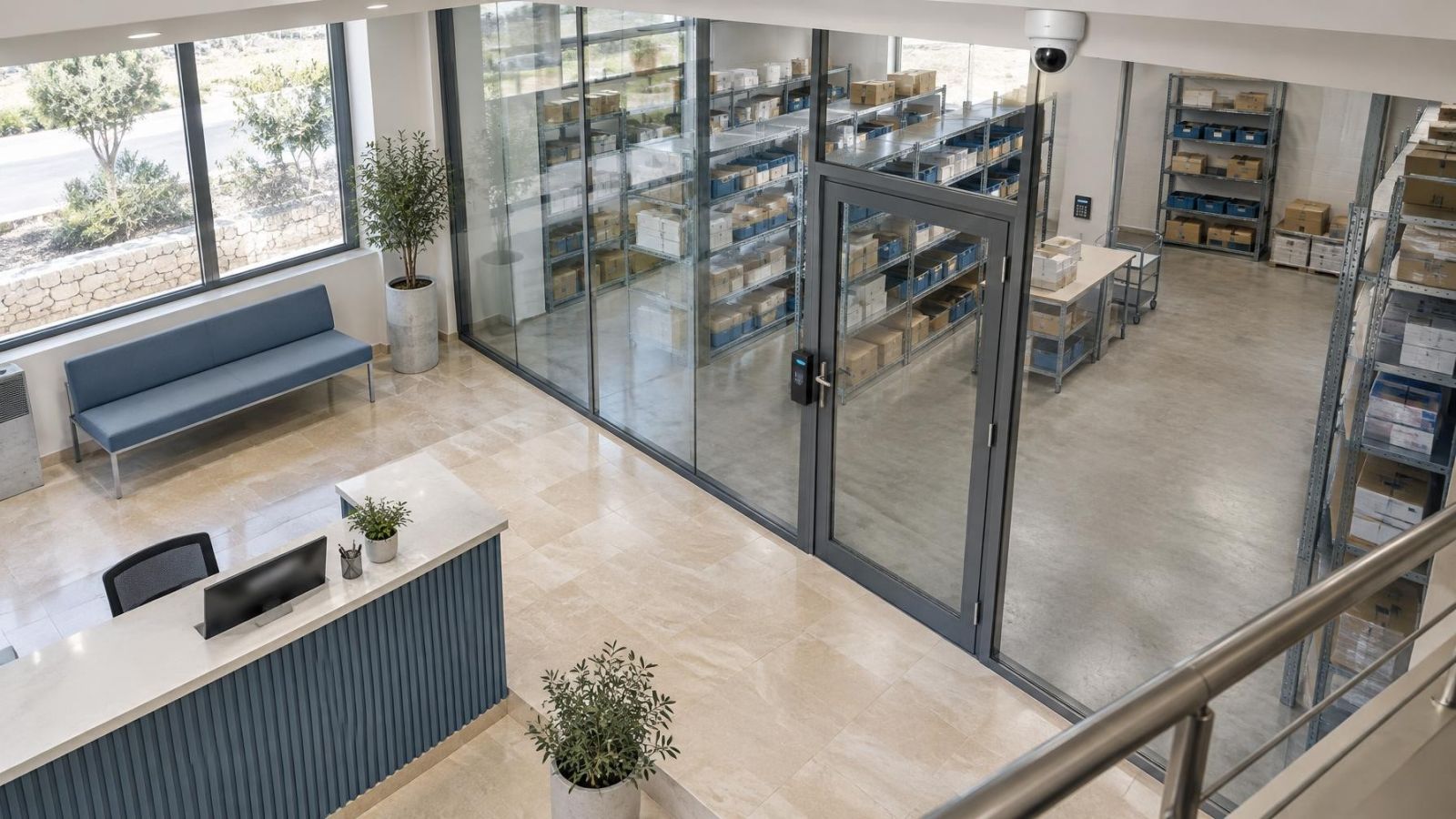
For a street-front business, deliveries and service visits can overlap with customers and staff. Define where goods are handed over, which entrance is used and who is authorised to release it. A delivery route to a stock area should not automatically provide access to an office, communications cabinet or staff-only room.
Remove Access and Review the Record
Access removal belongs in the original plan, not in a later clean-up. A temporary code should expire or be revoked when the task ends. A recurring cleaner’s credential should be removed when the arrangement finishes. Contractor permissions should not remain active simply because the work might resume at some undefined point.
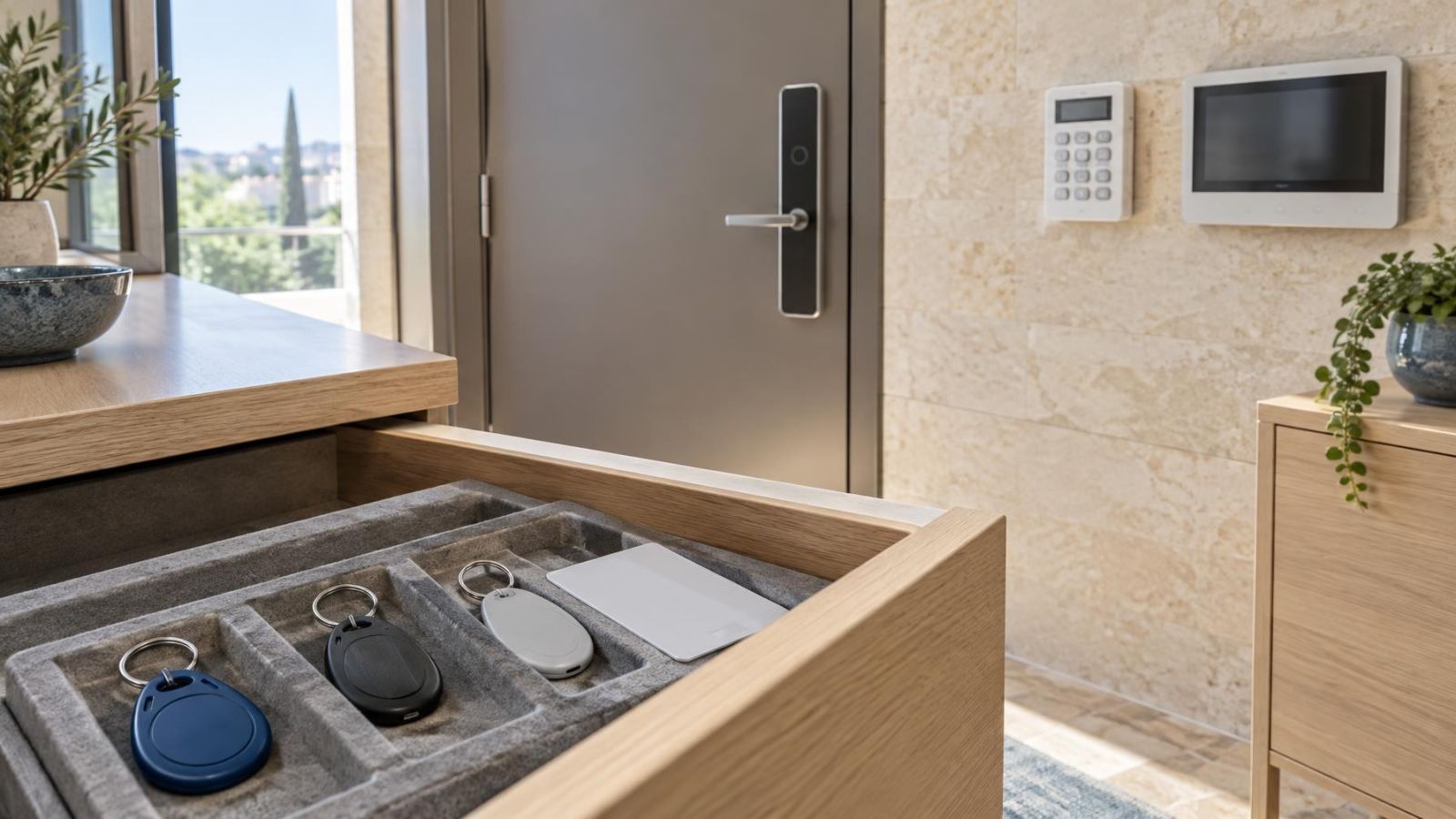
Physical items require a different process. Collect keys, gate remotes and access cards, then record that they were returned. A physical key remains usable until it comes back or the relevant lock is changed. Receiving the key does not establish whether another copy exists, so avoid issuing broad master access when a narrower key will do.
Where an access log is available, use it for operational clarity. It can show that a particular credential was used or that a door command was sent. It does not by itself establish the identity of every person who passed through the opening. Compare the log with the agreed visit window only when there is a practical reason to resolve confusion.
- Revoke electronic credentials promptly when the task or recurring arrangement ends.
- Recover physical keys, cards and remotes from the named holder.
- Remove unused users during periodic system administration.
- Check that removed credentials no longer appear as active permissions.
- Keep household, staff and visitor credentials in clearly named groups.
Write a Repeatable Access Routine
A short written routine reduces improvisation. It is especially useful for remote property owners, business managers and households where more than one person may approve entry. The document should identify the visitor, approved route, access window and responsible person. It should also state who closes the visit and removes the permission.
- Name the visitor and describe the task.
- List the approved route from the first shared or private entrance to the work area.
- Issue an individual credential with only the required lock and alarm permissions.
- Provide clear entry, disarming, exit and rearming instructions.
- State the fallback method for a power, device or connectivity problem.
- Confirm completion, recover physical items and remove electronic access.
- Update the checklist before reusing it for another visitor.
The fallback deserves particular attention. Decide what happens if a mobile connection fails, the visitor enters the wrong code or the intercom call goes unanswered. Name the person authorised to make the next decision. A fallback should restore a controlled process, not turn into permanent shared access.
Keep the checklist simple enough to reuse, but do not reuse credentials by default. The process can stay the same while the named person, route, permission and access window change. That combination gives visitors practical entry without turning a temporary arrangement into an indefinite one.
Key takeaways
- Every temporary user should have a separate credential that can be changed or removed without affecting anyone else.
- Visitor access should be limited by route, area, purpose and expected access window.
- Locks, alarms and entrance cameras work best when planned as one entry and exit process.
- Shared building entry and private property entry require separate access decisions.
- Every temporary access arrangement should include a defined method for removing permission.