On this page
Entry and Exit Alarm Delay Settings Explained
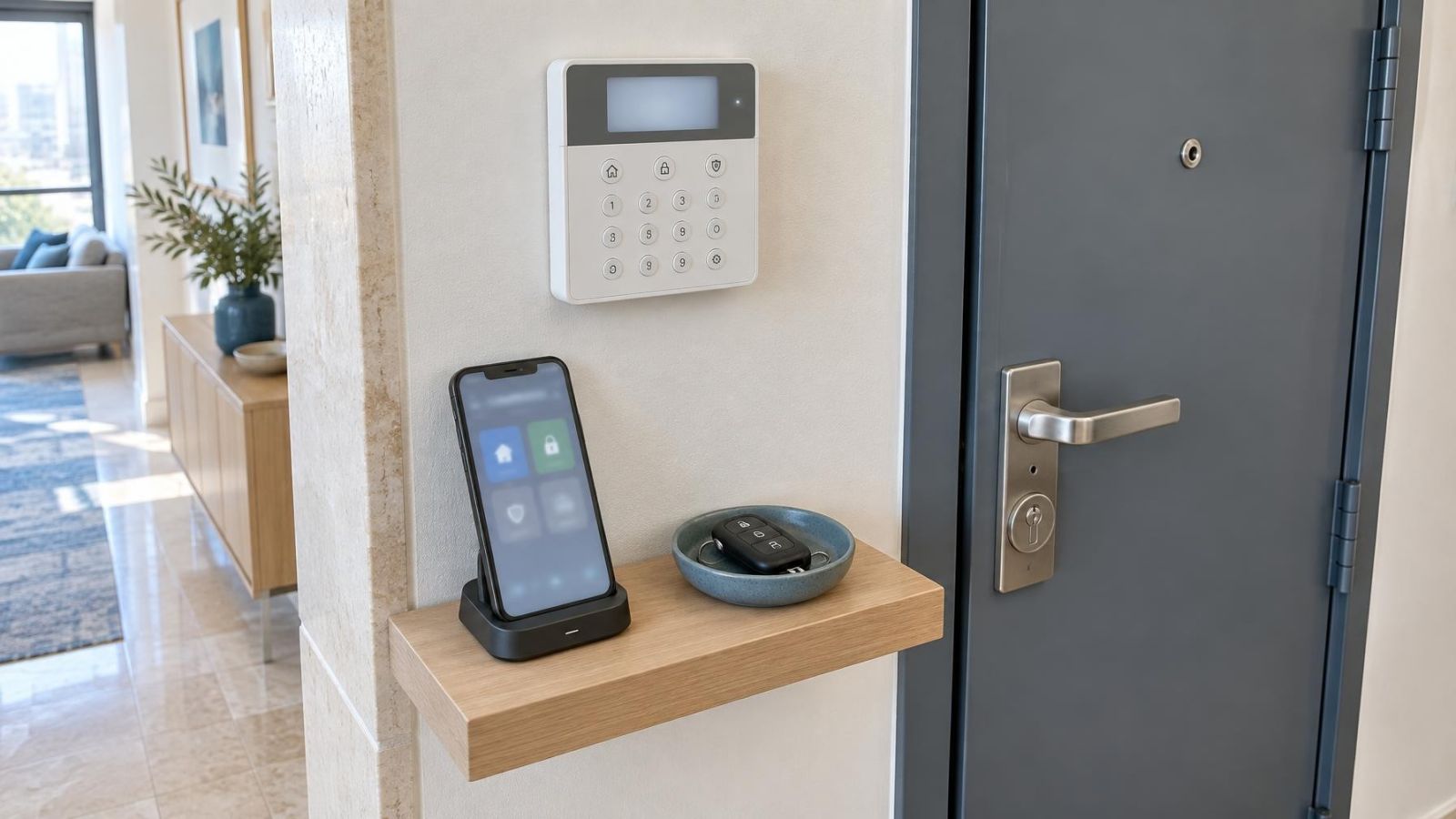
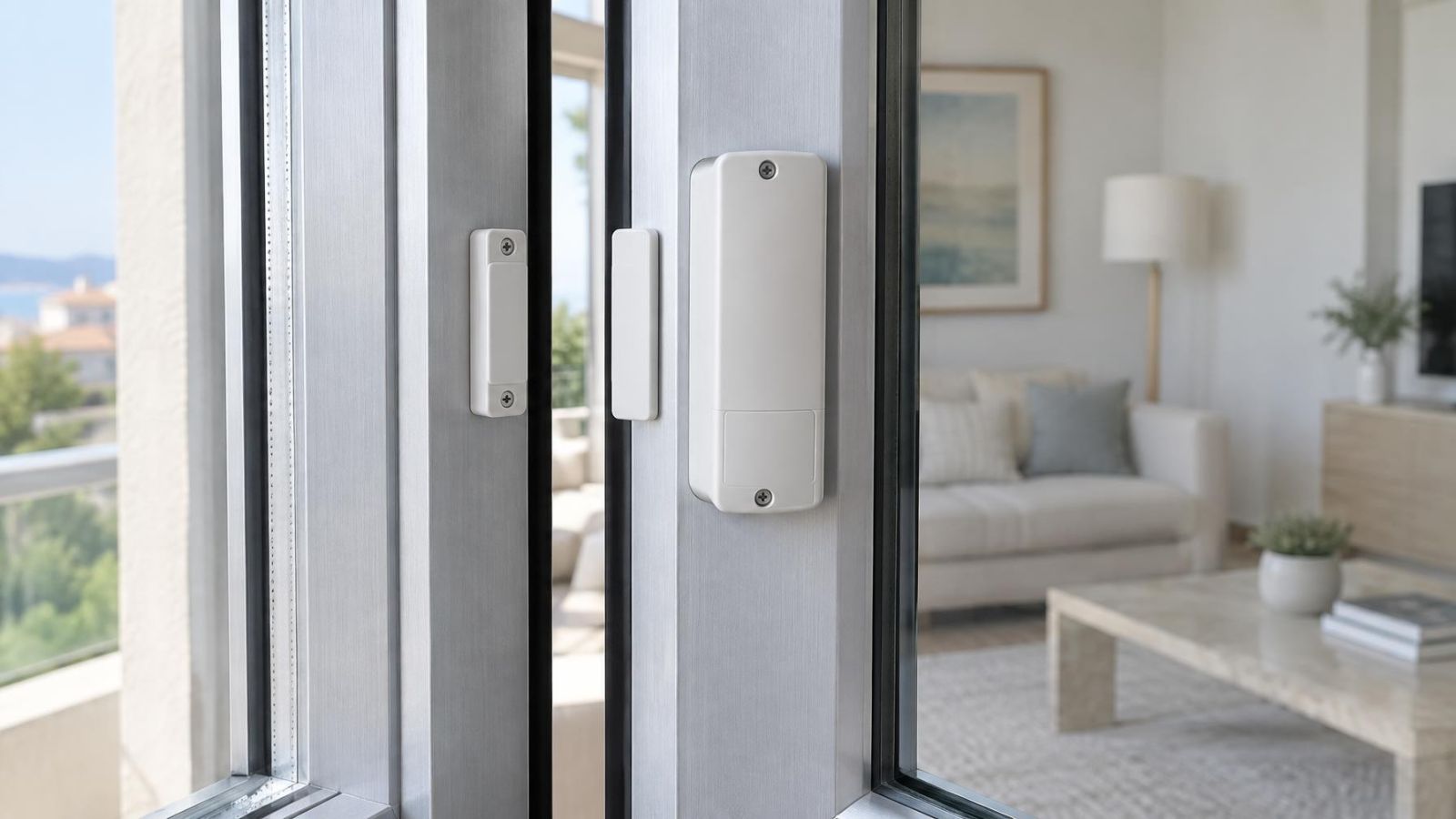
An alarm control panel, alarm keypad, door contact, front door, garden gate and delayed alarm zone all interact during a normal arrival. The important question is not simply how long the countdown should be. It is whether the alarm delay settings match the route people genuinely follow from the first protected opening to the place where they disarm.
An entry delay starts when a designated delayed zone is opened while the system is armed. It gives an authorised user time to reach the control point and disarm. If disarming does not happen within the configured period, the system follows its programmed alarm behaviour.
An exit delay works in the other direction. After arming, it allows movement along the planned departure route before the relevant zones become fully armed. The person leaving may need to walk through a hall, close the front door, turn a key and, in a private home, close a garden gate.
How does a delayed alarm zone work?
A delayed alarm zone is normally assigned to an opening used for regular entry or exit. An instant zone responds without providing the same routine countdown. The distinction matters because assigning delay too widely makes unrelated areas wait, while assigning it too narrowly can cause the alarm to sound during an ordinary arrival.
Many systems provide an audible countdown at the keypad or another sounder. That tone is useful routine feedback: it confirms that the system is waiting for disarming or that the exit period is still running. Users should learn what the normal entry and exit sounds mean. Silence, an unfamiliar tone or a countdown that begins at the wrong point deserves investigation rather than guesswork.
| Function | When it begins | What it allows |
|---|---|---|
| Entry delay | A designated entry zone is opened while armed | Movement to the keypad or other authorised disarming point |
| Exit delay | The system is armed | Departure along the configured route |
| Instant response | An instant zone is triggered while armed | No routine entry countdown for that zone |
Map the Real Entry Route
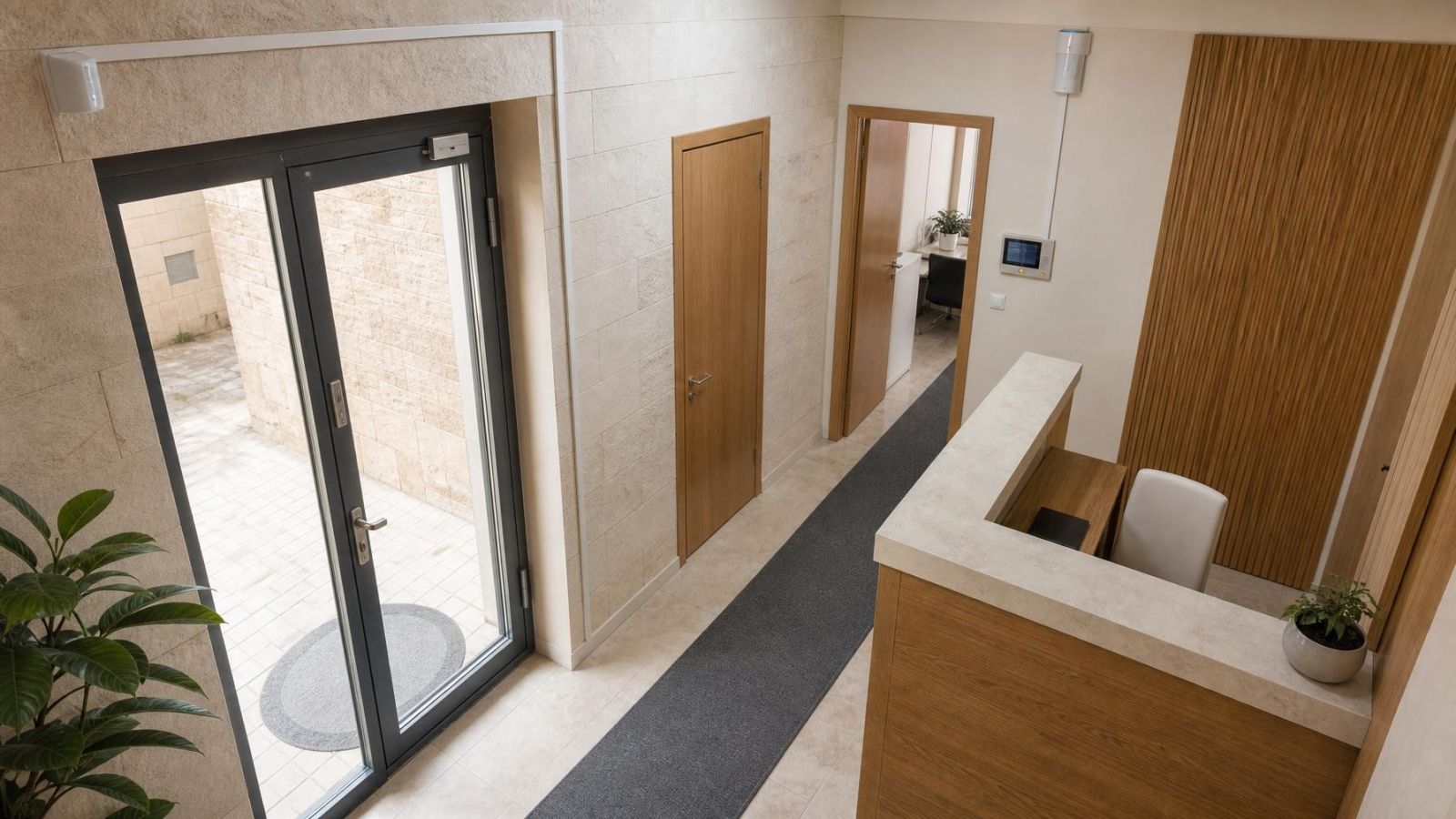
Start the route at the first protected boundary the user opens. In an apartment, this is often the apartment’s front door, not the shared entrance to the building. The shared lobby and stairwell may add walking time, but they are usually outside the apartment alarm’s protected route. In a private home, the route may begin at a garden gate, a pedestrian gate or the front door, depending on where the alarm protection starts.
Then walk to the alarm keypad exactly as a resident, employee or cleaner would. Note every door contact and movement detector crossed along the way. A detector in the hall can cause an immediate alarm even when the front door itself has entry delay, if that detector is configured as an instant zone rather than as part of the planned route.
Use normal conditions, not an empty-handed demonstration. Someone may be holding shopping bags, guiding children through the door, carrying work equipment or moving more slowly because of age, injury or a mobility need. A gate may need to be latched behind the user before the front door is opened. These are not exceptional complications. They are part of the daily routine the configuration must accommodate.
Keypad placement has a direct effect on how comfortable the route feels. A keypad hidden deep inside the property may keep it out of sight, but it also makes every arrival longer. Moving equipment is not always necessary or practical. Sometimes the correct answer is a better route definition, another authorised control point or a remote disarming routine. The placement and the timing should still be considered together.
What Is Entry Delay For?
What is alarm entry delay for?
Alarm entry delay gives an authorised user time to pass through a designated entrance, reach the control point and disarm normally. It is not general extra time for every protected part of the property. Its purpose is narrow: to make the expected arrival route usable without treating unrelated openings as delayed.
Different entrances may require different treatment. A front door that opens directly beside the keypad presents a short, simple route. A garden gate may begin a longer route across an outdoor area and through another protected door. A side entrance used by staff may cross a detector that the family entrance does not. Using one assumption for all three can produce awkward results.
Remote disarming can be a deliberate routine choice where the system supports it. A remote property owner might authorise a known visitor before arrival. A business manager might use an approved control method when opening. Remote control should not, however, disguise a poorly designed physical route. Users still need a clear procedure for occasions when the remote method is unavailable or the person entering is expected to use the keypad.
A longer delay provides more time for keys, bags and slower movement, but it also postpones the alarm response along that delayed route. The useful setting is therefore not the longest available period. It is the shortest period that comfortably supports the normal authorised routine, with a sensible allowance for ordinary variation.
Match Exit Delay to Departure
How should alarm exit delay match departure?
Begin with the arming point and identify the final protected door or gate that must close. If the keypad is beside the front door, the sequence may be short. If arming happens in an office, kitchen or bedroom, the user may cross several protected areas before reaching the final exit. The exit delay must cover that actual sequence.
Morning departure is a useful test because it exposes small tasks that are easy to omit from a technical plan. People collect bags, check that another person is ready, lock a door and sometimes return briefly for an item. In a garden property, the final action may be closing or locking the outer gate rather than the front door. The countdown should begin at a point that makes the intended sequence clear.
For an apartment, do not automatically include the time needed to walk through the shared building entrance. Once the protected apartment door is closed and the apartment zones have settled, the resident may still be inside a shared corridor that belongs to the building’s common area. Any equipment at a shared entrance may involve a separate system and decisions made with the building’s va’ad bayit.
A small business needs the same route-based thinking, but the routine may involve more people and more closing tasks. The last employee might arm at a keypad, pass through a stock area, turn off non-security equipment, close a shutter or internal door, lock the street-facing entrance and leave. Tasks that can be completed before arming should generally happen before the countdown begins. The remaining exit sequence should be simple and repeatable.
- Choose a clear arming point that staff or household members can reach without crossing an already immediate area.
- Complete variable tasks, such as gathering bags or checking rooms, before arming where practical.
- Include the time needed to close and lock the final protected opening.
- Make the expected final door unambiguous so users do not improvise another route.
- Treat occasional detours as exceptions to manage, not as a reason to delay the whole property.
Keep Other Zones Immediate
Delay should be limited to what the entry and exit route genuinely needs. Windows, balcony openings and doors that are not used for normal arrival can usually remain instant zones. The same applies to a garden-side door that is kept locked while everyone enters through the front.
Interior movement detectors need closer attention. A detector directly covering the path from a delayed door to the keypad may need route-aware treatment, depending on the system’s available zone behaviour. A detector in a room beside that path does not automatically need delay. Its viewing area and the movement people actually make are more important than its room name on the zone list.
Night arming creates another pattern. People remain inside, so occupied bedrooms, corridors and the route to a mamad may need to stay usable under the selected arming mode. Perimeter openings and unoccupied areas can be treated differently from spaces where normal indoor movement continues. The configuration should describe the occupied night-time layout, not merely reuse the daytime away mode with a longer countdown.
A delay is a route permission, not a property-wide pause.
This is also why a garden gate and front door may need separate zone treatment. If the gate starts a protected outdoor route, opening it may begin the entry sequence. If it is outside the alarm boundary, the countdown may correctly begin only at the house door. The answer depends on the installed detectors and the intended route, not simply on which opening is encountered first.
Why Does the Alarm Sound Too Soon?
An alarm that sounds before the user reaches the keypad often has a route problem rather than a timing problem. Extending the countdown may hide the symptom while leaving the wrong zone assignment in place. Check which device triggered first and compare it with the path the person took.
- The door used for entry may be assigned as an instant zone rather than a delayed one.
- A hall, stair or outdoor detector may respond immediately after the delayed door opens.
- The exit countdown may start before the user has completed tasks that should happen before arming.
- The keypad may be positioned away from the natural walking line, adding an unnecessary detour.
- Different household members or employees may use entrances that were never included in the original route plan.
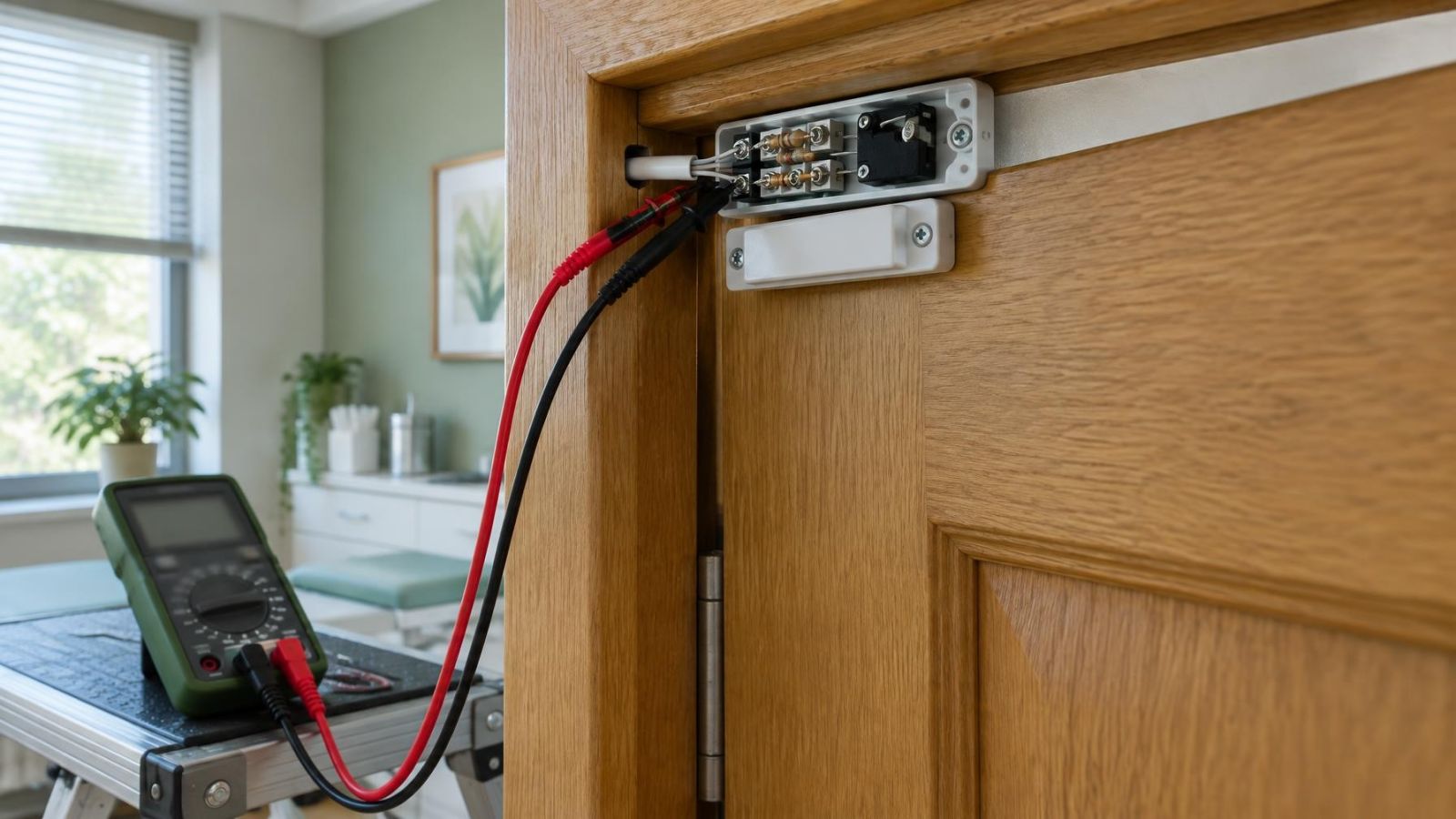
- A door may be labelled incorrectly in the control panel, causing the installer or user to adjust the wrong zone.
Strong sunlight, pets, plants moving near an outdoor detector and doors that do not close cleanly are separate issues from delay timing. They should not be corrected by simply adding more seconds. The event history, zone labels and physical devices need to be checked so that a detector issue is not mistaken for a route issue.
The audible countdown can help locate the mismatch. If it begins at the expected door but the alarm sounds when a person enters the hall, inspect the hall zone treatment. If no countdown begins at all, check the opening used and its assignment. If the user reaches the keypad comfortably but cannot complete disarming, review the operating procedure and control point rather than assuming the route itself is too long.
Test and Choose the Final Settings
Final settings should be selected through walk-through testing, not estimation from a floor plan alone. Include every regular user where possible. Adults, children who operate the system, staff members and people with mobility needs may use the same route at different speeds and with different habits.
- Arm the system from the normal control point and complete the regular departure sequence without rushing.
- Confirm that each door and detector on the exit route behaves as intended until the final opening is closed.
- Approach and enter through the regular entrance while carrying the items normally brought inside.
- Follow the natural path to the keypad and disarm using the usual method.
- Repeat the test for any garden gate, side door or staff entrance that is part of an authorised routine.
- Test the relevant occupied or night mode separately because its active zones and permitted movement may differ.
Run the test under ordinary conditions. Close and lock doors as users normally do. Do not ask someone to stand beside the keypad simply to make the result look successful. If a route only works when everyone moves unusually quickly, it is not a comfortable routine. If it requires a very long delay, the zone layout or keypad position may need attention.
Guests, cleaners and temporary staff need a short, clear instruction. Tell them which entrance to use, where the keypad is and whether another authorised person will disarm remotely. Avoid offering several possible routes unless each has been configured and tested. Consistency is usually more useful than a generous countdown.
After testing, an installer can adjust zone types, route-dependent detectors and timing together. Ask for the zone descriptions to match the names people actually use, such as “front door”, “garden gate” or “shop entrance”. Clear labels make later troubleshooting easier and reduce the chance that a future change is applied to the wrong opening.
The final configuration should feel uneventful. The countdown starts where users expect it, the route to the keypad is direct, and unrelated zones remain immediate. That balance comes from observing real movement through the property rather than choosing a delay in isolation.
Key takeaways
- Alarm delays work best when they follow the household’s or business’s real routine rather than an idealised route.
- A reliable delayed route begins at a designated entrance and continues clearly to the alarm keypad.
- Only doors and detectors needed for normal entry or departure should receive delayed treatment.
- Walk-through testing should include every regular user carrying out the routine at a normal pace.
- Entrances that lead through different parts of a property may require separate zone treatment.