On this page
Outdoor alarm detection starts with a physical route, not a catalogue of equipment. Outdoor alarm sensors may need to monitor garden gates, side passages or a contained patio. Outdoor curtain detectors and infrared beams can cover defined lines of movement, while security cameras provide visual information about what happened. The planning question is therefore specific: where around the property can a sensor observe meaningful movement without treating every ordinary outdoor activity as an alarm event?
Start Outdoor Alarm Detection With the Property Route
Begin with a simple plan of how people reach the building. For a private home, that may include a pedestrian gate, vehicle gate, front path, garden steps and a narrow route beside the house. A street-front business may have a recessed doorway, delivery entrance, external stock area or passage leading from the pavement to a rear door.
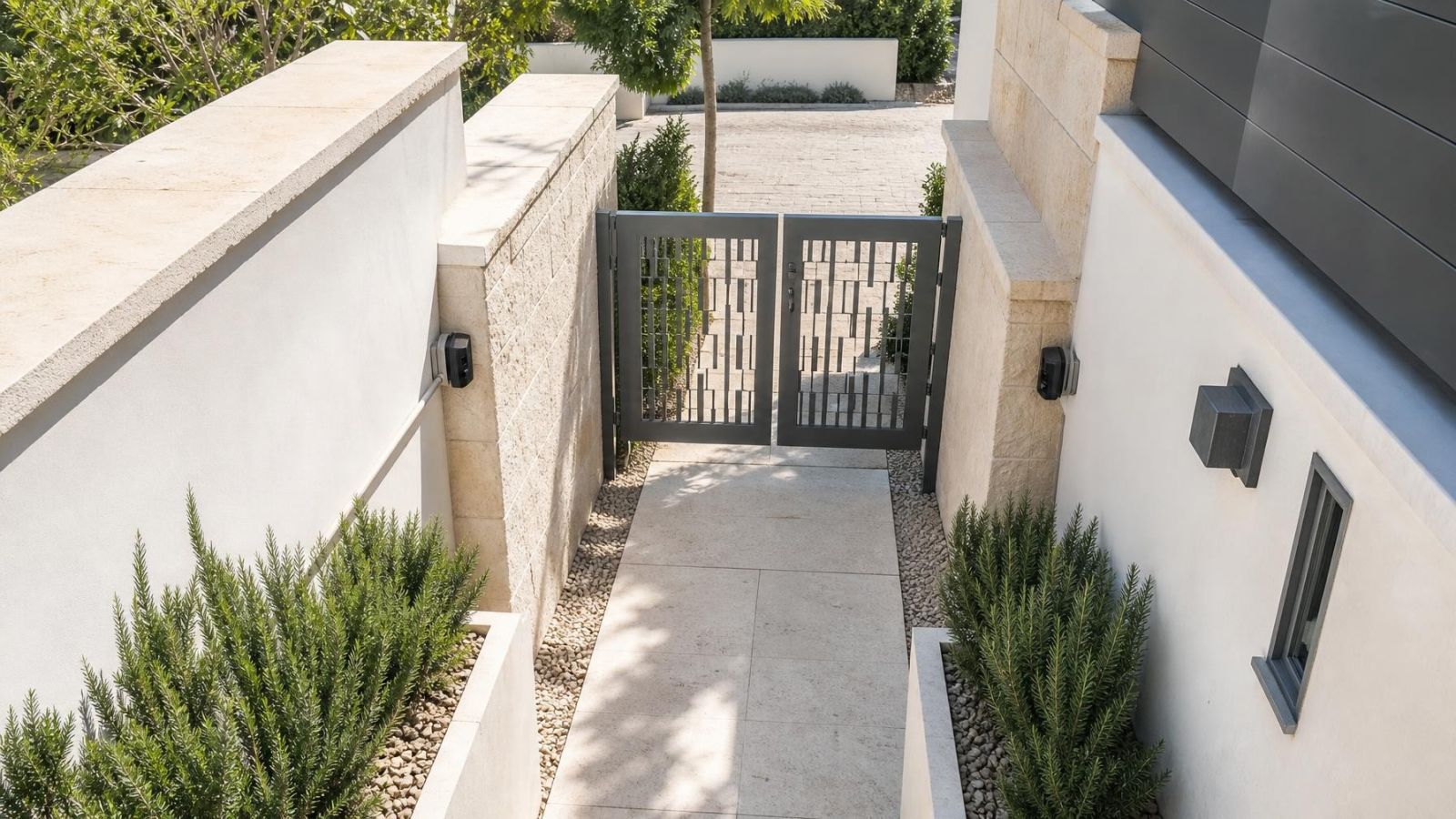
Mark likely approach paths before choosing any detector. A narrow side passage is a different detection problem from an open lawn. A gate that swings or slides is different again: the useful event may be the gate opening, movement through the opening, or both. The chosen equipment should reflect which event matters.
Separate private routes from shared areas
In an Israeli apartment building, the route from the street to the apartment may pass through a shared entrance, lobby, parking level or staircase. Those spaces are used by neighbours, visitors, cleaners and delivery workers. A private garden or apartment entrance may be suitable for a dedicated zone, but shared areas require coordination with the va'ad bayit and a clear understanding of who normally passes through.
Normal daily movement must be drawn onto the same plan. Include children returning home, staff opening a business, gardeners, cleaners, pets, deliveries and access to bins or storage. A technically neat detection line is poorly placed if residents must cross it whenever they use the garden.
What Should Detection Cover?
Cover the point where movement becomes relevant. A defined boundary, gate opening or narrow route generally gives the detector a clearer task than unrestricted open ground. The aim is not to make every square metre active. It is to identify the routes a person would use to approach a door, window, storage area or other protected point.
Narrow routes are often the best starting point. Side passages, paths between a wall and hedge, and entrances beneath a pergola can create controlled detection zones. Broad gardens contain more variables: branches move, animals cross, sunlight shifts, outdoor furniture is relocated and residents use the space in less predictable ways.
- Boundary zones: monitor passage through a defined line or opening.
- Approach zones: monitor movement towards a particular door, window or external area.
- Gate zones: report opening, movement through the entrance, or both as separate events.
- Contained-area zones: monitor a courtyard, enclosed patio or similarly controlled space.
Keep detection directed towards the property rather than across a pavement, shared driveway or neighbouring garden. Public and shared movement creates events that have little connection with the protected route. Separate zones also make responses clearer. A gate opening may produce a notification, while movement beside a closed business entrance may activate a different alarm response.
A useful outdoor zone answers one clear question about movement; it does not try to understand the entire garden.
Match Sensors to Each Area
Outdoor devices are not interchangeable. Their detection patterns and purposes differ, even when they are mounted close together. Choose the device after defining the event and the shape of the area.
| Device | Best-matched area | What it reports | Main planning concern |
|---|---|---|---|
| Curtain detector | Narrow side passage or defined line beside a building | Movement within a slim detection zone | Plants and routine access must stay outside the active zone |
| Infrared beam | Gate opening, path or other clearly defined crossing | Interruption of the beam path | The path between units must remain aligned and unobstructed |
| Outdoor motion detector | Contained courtyard, patio or controlled garden area | Movement within its detection zone | Open views, animals, vegetation and reflected heat require careful assessment |
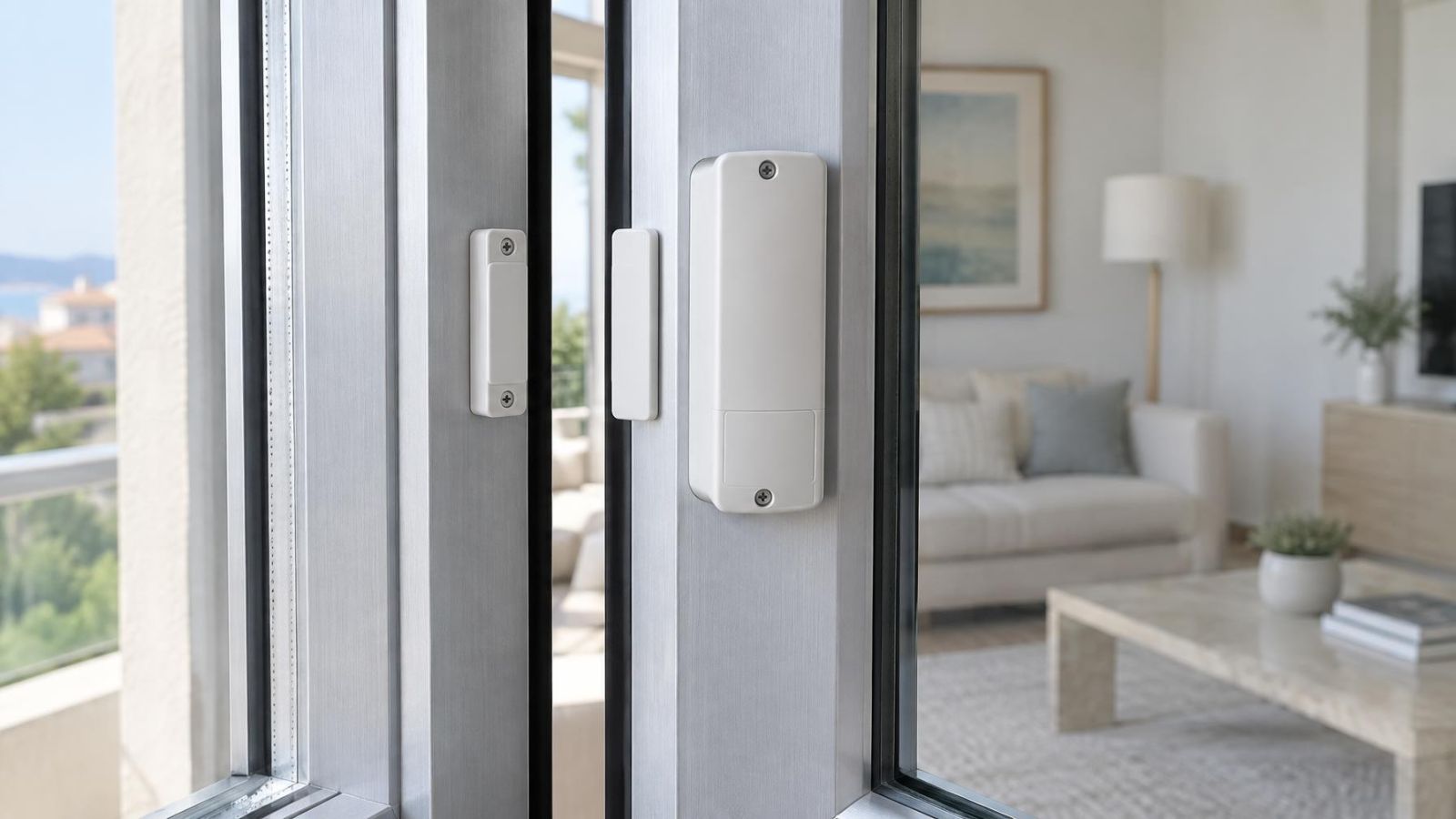
| Gate contact | Swinging or sliding gate | Change between closed and open states | Mounting must tolerate normal gate movement and alignment changes |
| Security camera | Entrance, route or overview requiring visual verification | Recorded or live visual information | The view, lighting and recording arrangement must support identification of the event |
Is an outdoor curtain detector suitable for a side passage?
A curtain detector is often well suited to a narrow side passage because its detection zone can follow the shape of the route. It works best where the zone remains clear and where residents do not routinely step into it. Overhanging leaves, stored bicycles, an opening shutter or a gate moving through the zone can make an otherwise sensible position troublesome.
Which gate alarm sensor should you choose?
Choose according to the event you need. A gate contact reports that the gate opened. It does not establish who passed through. An infrared beam reports a crossing at a defined line, while a motion detector responds to movement within a wider detection zone. A security camera can show the scene, but its visual information is not the same as a dedicated alarm event.
Combining devices can be appropriate when their roles remain distinct. For example, a contact can report gate opening and a camera can provide visual verification. Adding devices without deciding how each event will be used usually creates complexity rather than a better plan.
Where Should Outdoor Alarm Sensors Be Installed?
Install outdoor alarm sensors on stable surfaces with an unobstructed view of the intended detection zone. A detector fixed to a solid wall is less likely to shift than one attached to a flexible fence, loose cladding or a post that moves in the wind. Small changes in angle can move the active zone away from the route it was meant to cover.
The detection path should remain clear during ordinary use. Look beyond the empty space visible on installation day. Consider how a gate swings, where shutters open, whether a sunshade moves, and how vegetation grows. A beam path may be clear when fitted but later blocked by a parked vehicle, stored item or branch.
- Use a rigid mounting point that does not vibrate or twist.
- Keep moving plants and flexible screening outside the detection zone.
- Avoid positions that receive unnecessary direct rain, irrigation or runoff.
- Provide enough shelter without blocking the detector's view.
- Leave safe, practical access for cleaning, testing and adjustment.
- Route cables and locate wireless equipment with the complete communication path in mind.
Service access matters over the life of the installation. A detector mounted where nobody can clean its window or repeat a walk test is difficult to maintain. Remote property owners should also decide who can inspect physical obstructions, because a live connection cannot remove dust, trim a branch or realign a moved fitting.
Plan Around Israeli Conditions
Strong sunlight changes through the day and can reflect from pale stone, glazing, metal gates, parked vehicles and tiled surfaces. The important question is not simply whether a location is sunny. It is whether direct or reflected heat repeatedly crosses the detection zone. Testing should include the conditions present at different parts of the day.
Dust gradually settles on sensor windows and camera covers. A protected position still needs inspection and cleaning. Near the coast, humidity and salt-laden air make exposed fittings, cable entries and mounting points especially important. Shelter helps, but it should be part of a maintenance plan rather than treated as a permanent solution.
Account for moving surroundings
Pergola shades, roller shutters, hanging laundry, irrigation spray and garden vegetation can all enter a detection zone. Plants are particularly easy to underestimate because their position changes with wind and growth. Trim enough space around the active path, and avoid aiming a detector at foliage that cannot reasonably be kept clear.
Animals also belong in the planning discussion. The relevant question is which animals can enter the area, where they move and how close they can come to the sensor. Equipment settings cannot compensate for every placement problem. Keeping bins, ledges, walls and feeding points away from the active zone may be more useful than repeated sensitivity adjustments.
In shared apartment entrances, parking areas and common gardens, technical placement is only part of the work. Coordinate with the va'ad bayit before treating a shared route as a detection zone. Establish how residents, visitors and service workers use it, and keep private alerts separate from ordinary building traffic.
Decide the Detection Plan
The final plan should connect each physical route to a specific event and response. Avoid labels such as “garden sensor” when the real purpose is more precise. “Side passage movement towards the rear door” tells the installer where the zone belongs and tells the user what an event means.
- Map each route. Mark gates, paths, passages, entrances, shared areas and the normal movement of occupants, visitors, staff and service workers.
- Define the useful event. Decide whether the zone should report gate opening, crossing a line, movement within an area or provide visual verification.
- Choose the matching device. Fit the detection pattern to the route instead of forcing one sensor type to cover every outdoor area.
- List nuisance sources. Record plants, animals, reflected heat, irrigation, moving shutters, vehicles and unavoidable daily activity.
- Confirm infrastructure. Check cable routes, power, wireless communication and the path back to the alarm equipment or recording system.
- Set the response. Decide which zones create an alarm event, which send a notification and which call for camera review.
- Test normal movement. Walk the real routes, operate gates and shutters, use the garden normally and confirm that each zone behaves as intended.
Testing is not a single pass in front of a detector. Repeat it from realistic approach directions and check the edges of the zone. Confirm that intended movement is detected and that ordinary use outside the zone does not produce unnecessary events. Recheck after vegetation changes, gates are adjusted, furniture moves or building work alters the route.
For a remote property, document the zone names and camera views in plain language. Someone reviewing an event from another country should be able to distinguish a gate opening from movement in a side passage. Clear naming, visual verification and a practical local maintenance arrangement make the system easier to operate without being physically present.
Key takeaways
- Defined routes are easier to monitor consistently than unrestricted open gardens.
- The sensor type should match the shape, purpose and expected movement of each outdoor area.
- Gate contacts, motion detectors, infrared beams and security cameras perform different roles.
- Sunlight, vegetation, animals, dust and daily routines belong in every outdoor placement plan.
- Every outdoor detection zone requires practical testing under normal property conditions.