On this page
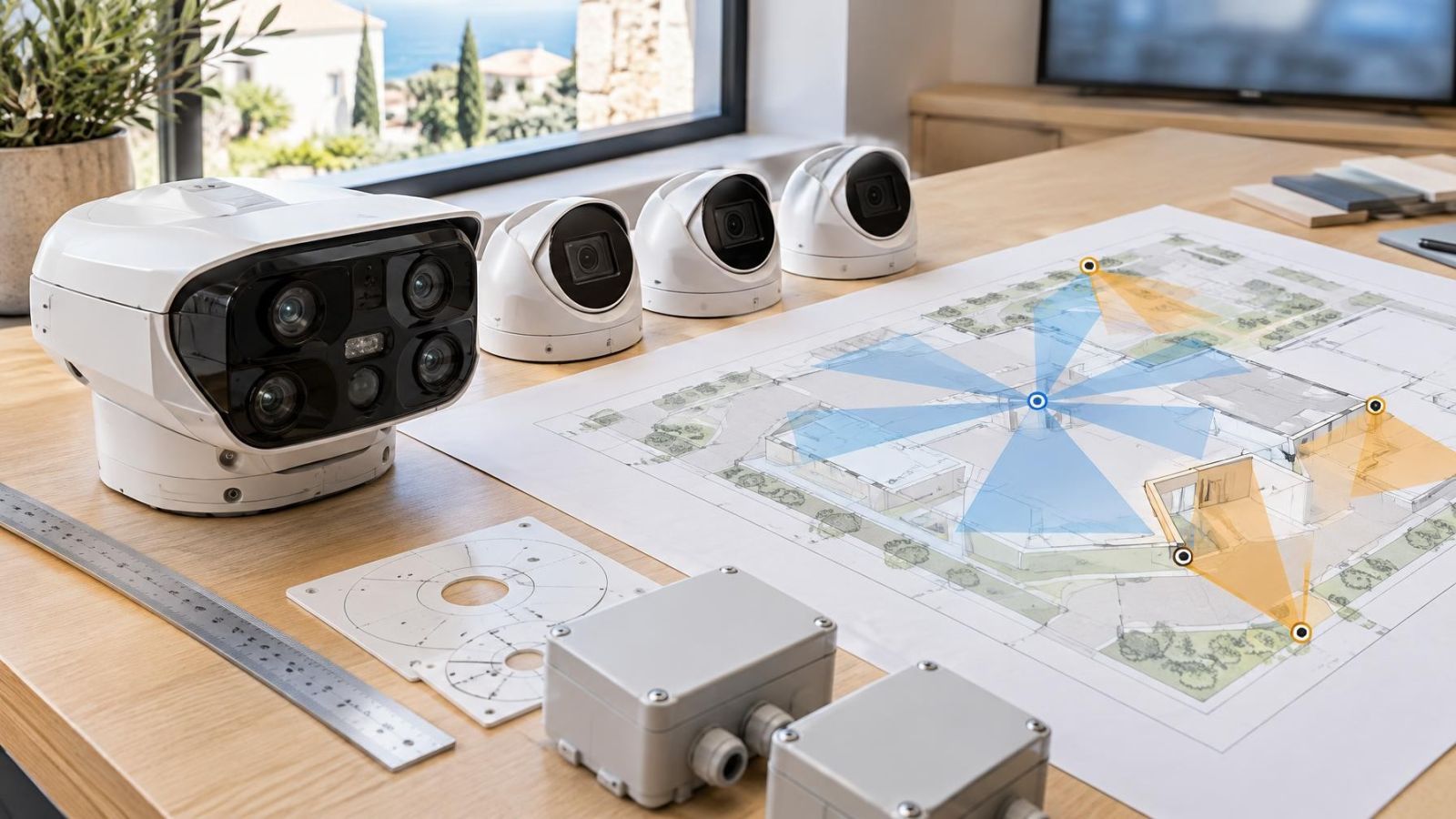
A fixed lens camera may be entirely suitable for a home entrance, while a varifocal security camera may be the better choice for a garden gate or street-front business. The difference is not simply that one lens is more advanced. It is about how much control the security camera installer needs over the final frame. This fixed vs varifocal lens comparison settles which option fits a known, stable view and which is more useful when distance, foreground or mounting position makes precise framing important.
Fixed vs varifocal lens: what each type changes
The lens determines how much of the scene reaches the camera sensor. Its focal length affects the field of view: a wider view includes more surroundings, while a narrower view places more of the captured image on the subject. The camera itself may record the same number of pixels per frame in either case. What changes is how those pixels are distributed across the scene.
What is a fixed lens camera?
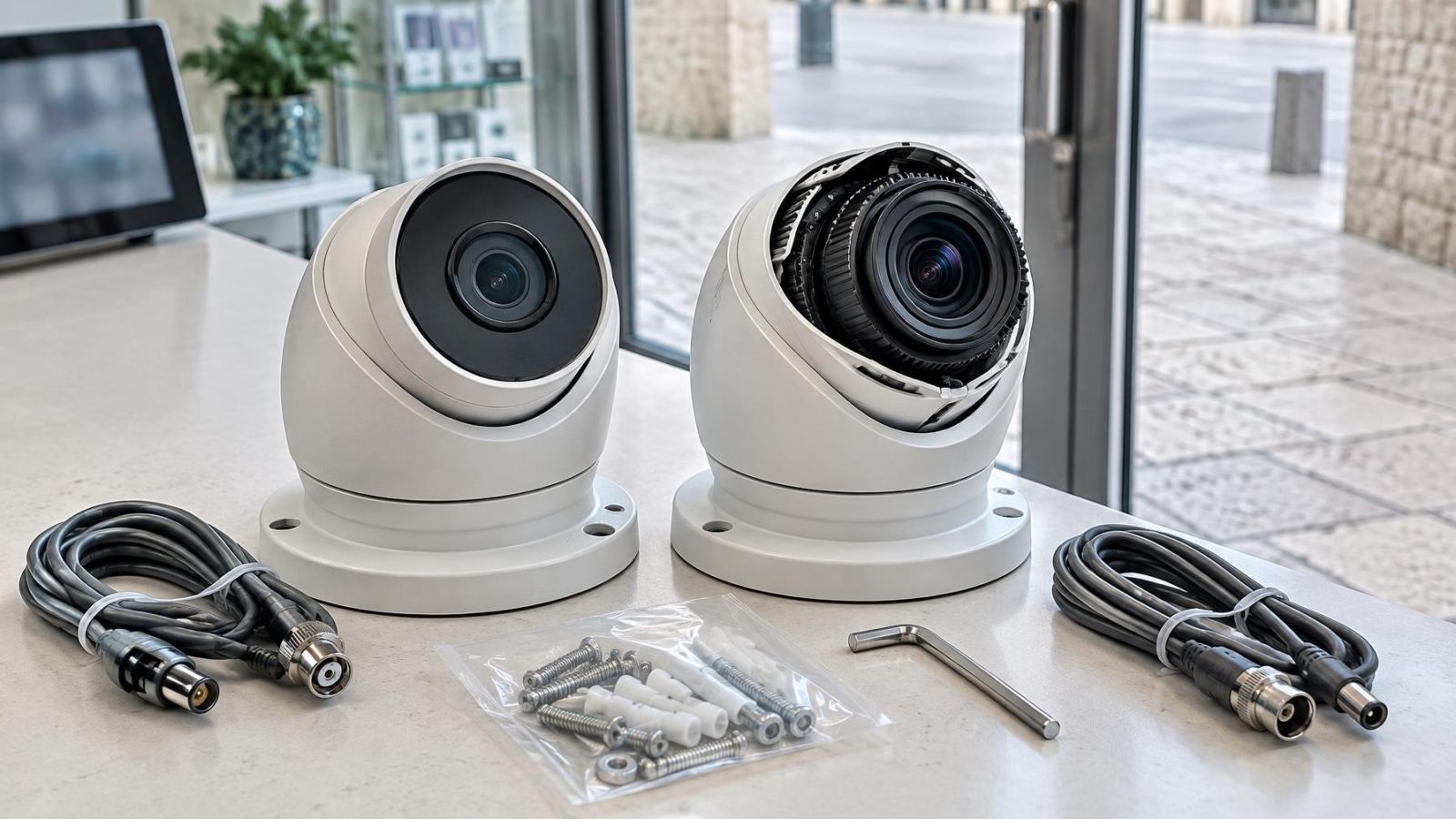
A fixed lens has one focal length and keeps the same optical field of view after installation. The installer can aim and rotate the camera, but cannot narrow or widen the view through lens adjustment. The frame is therefore largely determined by the selected lens, the mounting point and the direction in which the camera faces.
A varifocal lens has an adjustment range. During commissioning, the installer can widen the frame to include more of the area or narrow it to concentrate on a particular doorway, gate or approach path. Depending on the equipment, this adjustment is made physically at the camera or through a supported control interface.
| Lens type | Field of view | Framing after mounting | Typical reason to choose it |
|---|---|---|---|
| Fixed | Preset by the lens | Changed mainly by repositioning the camera | The required view is already known and stable |
| Varifocal | Adjustable within a defined range | Can be refined without moving the mounting point | The final subject distance or scene boundaries need on-site control |
Optical adjustment and digital enlargement are not interchangeable. Optical adjustment changes what the lens captures. Digital enlargement crops and magnifies pixels that have already been recorded. It may make a small subject easier to look at on screen, but it does not recover detail that the original frame did not capture.
The useful question is not how wide the camera can see. It is whether the required subject occupies enough of the recorded frame.
Where fixed lenses work well
Fixed lenses work well where the geometry is straightforward. A compact apartment entrance, an internal shop area or a short passage may have clear boundaries and a predictable subject distance. If a suitable mounting point gives the required frame without excessive ceiling, wall or pavement, there may be little value in adding lens adjustment.
- Compact entrances: A stable view of the doorway and immediate approach can often be planned before installation.
- Small shops: A wide-angle lens can cover a counter area or compact sales floor when general activity is more important than detail at the far edge.
- Simple commissioning: There is no focal-length setting to refine, although aiming, focus, exposure and night vision still require checking.
- Known scene boundaries: Fixed lenses are practical when furniture, partitions, gates and walking routes are unlikely to alter the required frame.
The limitation appears when the available mounting point produces the wrong composition. A fixed lens may include too much nearby wall, a large area of pavement or bright sky while leaving the important subject small. Correcting that frame may require moving the camera or choosing another lens configuration. In a finished entrance, cable route and mounting surface may make repositioning inconvenient.
When is varifocal worth choosing?
When should I use a varifocal security camera?
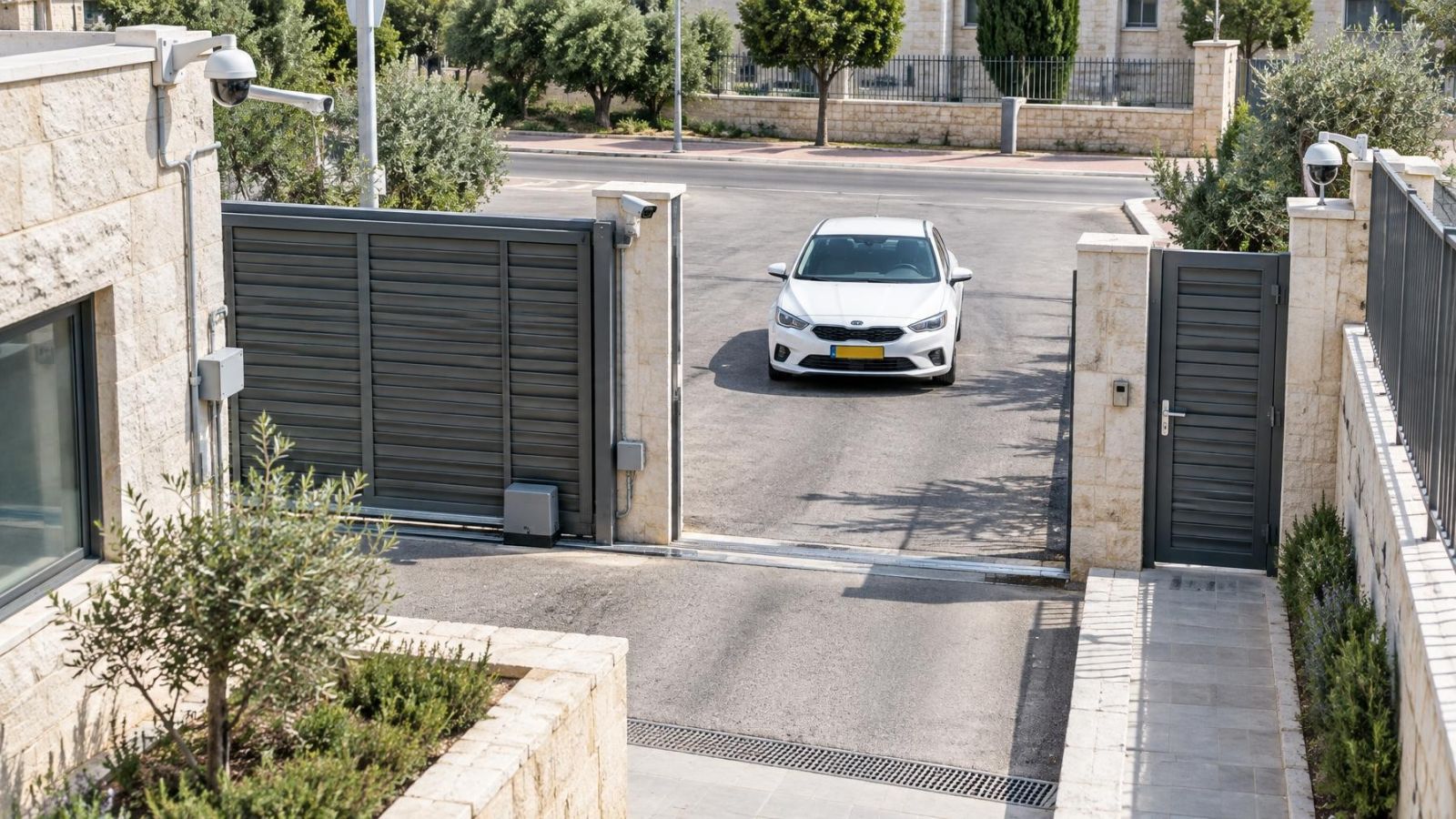
A varifocal lens is worth choosing when the mounting location is known but the exact frame cannot be settled confidently in advance. Gates are a common example. The camera may need to look past a garden, driveway or pavement and devote more of the image to the point where a person or vehicle is expected to appear.
Street-facing businesses have a similar issue. The widest available view may be dominated by the nearby awning, shopfront edge or passing foreground. Narrowing the viewing angle can exclude unhelpful areas and make the intended entrance or approach larger in the frame. The purpose is not to create more pixels. It is to use the recorded pixels more effectively.
An adjustable camera lens is also useful where the final mounting position may shift slightly because of a beam, shutter housing, pipe or suitable fixing surface. The installer can mount the camera where it is physically sound, then refine the optical frame within the available lens range.
Manual or motorized adjustment?
| Adjustment type | How it is commissioned | Access considerations | Best fit |
|---|---|---|---|
| Manual varifocal | The installer adjusts the lens at the camera and checks focus | Physical access is needed for later changes | Stable scenes where adjustment is mainly required during installation |
| Motorized varifocal | The view is adjusted through compatible camera, recorder or VMS controls | Later refinement may be possible without reaching the camera | High or awkward positions, remote properties and scenes likely to need reframing |
Motorized adjustment is convenient, but it should not be confused with continuous surveillance zoom. A varifocal camera is normally framed for a useful fixed scene and left there. Whether remote lens control is available depends on the camera and recording system. VMS (video management software) access alone does not mean every lens function can be controlled.
Future changes matter as well. A growing hedge, replacement gate, new display fixture or altered counter layout may change the useful frame. Varifocal adjustment provides some flexibility, but only within the lens range and the camera’s line of sight. It cannot see around an obstruction or correct a mounting position that looks in the wrong direction.
How does placement change the choice?
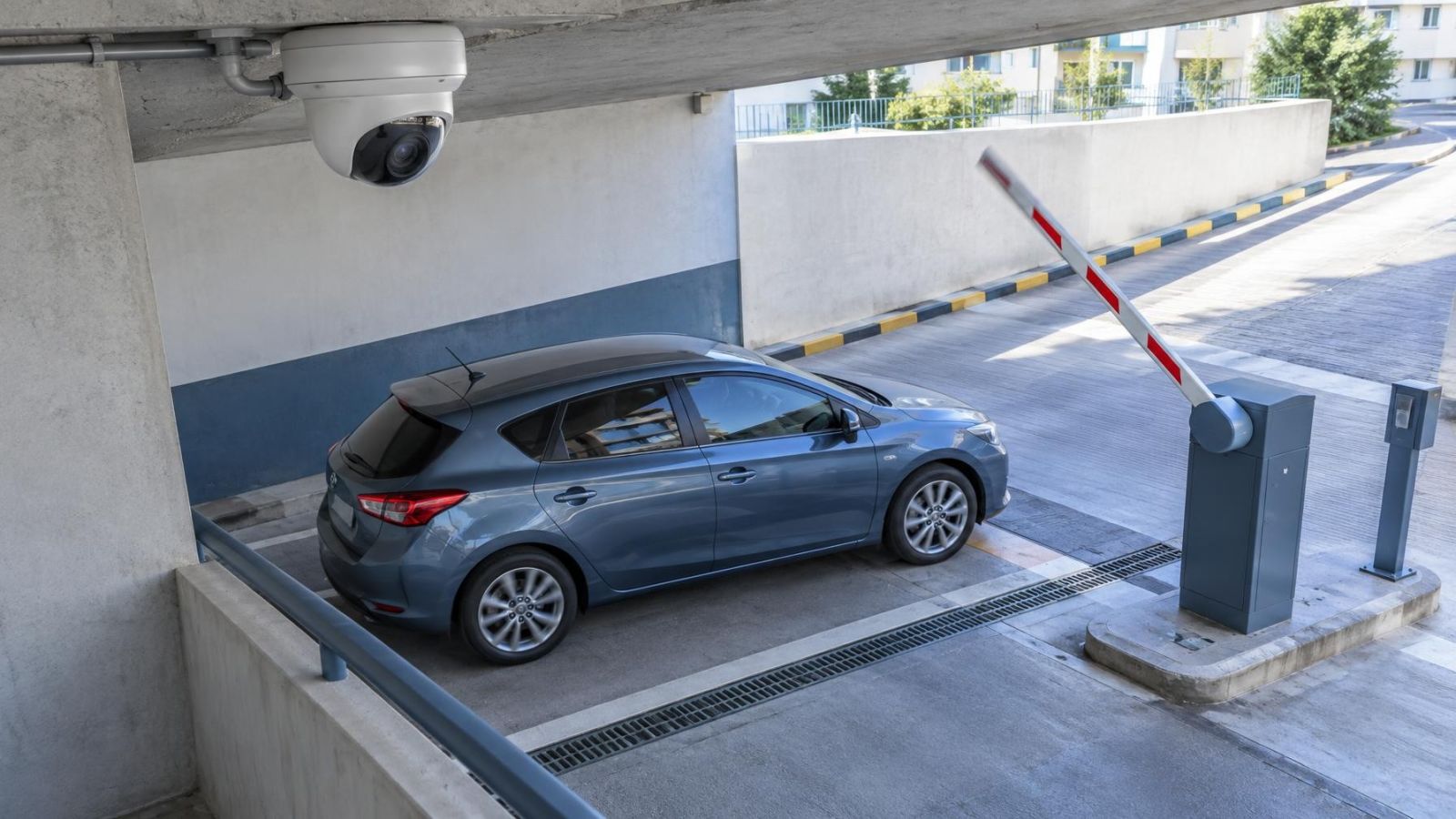
Lens selection should follow placement, not precede it. Start with the point where useful detail is required, then work back to the camera. Mounting height, horizontal distance and viewing direction all affect how large the subject appears and whether faces, clothing, packages or vehicle features are presented at a useful angle.
- Mounting height: A very high camera may produce a broad overview but a steep viewing angle. Lens adjustment can narrow the scene, but it cannot change that angle.
- Target distance: Judge detail at the doorway, gate line, counter or other required point rather than immediately below the camera.
- Obstructions: Door canopies, foliage, signs, shutters and balcony edges should be considered from the proposed camera position.
- Foreground: A bright wall or nearby path can occupy much of a wide frame and influence exposure or infrared behaviour.
- Approach direction: A person moving across the scene may be presented differently from someone approaching directly towards the camera.
Israeli sunlight can produce a severe contrast between a bright exterior and a shaded entrance. Strong backlight may reduce visible detail in the darker part of the image. WDR (wide dynamic range) can help the camera balance difficult areas, but the lens still needs a sensible frame. Including unnecessary sky, pale stone or sunlit pavement can make the exposure task harder.
Night illumination must be judged with the final framing. Infrared can reflect from a nearby wall, soffit, gatepost or foliage and make the foreground disproportionately bright. A narrow final view may also concentrate attention beyond the effective illuminated area. Test night vision after the lens has been set, not only at the widest setting used to find the scene.
For an apartment, the camera may face a private doorway, a shared landing or the building entrance. Shared entrances usually involve practical coordination with the va'ad bayit because the mounting surface, cabling and desired common-area view affect other residents. Decide the intended scene boundaries before selecting the lens; a varifocal lens is not a substitute for an agreed and clearly defined view.
Private homes often have longer and less regular sight lines between the building, garden and gate. A varifocal lens can be useful when the camera must look through a narrow opening or avoid a large area of foliage. At a street-front business, the decision often depends on whether the camera is intended to show the whole frontage or provide a tighter view of the entrance, counter or delivery point.
Common specification mistakes
Most lens mistakes begin by treating maximum coverage as the objective. A wide image can look impressive on a live screen, yet leave the important subject occupying only a small part of the recording. More scene is not automatically more useful information.
- Choosing the widest view by default: Extra wall, sky, road or shelving consumes image area that could have been used for the intended subject.
- Treating varifocal as live optical zoom: The lens is generally adjusted to commission the scene, not operated continuously to follow events.
- Confusing optical and digital changes: Optical adjustment changes captured framing; digital zoom enlarges existing recorded pixels.
- Ignoring focus: Changing the focal-length setting may require focus to be checked again. Some cameras automate part of this process, but the final image still needs inspection.
- Testing only in daylight: Sun glare, shop lighting, darkness and infrared reflections can reveal problems that are absent during a daytime setup.
- Expecting the lens to repair placement: No focal-length setting can remove a solid obstruction, improve a poor viewing direction or compensate for an unsuitable mounting height.
Another mistake is evaluating only the live view on a small installation screen. The recorded image should be reviewed through the actual NVR (network video recorder) or VMS, including playback and digital enlargement. This confirms what has genuinely been captured rather than what appears clear during a brief live inspection.
Choose from the required image
The most reliable specification process starts with the image you need, not the lens label. Define the subject, the point at which detail matters and the boundaries that should remain in the frame. Only then decide whether a preset field of view is sufficient or whether on-site optical control is justified.
- Define the subject. State whether the camera should show a whole area, a doorway, a gate, a counter or another specific point.
- Mark the useful boundaries. Identify what must remain visible and what adds no value, such as excessive sky, nearby wall or unrelated foreground.
- Confirm the mounting position. Check height, direction, cable route and physical obstructions from the camera’s actual location.
- Assess the subject distance. Review how large the required subject will be at the point where useful detail is expected.
- Check the light. Consider strong sun, shaded entrances, interior lighting, darkness and infrared reflections.
- Select the lens type. Use a fixed lens for a known and stable frame. Use varifocal when the installer needs precise optical framing at the site.
- Commission the final view. Set the field of view, check focus, inspect playback and repeat the inspection under representative daytime and nighttime conditions.
- Record the handover frame. Save clear reference views showing the final composition so a property owner, business manager or future technician can recognise unwanted movement or changed settings.
For remote property owners, the handover record is particularly useful. It should show what each camera is intended to capture, not merely that the camera is online. A labelled reference frame makes later conversations about foliage, moved furniture, changed lighting or altered camera direction much clearer.
A fixed lens is the cleaner choice when the required image is predictable and the mounting geometry supports it. A varifocal lens earns its place when real conditions make framing uncertain or when a tighter optical view is needed from an available position. Neither is inherently better. The better lens is the one that produces the required recorded image from a sound camera position, in both daylight and darkness.
Key takeaways
- A fixed lens suits a known, stable view where the camera position and required scene boundaries are already clear.
- A varifocal lens gives the installer more control over framing at the actual mounting point.
- Useful detail at the subject matters more than capturing the widest possible scene.
- Camera position, target distance, sunlight and night illumination should be assessed before the final lens is selected.