On this page
A security installation quote can combine a camera system, an alarm system, a site survey, cable routing and recording storage in a single document. Another quote may list similar equipment while leaving much of that work undefined. To compare security quotes properly, first establish whether every proposal covers the same places, performs the same functions and includes the same installation and handover work.
Compare Scope Before Equipment
Start with what the system is meant to do. Camera quantities and detector counts are meaningful only after the coverage has been agreed. One proposal may place a camera at an entrance to record everyone approaching it. Another may provide a wider overview of the same area. Both cover the entrance, but they do not provide the same recorded detail.
Ask each installer to describe the intended result at every important location. For cameras, distinguish between general observation, recognition of a familiar person and the capture of useful detail at a gate, doorway, counter or vehicle entrance. For alarms, identify the rooms, openings and external areas to be monitored, along with any areas that need different behaviour when people are present.
The property type changes the scope. In an apartment, the front door and internal rooms may be straightforward, while the shared lobby, stairwell, parking area and building entrance involve common infrastructure and decisions by the va'ad bayit. In a private home, the boundary, garden, gate and approach routes matter. A street-front business may need coverage of the entrance, customer area, stock area and service access without treating all of them in the same way.
A site survey is especially useful when proposals make different assumptions. It exposes difficult cable paths, inaccessible ceilings, shared communication cupboards, outdoor mounting conditions and places where strong sunlight will affect the view. If an installer has not visited, the proposal should clearly identify what remains provisional.
Check for assumptions hidden behind phrases such as standard installation, full coverage or remote viewing included. These terms do not define camera positions, recorded detail, cable routes, network work or account setup. Ask for the practical meaning to be written into the scope.
What Should a Security Installation Quote Include?
A useful quote should connect every item to a location and a purpose. A list of cameras, detectors and recording equipment is not enough. The proposal should show how those parts form a working system for the property and its users.
For a combined camera and alarm system, look for the following details:
- Proposed camera locations, viewing directions and the purpose of each view.
- The level of recorded detail required at entrances, gates, counters, parking positions and other important points.
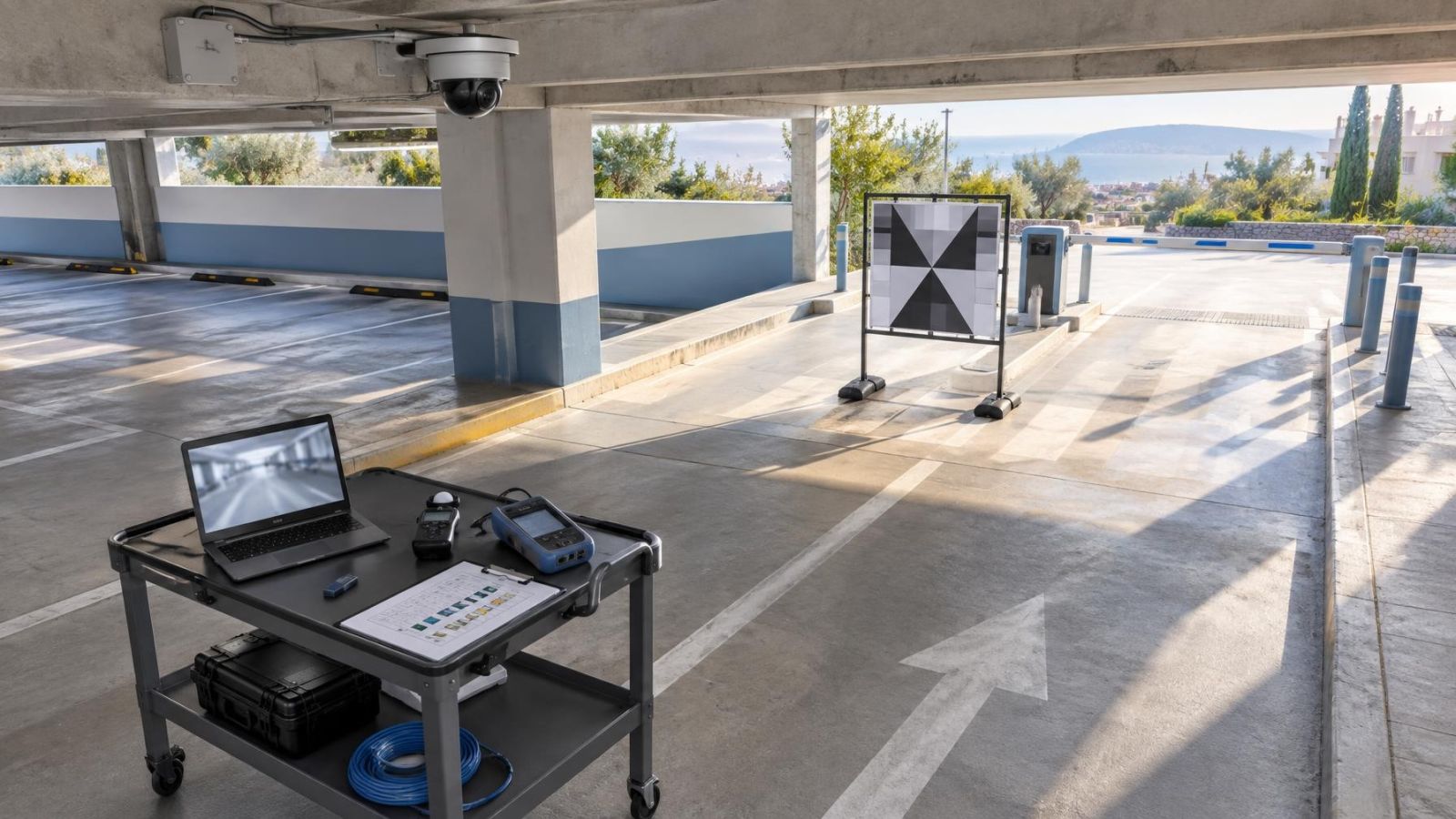
- Areas where sunlight, reflections, darkness, IR illumination or nearby surfaces may affect night vision and image quality.
- Alarm detector locations, zone names and the expected behaviour of each zone.
- The number and type of users, including owners, staff, family members, cleaners or property managers who need different access.
- Control points such as keypads, internal sounders, external sounders and any agreed notifications.
- Coverage of gardens, gates and outdoor approaches, including the difference between boundary awareness and close identification.
- Street-front views that balance the entrance, interior lighting and bright daylight outside.
Israel's strong sunlight makes entrance planning particularly important. A camera facing from a darker interior towards a bright street may need WDR (wide dynamic range), but the feature name alone is not enough. Position, angle and the expected subject distance still determine whether the recording contains the required detail.
Alarm zones also need operational context. A home may require a night setting that leaves selected internal areas usable. A business may need separate control for a stockroom or office. A remote owner may want a local property manager to have access without receiving administrator control. These are system functions and should appear in the security system proposal, not be left for the installer to discover on handover day.
Read the Technical Specification
Once the scope matches, compare the equipment specification. Read each item by role rather than by headline features. An outdoor entrance camera, a wide internal overview camera and a camera intended to capture detail at a gate have different jobs. Similar-looking specification sheets do not make them interchangeable.
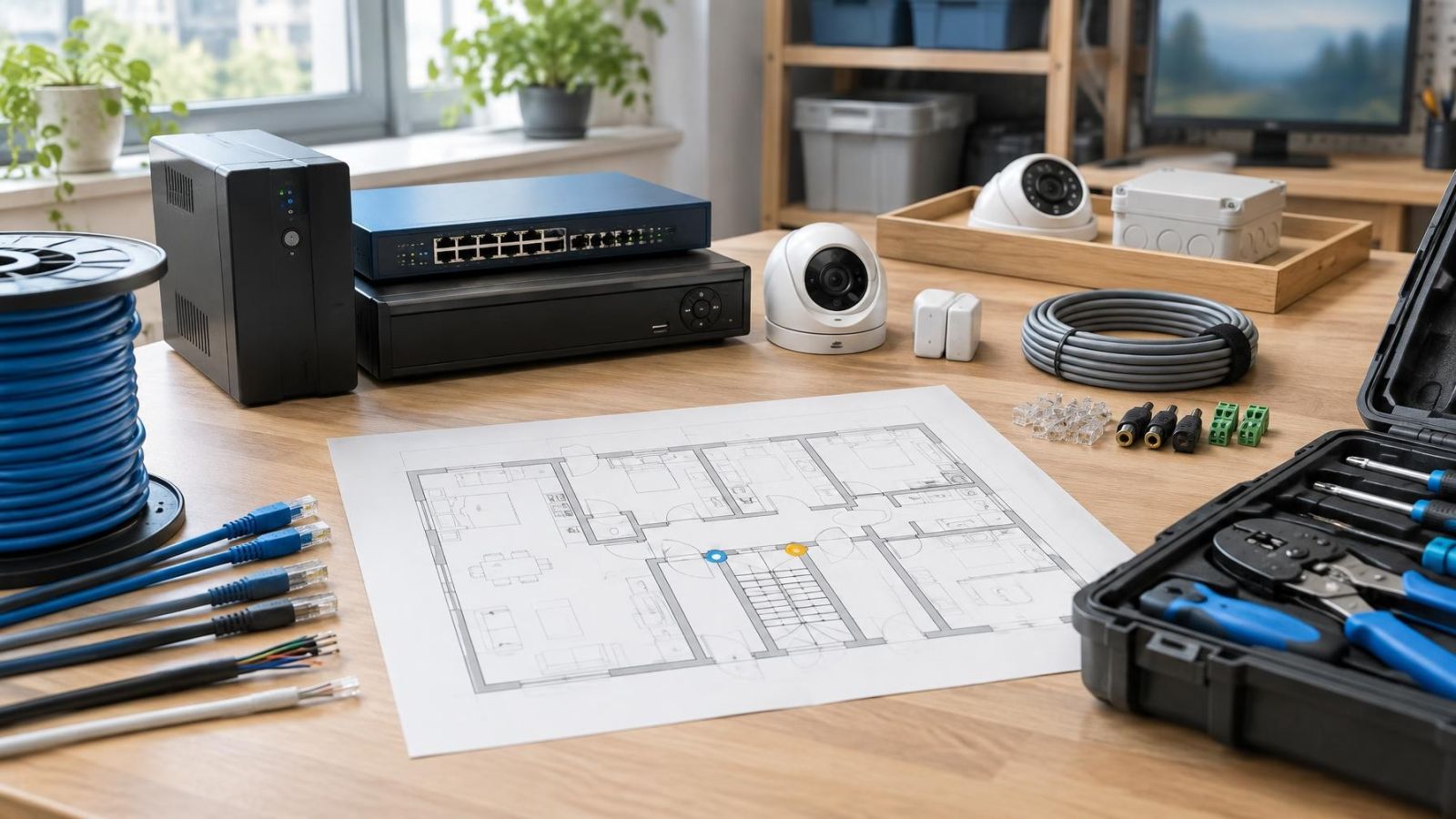
For an IP camera system, the quote may include an NVR (network video recorder), PoE (power over Ethernet) switching and network connections. Other systems may use a DVR or a VMS (video management software). The proposal should state the recording method, where recording equipment will be installed and how users will view live and recorded video.
Treat resolution as a pixels-per-frame specification, not as a complete statement of quality. Lens choice, camera position, light, compression, exposure and subject distance all affect the useful result. A higher pixel count cannot correct a poor viewing angle or a face that occupies too little of the frame.
Recording storage must have a stated basis. Capacity depends on camera settings, recording behaviour and retention needs. Continuous recording uses storage differently from motion detection recording. Scene activity, frame rate, compression and image settings also affect the result. Ask the installer to record the assumptions used, rather than accepting an unexplained retention claim.
Backup power should identify what remains powered. Supplying the recorder but not the cameras, network switch or router may leave only part of the system operating. The quote should state which devices are connected to backup power and whether the alarm system has its own provision.
Consider expansion and replacement as well. Check for spare recording capacity, available PoE ports, space for additional storage and compatibility with the proposed system architecture. No system remains frozen forever. A clear design makes later replacement or extension more manageable without promising that every future device will be compatible.
Does It Include Installation Work?
Installation work should be described as part of the deliverable, not treated as an invisible extra behind the equipment list. Cable routes, mounting methods, power provision and network work influence the appearance, reliability and serviceability of the finished system.
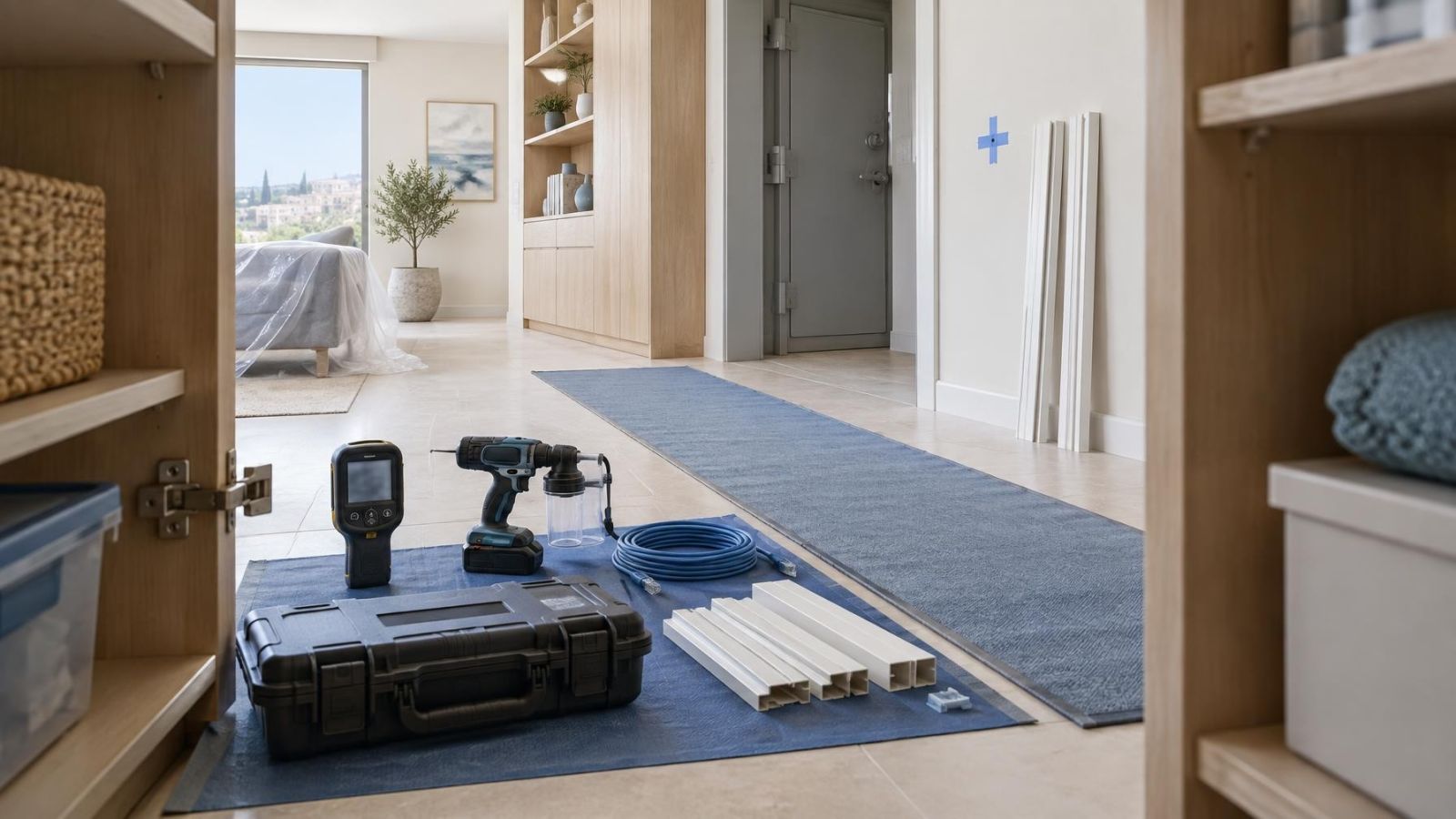
The camera alarm installation quote should distinguish visible surface cabling from concealed routes. Concealment may use existing conduits, ceiling voids, service shafts or prepared routes, but access cannot be assumed. Where concealment is not practical, the proposal should explain the expected trunking or exposed cable path and where it will be visible.
Clarify the treatment of drilling and finishes. Mounting a device may require holes through concrete, stone, plasterboard, cabinetry or an external wall. Patching, paint repair, waterproof sealing and restoration of decorative finishes are separate tasks unless the written scope includes them. The installer should also identify who moves furniture, opens specialist ceilings or provides access to locked common areas.
Power and network responsibilities need similar clarity. The proposal should state whether new power points, network outlets, switches, router changes or VLAN configuration are included. If another trade or the property owner's internet provider must complete part of the work, that dependency should be visible before installation begins.
A mamad, or safe room, is a normal part of many Israeli floor plans. Its dense walls and door can complicate drilling, cable routing and wireless communication. Concrete ceilings, stone cladding and finished gardens can create similar access constraints. The route should be inspected rather than assumed from a floor plan.
In apartment buildings, trace the route beyond the apartment itself. A cable may need to pass through a shared shaft, communication cupboard, lobby or parking area. The quote should identify which common spaces are involved and whether access or coordination remains the property owner's responsibility.
Check Configuration and Handover
A physically installed system is not fully handed over until it has been configured, tested and transferred to the people who will operate it. Quotes often describe mounting and wiring in detail while giving only a few words to this stage.
The owner should know who controls the administrator account. Personal email addresses or mobile accounts belonging to the installer should not become the permanent foundation of the system. The proposal should state who creates the main account, how additional users are added and which credentials are delivered at handover.
Remote access requires more than installing an application. The system must be connected to the appropriate network, associated with the correct owner account and tested from outside the property network. For remote property owners, it is sensible to define separate access for a local manager or family member rather than sharing one administrator password.
Commissioning should test the system against the agreed functions. Camera checks include field of view, focus, day and night behaviour, timestamps, recording and playback. Alarm checks include detector response, zone naming, entry and exit behaviour, user operation and agreed notifications. Testing should also confirm that backup power supports the devices listed in the proposal.
A practical handover includes:
- Administrator credentials transferred securely to the owner.
- Named user accounts with suitable access rather than a shared login for everyone.
- Remote access tested on the owner's intended devices and connection.
- Camera names, alarm zones and notifications labelled in clear language.
- Recording search, playback and export demonstrated.
- Passwords changed from installation defaults.
- Privacy masks, audio settings and other agreed privacy controls confirmed.
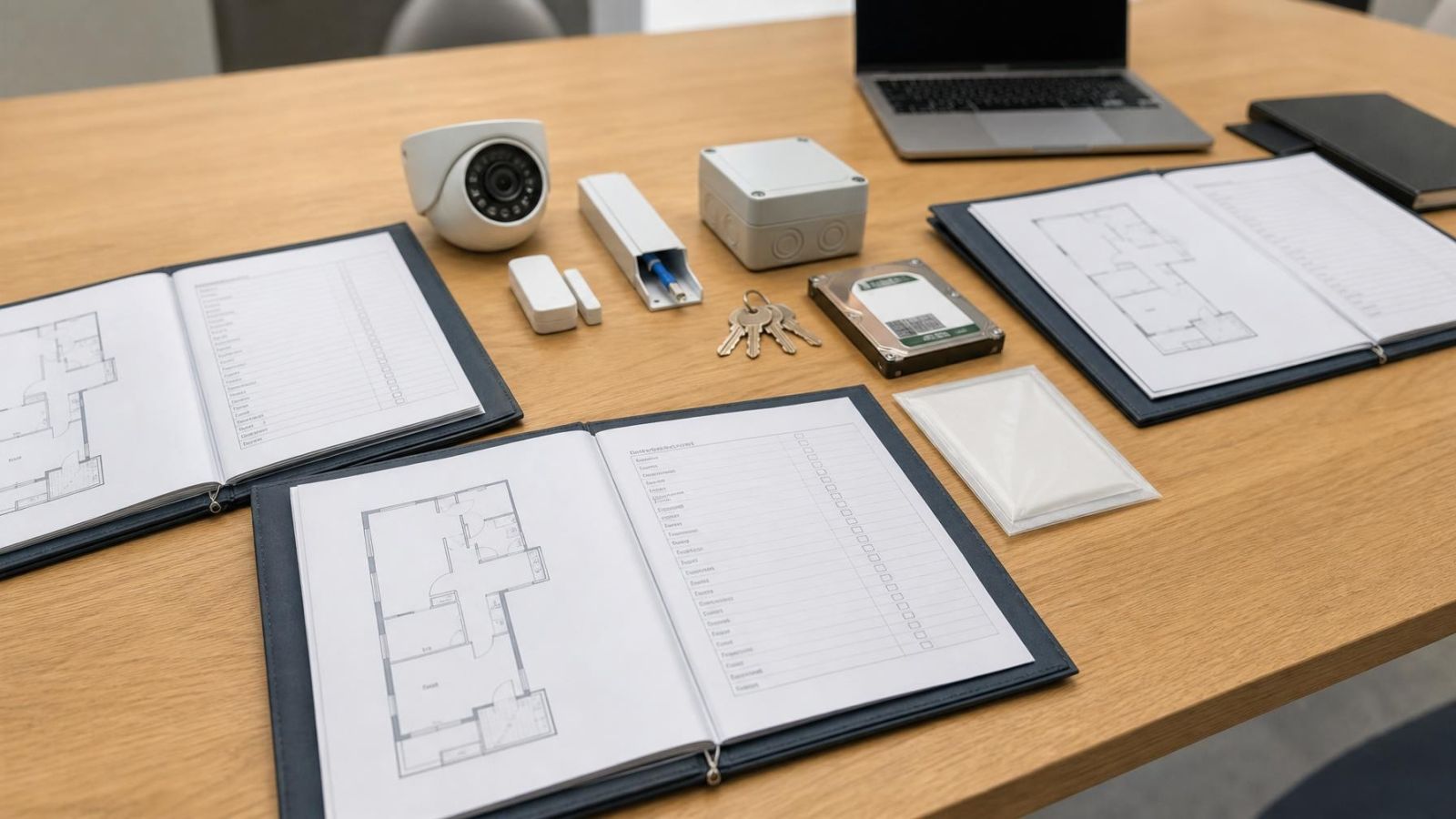
- Basic handover documentation covering equipment locations, network dependencies and routine operation.
The owner does not need to become the system engineer. The handover should nevertheless make ordinary tasks possible without calling the installer for every user change, playback request or password update.
Clarify Support After Installation
Initial installation, maintenance and ongoing support are separate services unless the proposal explicitly combines them. A statement such as support included is too broad to compare. Ask what support covers, how it is requested and what falls outside the arrangement.
Remote help may cover user guidance, account changes or configuration checks. A fault visit may cover diagnosis only, or diagnosis and corrective labour. Replacement equipment, access equipment, network faults and damage to cabling may be handled separately. None of these boundaries should depend on an informal conversation.
The proposal should distinguish equipment coverage from workmanship coverage. It should also explain the process when the cause is uncertain. For example, loss of remote viewing may come from the camera system, local network, router settings or internet connection. A clear support process identifies who investigates each layer and when another provider needs to be involved.
Maintenance should list actual tasks. Useful examples include checking recorded views, cleaning accessible camera surfaces, testing recording and playback, reviewing storage operation, checking alarm detectors and confirming backup power condition. If no scheduled maintenance is included, the document should say so plainly.
For a remote property, ask who can provide physical access for a visit and who is authorised to approve configuration changes. For a business, identify the operational contact and the person who owns administrator credentials. These simple decisions reduce confusion without giving unnecessary control to every user.
How to Compare Security Quotes: The Final Check
Build a like-for-like table only after each installer has answered the same scope questions. Do not force unlike proposals into a single equipment count. Mark an item as different, omitted or provisional whenever the intended result is not genuinely equivalent.
| Comparison area | Proposal A | Proposal B | What to resolve |
|---|---|---|---|
| Coverage | Locations and intended detail | Locations and intended detail | Missing or different views |
| Alarm functions | Zones and user modes | Zones and user modes | Operational differences |
| Recording | Method and retention basis | Method and retention basis | Assumptions behind storage |
| Installation | Routes, drilling and finishes | Routes, drilling and finishes | Excluded building work |
| Infrastructure | Power, network and backup | Power, network and backup | Owner or third-party tasks |
| Handover | Accounts, testing and documents | Accounts, testing and documents | Undefined ownership |
| Support | Included work and boundaries | Included work and boundaries | Omissions and provisional items |
Send the comparison back to each installer and request written corrections or clarifications. This is not an invitation to redesign the proposal without limit. It is a way to ensure that differences are deliberate and visible. If one installer proposes fewer cameras because each view has been planned carefully, that may be a valid design difference. If the omission is simply unexplained, it is not yet comparable.
Prefer the proposal that is complete enough to manage. Clear locations, installation methods, account ownership, storage assumptions, exclusions and support boundaries are more useful than confident but vague assurances. The strongest proposal is not necessarily the one with the longest equipment list. It is the one that describes the finished system, the work required to deliver it and the responsibilities that remain with the owner.
A quote becomes comparable when its assumptions are visible. Until then, similar equipment lists can describe very different installations.
Key takeaways
- Coverage and system functions must match before equipment lists can be compared meaningfully.
- Cabling, configuration, testing and handover are core parts of a complete installation scope.
- Recording retention assumptions and administrator account ownership should be confirmed in writing.
- Explicit inclusions and exclusions are more useful than broad promises of complete coverage or support.
- Material differences between proposals should be resolved before an installer is selected.