On this page
A pet-immune motion sensor is still a passive infrared sensor connected to an alarm system; it does not know whether the warm body in an Israeli apartment or private home is a dog or cat. The practical question is whether its filtering, position and field of view suit the animal’s real routine—or whether door and window contacts should carry more of the protection. That is the question this guide settles when planning indoor motion sensors.
Start With the Pet’s Routine
Good planning starts with the animal, not the equipment catalogue. Note the pet’s body size and, more importantly, the height at which its warm body moves. A large dog staying on the floor may be easier to plan around than a smaller cat that reaches a shelf close to the sensor.
Walk through an ordinary day. Record the routes between beds, feeding areas, water bowls, litter trays and outside access. Include what happens when nobody is home. A route that seems unimportant while the alarm is disarmed may run directly across a detection zone when the system is armed.
- List every room the pet can enter while the alarm is armed.
- Mark sofas, tables, cabinets, stairs and other surfaces the animal can climb or jump onto.
- Note doors that are normally left open and doors whose position changes during the day.
- Include feeding areas, litter trays and sleeping places that encourage repeated movement.
- Consider whether visitors, cleaners or pet carers change the animal’s usual access.
The map must describe actual habits rather than intended rules. Saying that a dog is not allowed on the sofa does not help if it uses the sofa when the home is empty. Likewise, a cat’s current route may change when a chair is moved beside a cabinet.
What should you check when choosing an alarm sensor with pets?
Check whether the proposed position sees the pet crossing the room, approaching the sensor or moving on an elevated surface. Then compare that geometry with the areas where human movement must still be detected. A pet friendly alarm sensor is only a suitable choice when the room layout lets its filtering work under normal conditions.
How Does Pet Immunity Work?
A passive infrared sensor reacts to changes in thermal energy moving across its detection field. The optical arrangement divides that field into zones. A warm body crossing between zones produces a changing pattern that the sensor evaluates.
Pet immunity is filtering, not animal identification. The sensor does not see fur, recognise a species or know the pet’s weight. It assesses the thermal and movement pattern reaching it. A person far from the sensor and an animal very close to it can therefore produce patterns that are less distinct than the labels suggest.
What does a pet immune motion sensor actually ignore?
It is designed to disregard some movement patterns that are consistent with pets moving in the expected part of the field. The result depends on mounting height, angle, distance, room geometry and the animal’s route. A pet close to the sensor can appear more significant than the same animal farther away because it occupies more of the sensor’s effective view.
Sensitivity is not a substitute for correct placement. Turning sensitivity down may change how readily the sensor responds, but it can also weaken useful detection in the area being protected. It does not remove a shelf from the field of view or stop a cat approaching at sensor height.
Several animals moving together can also create a more substantial thermal pattern than one animal moving alone. Planning should therefore use the household’s real number of pets and their shared routines, not an isolated test with one calm animal.
Pet immunity is a filter applied to movement patterns, not a declaration that every movement made by a pet will be ignored.
Map Each Indoor Motion Sensor Detection Zone
Draw each room as it is used. Mark doors, windows, fixed cabinets, tall furniture and the route toward spaces that need protection. The aim is to understand how movement crosses the detection zone, not simply whether the sensor can see the whole floor.
Crossing movement is usually more useful to the design than movement heading directly toward or away from the sensor. Positioning should therefore consider likely approach routes through doors, from corridors and across open-plan living areas. In a compact apartment, one sensor may see parts of several circulation paths, but that broad view can also include more pet activity.
Open-plan spaces need particular care. A living room, dining area and kitchen may form one visual field while giving the pet many routes at different distances. Corridors are narrower, but stairs, landings and furniture near their ends can place an animal higher in the field.
A mamad is the protected room commonly built into an Israeli floor plan. Its walls and doorway often create a firm visual boundary within the home. Treat it as a separate room when sight lines stop at the doorway; do not assume a sensor outside covers movement inside. If the mamad is used as a bedroom, office or pet-access room, its normal use should be included in the arming plan.
Finally, check for blind spots created by furnishings. A tall cabinet can hide part of an approach route. A sofa may block floor-level movement but also give a cat an elevated platform. The same object can improve one part of the geometry and undermine another.
Choose Stable Mounting Positions
Use the mounting height and orientation specified for the particular sensor. The internal optics are designed around that geometry. Mounting higher, lower or at an improvised angle changes where the detection zones fall, even if the sensor still appears to cover the room.
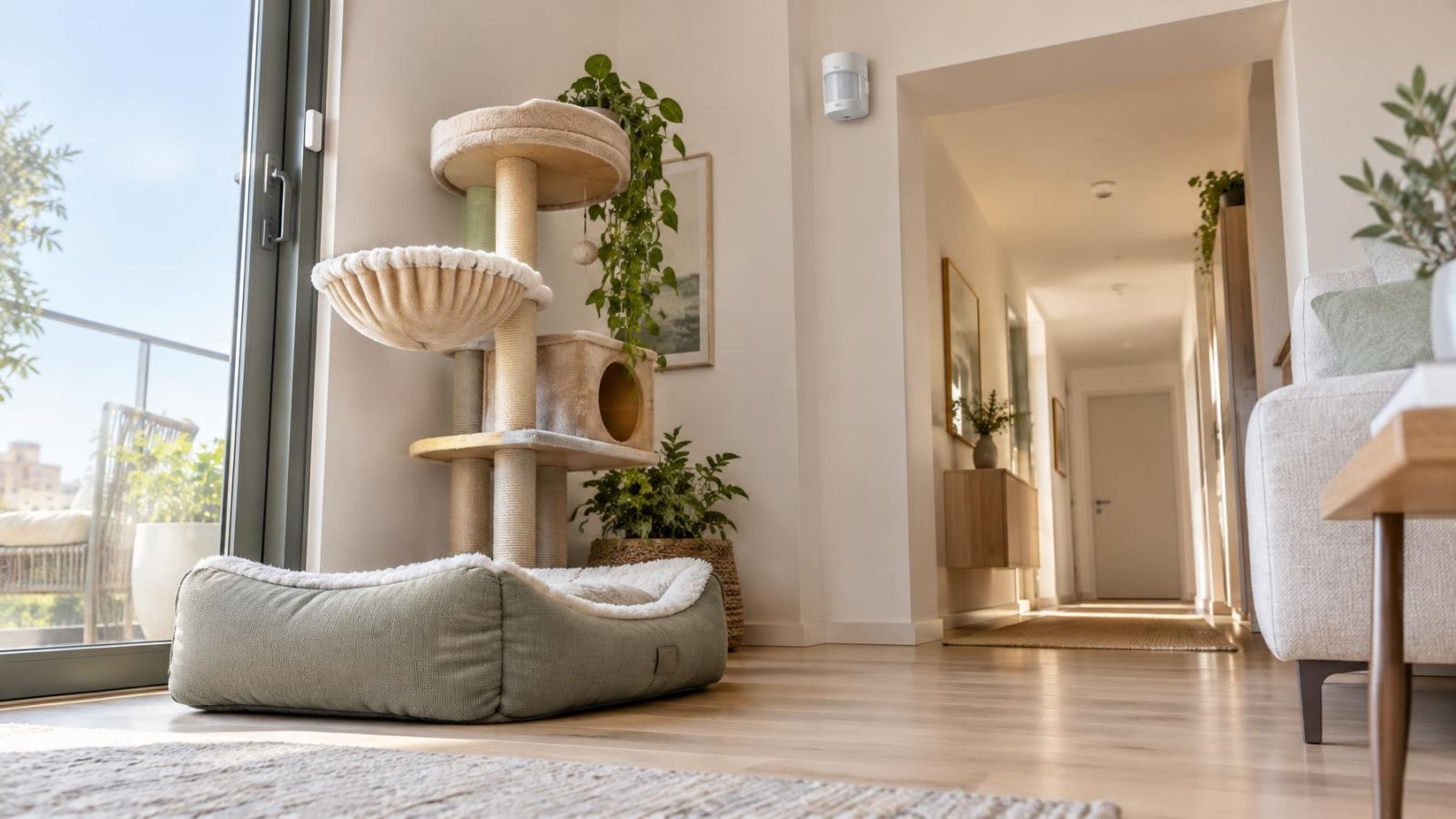
Keep the position away from furniture that a pet can climb. This matters especially near bookcases, kitchen counters, wardrobes and the back of a sofa. A floor route at a sensible distance may be filtered, while the same animal jumping onto nearby furniture can enter a part of the field associated with human movement.
Stairs and landings create a similar problem. The animal’s height relative to the sensor changes as it climbs, and it may pass close to the unit. A sensor facing a staircase should be selected and positioned only after the vertical route has been considered.
- Avoid direct sunlight reaching the sensor or moving through its field.
- Keep changing heat sources, including strong flows of heated or cooled air, out of the immediate view where practical.
- Do not allow curtains, hanging decorations or large plant leaves to obstruct the field.
- Choose a rigid wall position that is unlikely to be knocked or redirected.
- Confirm that an open door cannot block the sensor or create a new path close to it.
Strong window glare is not the only concern. Sunlight shifts across a room, and surfaces near a bright window can warm unevenly. A position that looks stable during one visit may behave differently when the sun reaches another part of the room. The installation assessment should therefore consider the window orientation and the full area through which direct light travels.
Where should a motion detector for dogs be placed?
Place it where the dog remains in the intended lower part of the detection field and cannot approach closely from furniture, stairs or a raised landing. The sensor should still observe the human approach route being protected. For a large dog, body height and proximity can matter as much as floor route, so a label alone is not enough.
What Makes Cats More Difficult?
Cats use vertical space. They jump onto window ledges, shelves, sofa backs, counters and wardrobes, sometimes creating a route that passes close to the sensor. Once elevated, a cat can enter detection areas intended to respond to human movement.
Curtains can become both a climbing route and a moving object within the field. Tall furniture creates intermediate landing points. An apparently unreachable shelf may become accessible when a chair, box or cat tree is moved beside it. This makes the room’s future arrangement part of the alarm design.
Vertical routes are also less predictable than a dog’s usual path along the floor. A cat may spend weeks using one route and then discover another. The design should not depend on a single assumption such as “the cat never goes there” when the surface is physically accessible.
- Keep sensors away from likely launch and landing points.
- Avoid positions beside shelves, curtain rails and tall furniture.
- Check window ledges, kitchen surfaces and the tops of internal partitions.
- Retest after moving furniture or adding climbing structures.
- Review access whenever a previously closed room becomes available to the cat.
Where climbing cannot be separated from the field, unrestricted interior motion detection may not be the most stable approach. It can be more practical to omit that room from an armed interior zone and protect selected doors or windows instead.
Plan Around Israeli Homes
Israeli homes often place strong sunlight, compact circulation and powerful air conditioning in the same small area. These are not reasons to avoid passive infrared detection. They are reasons to inspect the room rather than choosing a position from a floor plan alone.
In apartments, a short corridor may connect bedrooms, a mamad and an open living space. One position can appear to offer convenient coverage, yet also face a bright balcony door, an air-conditioning outlet and the pet’s route to food. Moving the sensor to a less central wall can produce a more stable field while preserving the important approach path.
Air-conditioning outlets deserve attention because they can create local temperature changes and move curtains or plant leaves. The issue is not simply whether an outlet is present. Check where the air travels, what it moves and whether that movement occurs while the system is armed.
Private homes add garden doors, gates and pet doors. A dog moving between the garden and living area may repeatedly cross an interior field or approach a sensor at close range. If that access stays open while the alarm is armed, perimeter protection at other selected openings may be a better foundation than broad interior coverage.
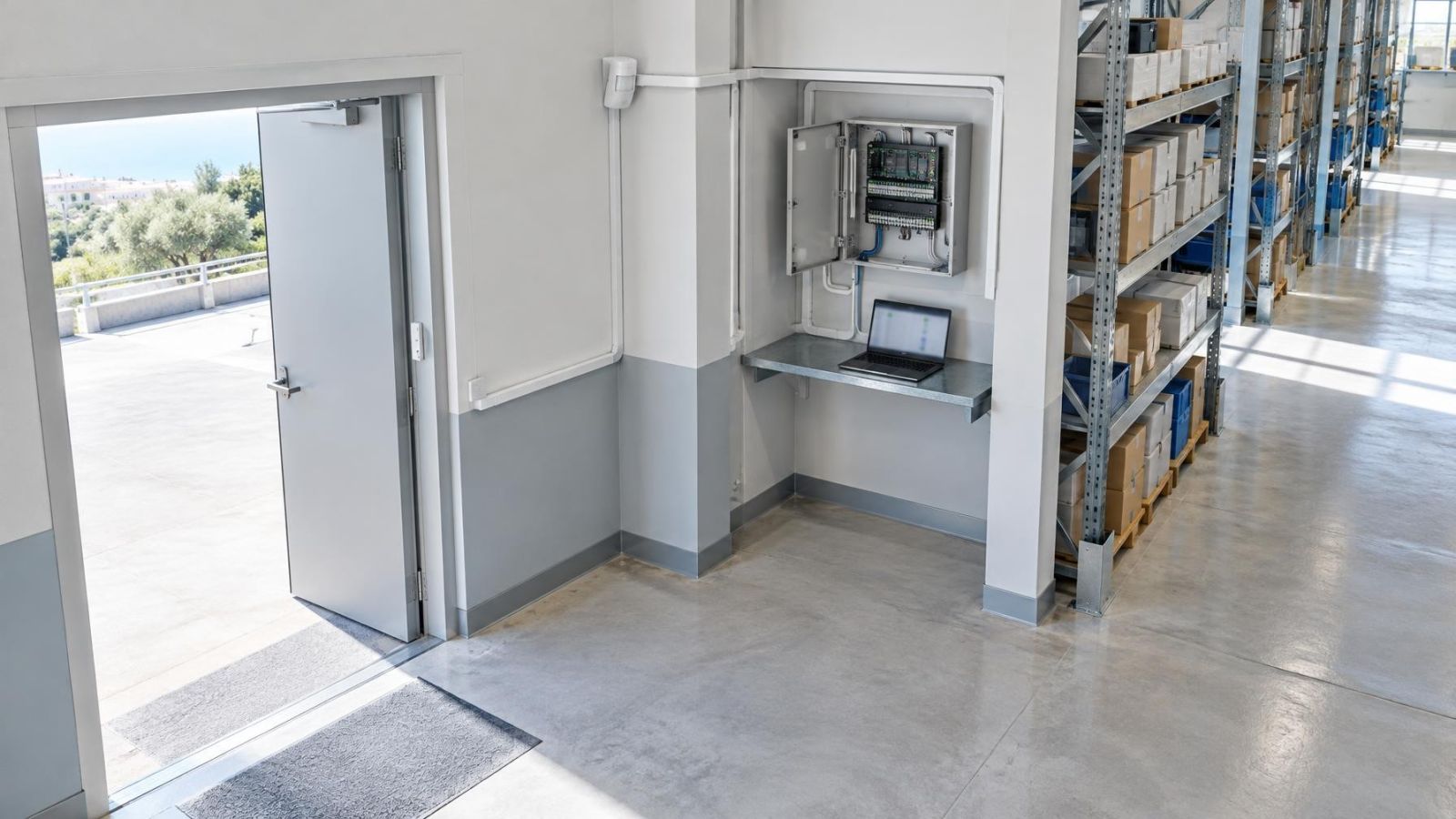
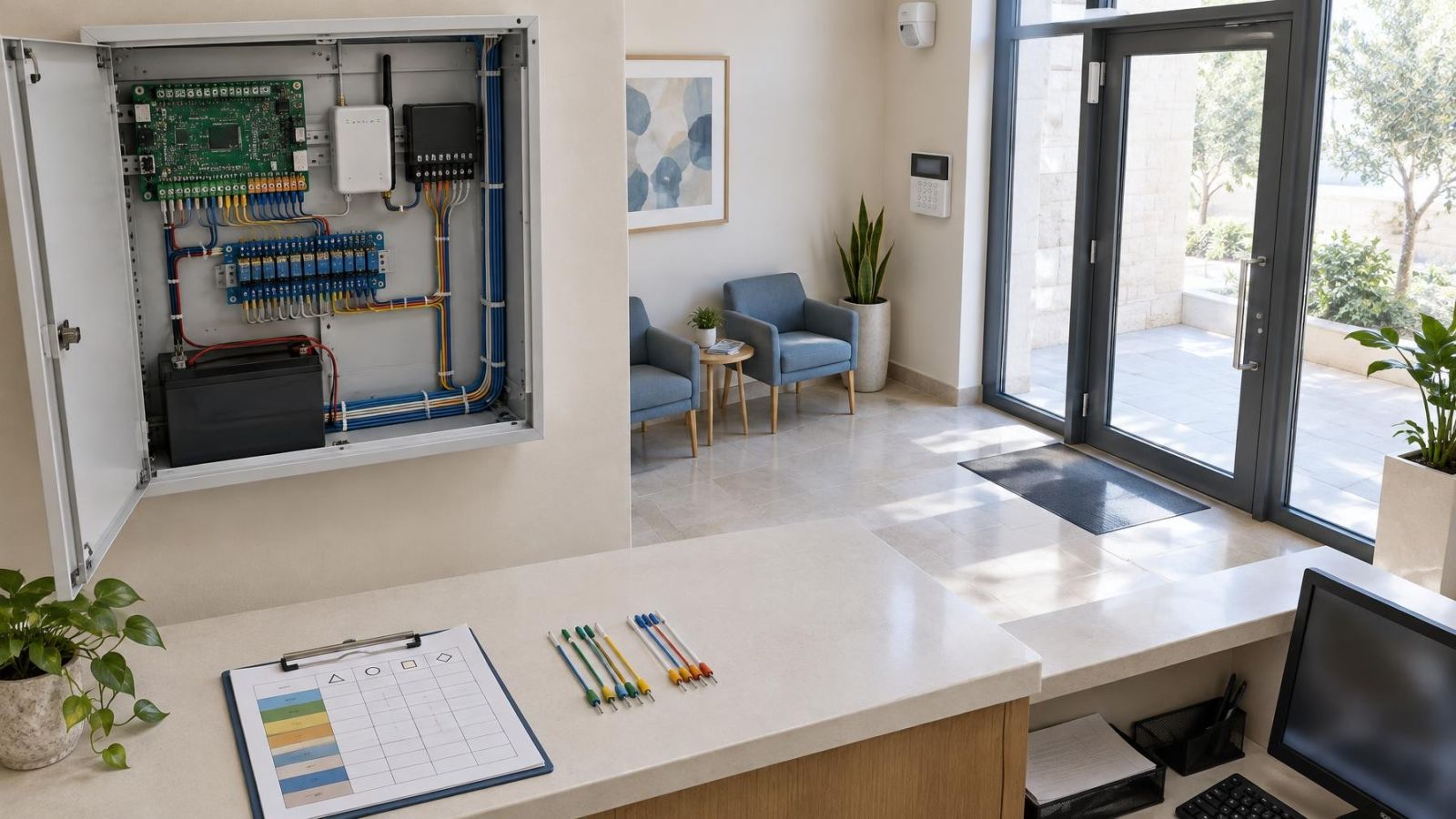
Small businesses on street frontage have different routines but similar geometry. An owner may bring a dog to the premises, while sunlight and pedestrian movement remain visible through the entrance glazing. The indoor sensor should not be aimed as if the glass frontage were a neutral wall. Entry contacts, internal doors and controlled zones can separate the public-facing area from stock, office or service spaces.
Decide the Protection Strategy
The choice is not between having interior sensors everywhere and having no useful alarm coverage. Interior detection and perimeter protection perform different jobs. A balanced design can use each where its behaviour suits the space.
| Approach | What it monitors | Pet-planning advantage | Main planning limit |
|---|---|---|---|
| Interior motion detection | Movement within selected rooms or circulation areas | Covers movement after entry where the field remains stable | Pet routes, climbing and changing room geometry can affect response |
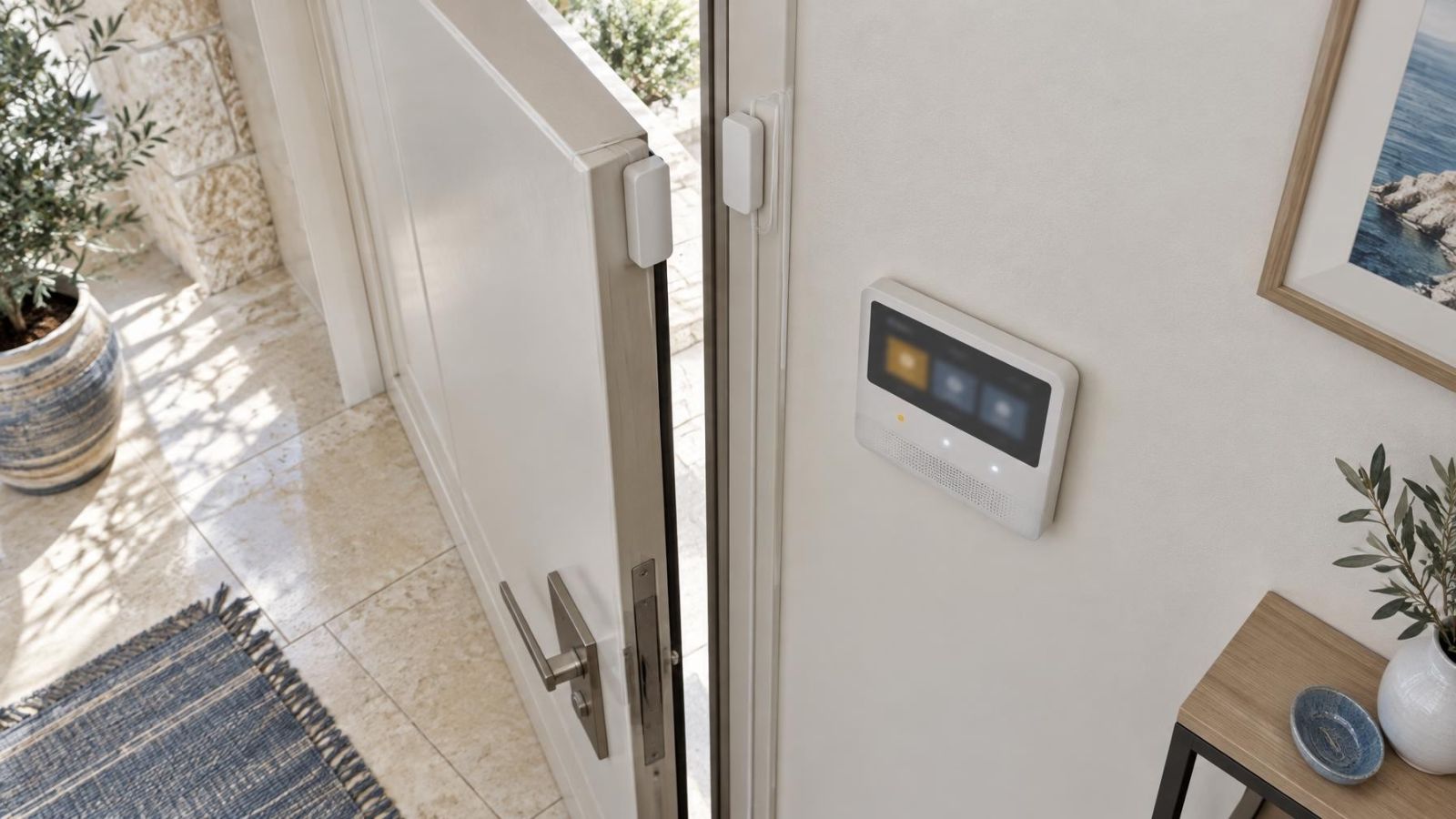
| Door and window contacts | Opening of selected doors and windows | Pets can move indoors without crossing an interior field | Only the fitted openings are monitored |
| Zoned interior detection | Movement in rooms kept outside the pet’s access | Preserves interior detection in sensitive spaces | Doors and access rules must remain consistent |
| Layered detection | Selected openings plus chosen interior routes | Allows different parts of the property to be planned separately | Requires careful arming choices and clear daily operation |
A common strategy is to allow free movement in designated rooms while excluding those rooms from interior detection during pet-access periods. Door and window contacts then monitor selected openings. Other rooms, such as storage areas, offices or rooms the pet cannot enter, can retain interior detection.
Layering is useful when one method cannot describe the whole property. A street-front business may use an entry contact at the main door, interior detection in a staff-only area and a separate arrangement for the room where a dog stays. A private home may protect accessible doors and windows while keeping motion detection in a closed upper floor or study.
The system should also be understandable to the people using it. If remote owners, guests, cleaners or pet carers need different arming modes, the zone names and operating choices should make the permitted pet area clear. A technically sound plan can still be inconvenient if daily users cannot tell which areas may remain occupied.
How should pet-aware detection be tested?
Test with the home or business arranged as it is normally used. Run the air conditioning, place curtains and plants in their usual positions, and let the pet follow ordinary routes without being encouraged toward the sensor. Check beds, feeding points, stairs and favourite furniture at different distances from the unit.
Then test the human approach routes the alarm is intended to monitor. Pet filtering is not successful if the chosen angle also leaves the important route poorly observed. The final position must satisfy both sides of the design: ordinary animal movement should fit the planned filtered area, while relevant human movement remains within the effective detection field.
For remote property owners, document which internal doors should stay open or closed, which rooms permit pets and which arming mode matches that arrangement. Clear operating notes matter because a visitor may otherwise change the layout on which the sensor placement depends.
Final placement is always room-specific. Product filtering can support a well-planned installation, but it cannot correct unstable heat, an accessible shelf beside the sensor or a pet route that was never included in the design. Start with the routine, map the field, choose stable positions and use perimeter protection wherever free indoor movement makes interior detection unsuitable.
Key takeaways
- Pet immunity filters movement patterns rather than identifying whether the moving heat source is a person or an animal.
- Sensor placement should reflect the pet’s real routes, body height, climbing behaviour and access to furniture.
- A stable mounting position stays away from direct sunlight, changing heat sources, moving curtains and climbable surfaces.
- Door and window contacts can protect selected openings while pets continue to move freely indoors.
- Final testing should reproduce normal household conditions, including ordinary pet movement, curtains, air conditioning and furniture positions.