On this page
A PIR alarm sensor and a dual-technology motion sensor can look almost identical on the wall, yet they evaluate a room differently. One relies on passive infrared. The other can combine passive infrared with microwave detection before the indoor alarm system reports movement. In an Israeli property, the decision may also be shaped by strong sunlight, air conditioning, pets and wireless communication around a mamad, or safe room. The practical question for you and your alarm installer is simple: does the room need a well-positioned PIR detector, or is a second sensing method genuinely useful?
PIR vs dual tech?
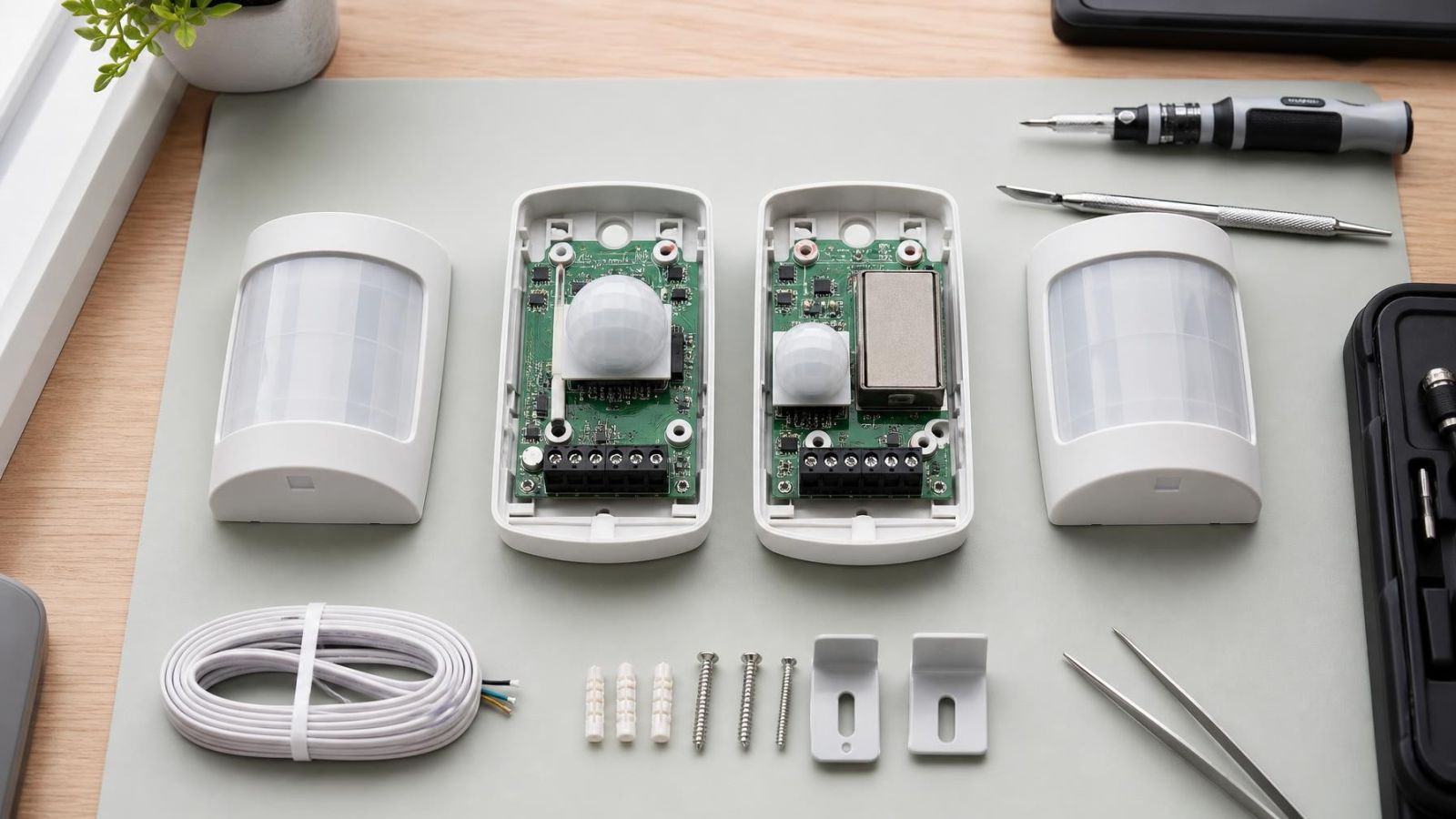
A PIR detector responds to changes in infrared energy within its detection pattern. It does not produce a thermal image. Its lens divides the room into detection zones, and movement across those zones creates the change that the sensor evaluates. A person crossing the room usually creates a clearer change than someone moving directly towards the detector.
When is a PIR alarm sensor enough?
PIR is often the sensible choice for a stable bedroom, corridor, office or storeroom. The room should have a clear detection path, limited movement when unoccupied and no strong heat source aimed at the detector. Simplicity is useful. There are fewer sensing variables to configure, and a good installation can be tested in a straightforward way.
A dual technology motion sensor evaluates passive infrared and microwave detection under its configured logic. In a common alarm configuration, the detector looks for confirmation from both technologies before reporting movement. The exact behaviour depends on the detector and its settings, so “dual” should not be treated as a complete description of the decision logic.
Microwave detection responds to movement differently from passive infrared. This can be valuable where changing heat, moving air or a complicated room layout makes PIR-only detection difficult to manage. It also introduces another detection pattern that must be adjusted. Depending on the construction and settings, microwave energy may respond to movement beyond the intended part of a room. More technology therefore requires more careful commissioning, not less.
| Factor | PIR | Dual technology |
|---|---|---|
| Sensing method | Changes in infrared energy | Passive infrared plus microwave evaluation |
| Best fit | Stable, predictable indoor rooms | Rooms with difficult environmental conditions |
| Configuration | Placement and sensitivity | Placement, sensitivity and confirmation logic |
| Main planning concern | Heat and movement across the pattern | Interaction of two detection patterns |
| Testing requirement | Full installed walk test | Walk test of both technologies and reporting logic |
Match the sensor to the room
Start with the room rather than the detector catalogue. A stable bedroom or internal corridor usually presents a simple task: controlled lighting, limited air movement and a predictable route through the space. A correctly placed PIR detector may be entirely appropriate. An extra sensing method adds little if the room itself is uncomplicated.
Street-facing shops and offices need a closer look. Their glazed fronts may receive direct sunlight and reflected glare. Entrance doors introduce warm or cool outside air. Signs, displays and stock can alter sightlines. A dual-technology detector may be useful in some of these spaces, but it cannot correct a poor view across the shop or a detector aimed into unstable conditions.
Sunlight, glazing and changing heat
Direct sunlight on a detector, or moving through the area it watches, can make motion detection less reliable. Large windows can also create sharp temperature changes across floors and furniture. The first response should be to reconsider the mounting position and angle. Choosing a more complex detector without fixing the exposure leaves the main installation problem in place.
Air-conditioning outlets deserve the same attention. A detector should not sit in the direct path of conditioned air, especially where the airflow moves curtains or plants. Other unstable heat sources can also complicate performance. The relevant question is not whether the room has air conditioning, which is normal in Israel, but whether moving air or changing heat crosses the detector’s working area.
Mamad walls and wireless planning
A mamad is a reinforced safe room and a normal part of many Israeli floor plans. Its construction can affect wireless communication. A wireless detector may perform correctly inside the room while its connection to the alarm control panel is less dependable than expected. Sensor type and communication path are separate decisions. Test the actual signal path with the door in the positions in which it is normally left, and consider a wired route or an adjusted system layout when needed.
Near the coast, indoor humidity and fine dust also deserve routine attention. Neither condition automatically calls for dual technology. Use equipment suited to the indoor environment, keep the detector lens clean and inspect for condensation or dust accumulation during maintenance. A dirty lens changes the optical conditions seen by a PIR detector; added microwave sensing is not a substitute for upkeep.
Account for pets and movement
Pet-tolerant settings are useful, but the phrase “pet immunity” can create the wrong expectation. Performance depends on the animal’s size, movement and access to elevated surfaces. A small cat on top of a cabinet may appear differently to the detector than the same cat on the floor. An active dog moving close to the sensor can present another pattern entirely.
Map the surfaces a pet can reach before selecting the mounting point. Sofas, window ledges, shelves, stairs and counters can place an animal inside a more sensitive part of the detection pattern. Moving the detector or changing its angle may be more effective than relying on a sensitivity setting. Furniture should be assessed as part of the room, not as decoration that can be ignored.
- Curtains: Check whether air conditioning or an open window causes them to move through the field of view.
- Plants: Keep large leaves away from airflow and away from the detector’s immediate foreground.
- Hanging objects: Signs, decorations and suspended lights can move after a door closes or ventilation starts.
- Robot cleaners: Include their operating route and schedule when assessing low-level movement.
- Pet furniture: Treat climbing trees, shelves and feeding stations as accessible surfaces.
Routines matter as well. A family may arm only the ground floor at night while people and pets remain upstairs. A business may have cleaners, deliveries or staff moving through selected areas outside normal opening hours. These patterns may call for separate zones, adjusted arming choices or a different detector position. They do not automatically call for a different sensing technology.
Pet tolerance is a room-planning task, not a single detector setting.
Where should the detector go?
Where should an indoor alarm motion detector be installed?
The detector should usually watch people move across its field of view rather than directly towards it. A corner position can provide a useful diagonal view of a room, but only if doors, tall furniture and changing displays do not block the detection pattern. The correct installation height and angle come from the detector’s intended geometry, not from whichever wall area is easiest to reach.
Avoid placing the detector where low or direct sunlight reaches its face. Also avoid aiming it towards strongly sunlit windows when another position can cover the same approach. In a glazed entrance, the best position may watch movement into the premises from the side rather than looking straight through the doorway.
Keep separation from air-conditioning outlets, heaters and other unstable heat sources. The issue is both thermal change and physical movement: airflow can move curtains, lightweight signs and plants. A detector placed above an outlet may look neat while receiving exactly the conditions that make its work more difficult.
Doors and furniture also require a three-dimensional view. An open door can mask part of the room. A tall cupboard can create an unseen route. In a shop, a seasonal display may later occupy space that was clear during installation. The plan should therefore identify the protected approach, the expected furniture layout and anything likely to change.
An alarm installer should use the detector’s specified mounting guidance as a starting point, then adapt it to the actual room. Mounting higher, tilting farther or increasing sensitivity is not a general solution. Each adjustment changes the pattern, including how it interacts with pets and nearby movement.
Test the complete alarm zone
A walk test checks the installed detection pattern. It is more useful than relying on a product description because walls, doors, furniture and mounting angle all affect the real coverage. Test from each likely approach, including the entrance route, side routes and any path that passes close to the detector.
- Place the system in its test mode and confirm which detector and zone are being observed.
- Leave the room long enough for the detector to settle according to its operating behaviour.
- Walk across the intended coverage area from each realistic approach, using a normal pace.
- Check the edges of the room, routes beside furniture and areas partly masked by open doors.
- Repeat relevant paths under the detector’s configured sensitivity and confirmation settings.
- Confirm that the alarm control panel receives and identifies the expected zone report.
Testing should include changing light conditions where sunlight enters the room. A room that is stable with blinds closed may behave differently when low-angle sunlight reaches the floor. Air conditioning should also be tested in its normal operating state. If curtains or plants move when the system runs, that movement belongs in the test.
For homes with pets, test every accessible surface rather than only the floor. Consider where an animal jumps, rests or passes close to the detector. The aim is not to make the detector ignore movement generally. It is to understand whether the installed geometry and selected pet-tolerant behaviour suit that particular room.
With dual technology, verify more than the final alarm indication. The installer should confirm that passive infrared and microwave detection cover the intended area and that the configured confirmation logic reports as expected. Excessive microwave range, weak edge coverage or unsuitable sensitivity can be hidden if testing checks only whether one central walk produces a report.
Choose by conditions, not labels
Choose PIR for predictable indoor environments where heat, airflow and movement can be managed through good placement. Bedrooms, internal corridors and orderly office areas often fit this description. PIR is not an inferior option. In a suitable room, it is the direct answer to a straightforward detection task.
Consider dual technology where the environment is genuinely harder to control. Examples include some glazed entrances, busy commercial layouts and rooms with complicated thermal or movement conditions. The second sensing method provides additional information under the configured logic. It does not repair blocked sightlines, direct sun on the detector or careless positioning.
Compatibility with the alarm control panel must be checked before selecting either type. Confirm the required power, wired or wireless communication method, zone behaviour, tamper reporting and any detector status the panel can actually use. A detector may be technically capable of several behaviours while the connected system exposes only part of them.
Professional placement should come before added complexity. If moving a detector provides a cleaner view and removes direct airflow, that is usually a better design step than compensating with more aggressive sensitivity or an additional sensing method. Complexity is justified when it addresses a room condition that cannot reasonably be removed.
Finish with a room-by-room sensor plan. Record the detector type, mounting position, protected route, pet access, relevant windows and air-conditioning outlets. Note wireless considerations around the mamad and identify which alarm zone serves each area. This gives the owner, installer and future maintenance technician a clear explanation of why each detector is there.
- Use PIR when the room is stable and the detection path is clear.
- Consider dual technology when environmental movement or thermal change remains difficult after placement has been improved.
- Reposition first when sunlight, airflow or furniture compromises the proposed mounting point.
- Plan for pets by mapping accessible furniture and climbing routes.
- Test the system as an installed zone, including panel reporting and wireless communication.
Key takeaways
- PIR sensors suit indoor rooms with predictable movement, stable temperatures and carefully planned detector placement.
- Dual-technology sensors add microwave confirmation where the room is harder to control.
- Detector placement and walk testing usually matter more than adding sensor complexity.
- Pet-tolerant performance depends on the animal, furniture layout and mounting position as well as the selected settings.
- Mamad construction must be considered when planning wireless communication between detectors and the alarm control panel.