On this page
A magnetic opening contact on a sliding aluminium window answers a different question from an acoustic glass-break detector facing a glazed door or shopfront glazing. Both can connect to the same alarm system, but they observe different events. This window sensor comparison explains when to monitor movement, when to listen for breaking glass, and when the sensible choice is to use both.
Window Sensor Comparison: What Does Each Sensor Detect?
How do window alarm contacts work?
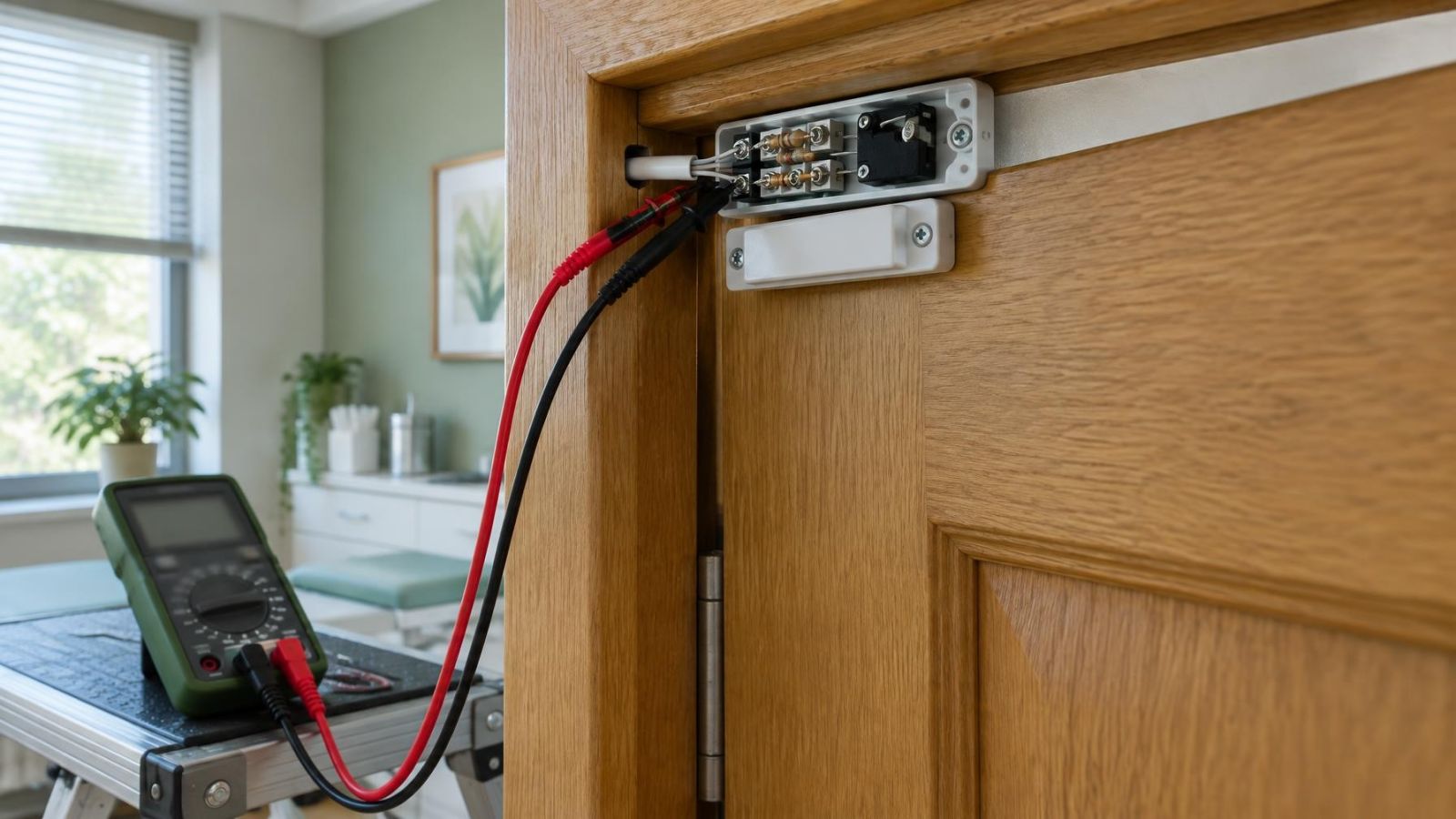
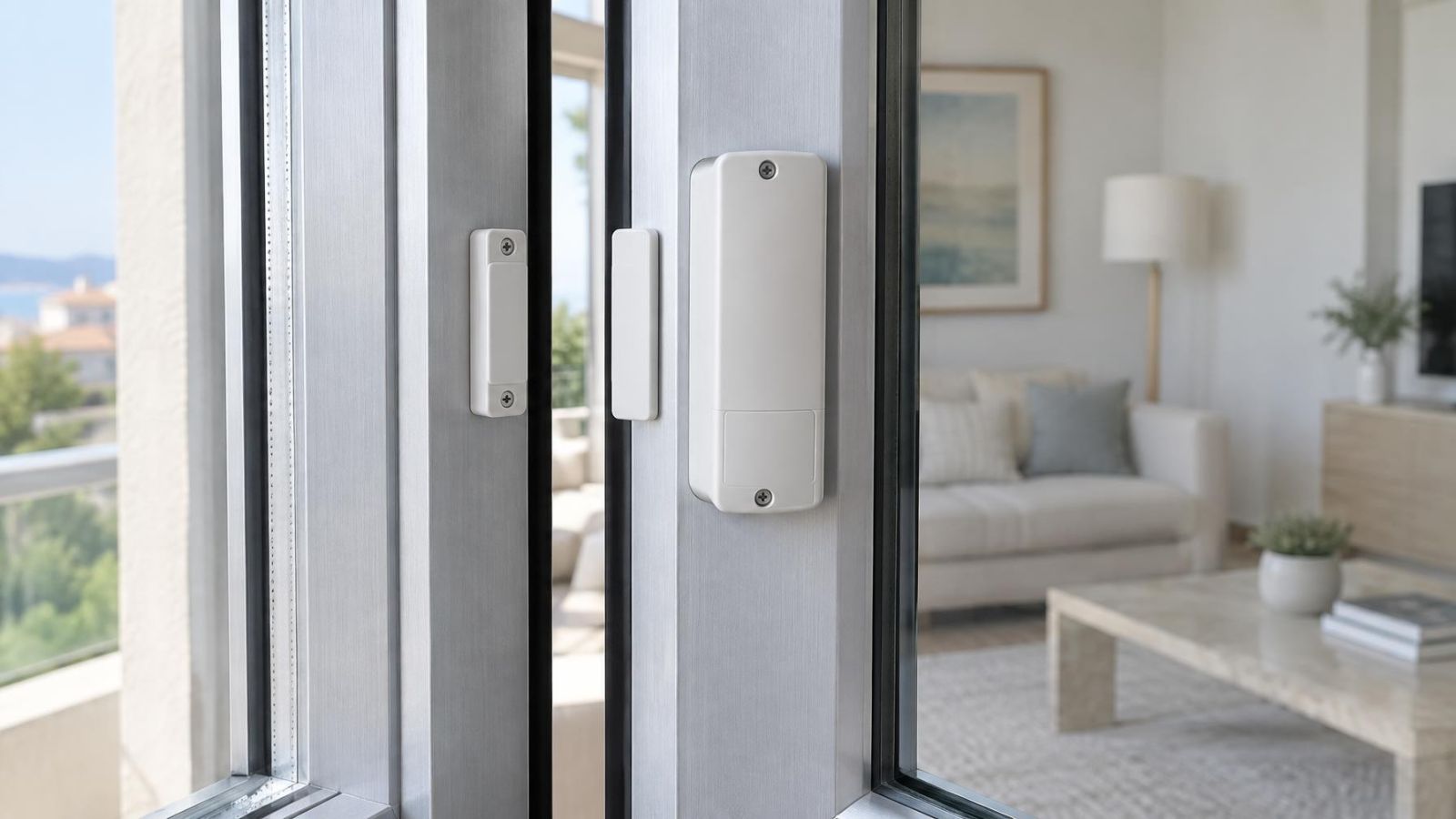
An opening contact has two aligned parts. The contact is normally fixed to the frame, while a magnet is fixed to the moving sash. When the window opens, the distance or alignment between them changes and the alarm system reports the contact as open.
The contact does not inspect the glass. If someone damages a pane without moving the sash, the contact can remain in its closed state. It is therefore best understood as a direct monitor for an opening section, not as a general detector for everything that might happen to a window.
What does a glass break detector hear?
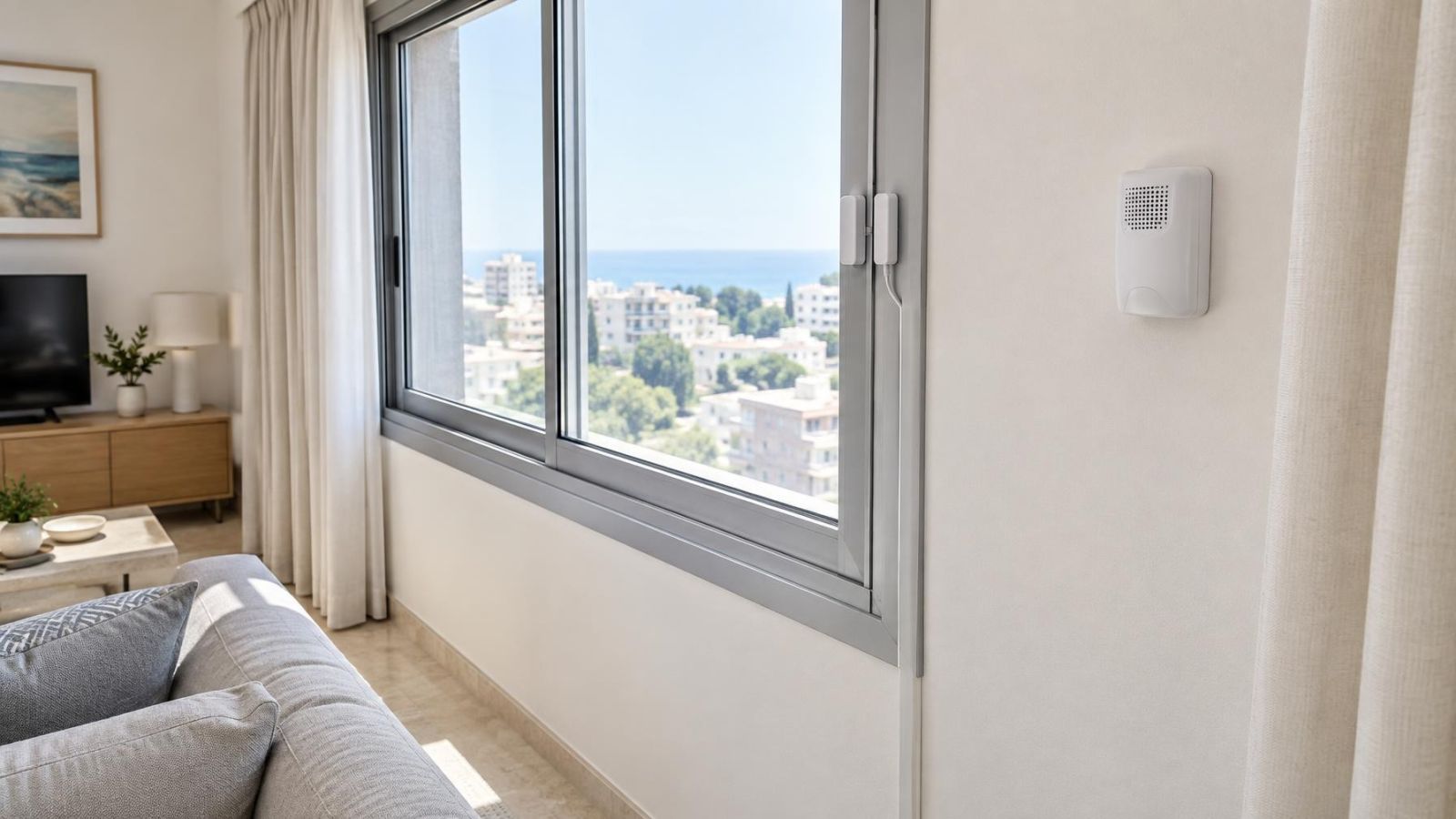
An acoustic glass-break detector listens from inside the room for sound characteristics associated with glass breaking. It responds to sound rather than movement at the frame. A suitable position may allow it to monitor more than one compatible pane, provided the glazing is within its defined coverage and sound has a clear route to the detector.
It does not normally report an intact window being opened. A quietly moved sash produces a different event from breaking glass, so an acoustic detector and an opening contact should not be treated as interchangeable parts.
Where does a glass sensor alarm using shock detection fit?
A shock sensor is a separate method. It is mounted on, or closely associated with, the protected structure and responds to vibration or impact. Its behaviour depends heavily on the mounting surface and adjustment. A loose frame, a flexible panel or everyday vibration can matter. It should not be grouped automatically with either an acoustic detector or a magnetic contact.
Protection Gaps That Matter
The simplest way to choose is to name the event you want the system to report. “Something happened at the window” is too broad. Opening, breakage and impact are distinct events, and each detection method has a gap.
| Event | Opening contact | Acoustic glass-break detector |
|---|---|---|
| Sash opens without glass damage | Reports movement when correctly aligned | Usually does not report ordinary opening |
| Pane breaks while sash stays closed | Can remain closed | Listens for compatible breaking-glass sound |
| Glazed door is left partly open | Can show the door is not fully closed | Does not indicate the door position |
| Fixed pane breaks | No moving section to monitor | May monitor compatible glazing within coverage |
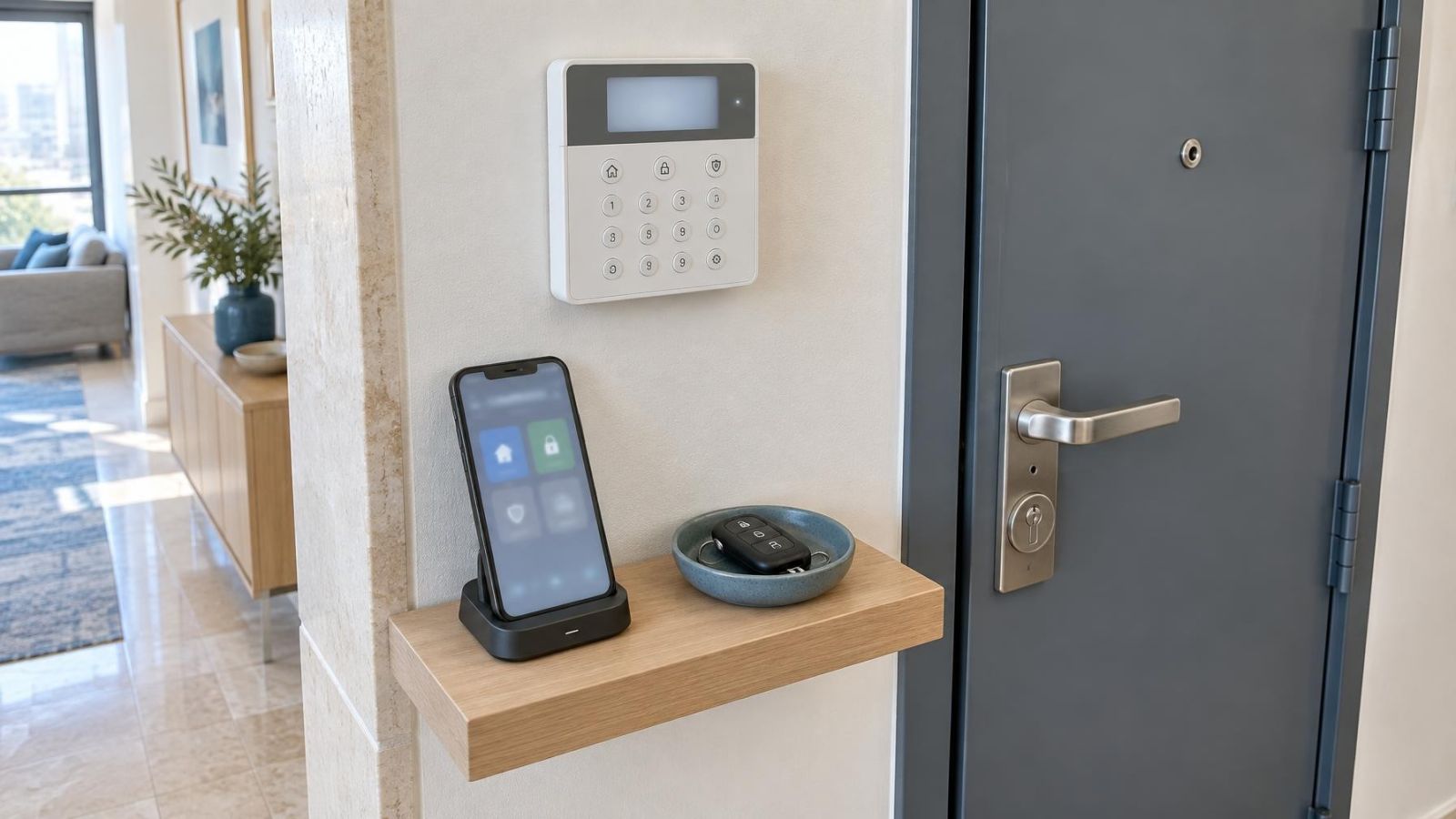
Alarm use while occupants remain inside makes this distinction especially important. Perimeter contacts can often remain active while people move normally between rooms. Acoustic detection may also remain usable, but the room’s normal sounds and activities need consideration. In a home where a glazed balcony door is regularly left partly open, the system also needs a clear way to show that condition before arming.
Choose the event first: sash movement, glass breakage or impact. Then choose the detector that actually observes it.
Window Type Changes the Choice
Israeli homes commonly combine sliding aluminium windows, shutters, insect screens, hinged openings and large glazed balcony doors. These parts may occupy the same opening but move independently. The installer must identify which section opens, which section is fixed and where the contact can remain aligned throughout normal use.
Sliding windows need particular care because their sashes overlap. A contact placed without considering the overlap may monitor only one sash, obstruct cleaning or sit where movement gradually changes the gap between sensor and magnet. Worn rollers and flexible frames can also alter alignment. The system should report the actual opening condition, not merely the movement of the easiest sash to reach.
Hinged windows are often more straightforward because the fixed frame and opening leaf are easy to distinguish. Even so, hinges can allow small changes in position, and handles, screens or shutters may compete for the same mounting area. A concealed contact can give a cleaner finish where the frame construction permits it, but service access still matters.
Large glazed doors often justify separate decisions for opening and breakage. A contact reports whether the door moves from its closed position. An acoustic detector can monitor exposed glass if the pane type, distance and room conditions suit the detector. Fixed panes beside the door have no opening section, so a magnetic contact cannot describe what happens to the glass itself.
Street-facing shopfront glazing has similar distinctions. A glass frontage may include a fixed display pane, an aluminium entrance door and smaller opening sections above or beside it. Treating the whole frontage as a single “window” hides those differences. Each movable part and each exposed glazed area should be considered separately.
A mamad, the protected room included in many Israeli floor plans, may have a heavy window assembly together with shutters, screens and existing hardware. Detection must not interfere with normal operation or access to handles and tracks. The visible interior window may also be only one part of the full assembly, so its movement should be checked rather than assumed.
Room Conditions Affect Glass Detection
An acoustic detector works through the room, not through a direct electrical connection to the pane. Position therefore matters. The detector needs a suitable acoustic path to the protected glass. A deep recess, solid partition or closed internal door can place apparently nearby glazing outside a useful path.
Curtains change more than the appearance of a room. Heavy fabric, lined blinds, display materials and soft furnishings can absorb or alter sound travelling from the pane. A detector selected and tested in an empty room should be checked again after curtains, shelving or office partitions are installed. Moving a large cabinet can also change the practical path.
Sharp everyday sounds require attention as well. Clattering objects, some tools and other abrupt noises can contain glass-like characteristics. Detector design and correct placement help distinguish events, but testing should include the way the room is actually used. A busy food-preparation area, workshop or shop entrance presents different background sounds from a bedroom.
Glazing compatibility is not universal. Pane construction, size and treatment can affect whether a particular acoustic detector is intended for that glass. Compatibility and coverage should be confirmed from the detector documentation rather than inferred from the fact that the surface looks like ordinary glass.
Wired, Wireless and Concealed Contacts
During renovation, cable access can make a wired detector the neatest long-term arrangement. The cable route, frame entry and future service point can be planned before plaster, joinery and paint are complete. In a finished property, running a new cable may be disproportionately disruptive, making a wireless detector more practical.
Wireless does not mean maintenance-free. Batteries must remain accessible, and the detector should not be hidden behind a fixed pelmet, sealed cover or furniture that requires dismantling. Thick walls, metal frames and a mamad can affect radio communication, so the installed position should be tested with the alarm equipment in its final locations.
Surface contacts remain visible but are generally easier to inspect, align and replace. Concealed contacts provide a quieter appearance, particularly on carefully finished doors and windows, but they depend on suitable frame depth and accurate installation. Concealment should not create a part that cannot be reached for diagnosis.
Aluminium tracks collect dust and may be exposed to moisture, especially near the coast or beside a garden. Contacts and magnets should not sit where routine cleaning, standing water or sash movement will disturb them. On flexible or worn frames, enough operating tolerance is needed to avoid intermittent reports without making the contact insensitive to genuine opening.
Plan Coverage Without Blind Spots
Coverage planning starts with an opening schedule, even for a small apartment or shop. Walk around the property and identify every external opening. Record which sections move, which panes are fixed, whether a door can be left partly open and how screens or shutters are normally used.
- Separate fixed glazing from opening sashes and doors.
- Decide whether opening, breakage, impact or more than one event should be reported at each location.
- Check mounting access, cable routes, battery access and moving hardware.
- Confirm acoustic coverage using the furnished room layout, not only a floor plan.
- Test each detector and label its alarm zone in language that is useful to the person receiving the notification.
Zone names deserve care, particularly for remote property owners. “Zone 4” gives little useful information. “Living room balcony door” or “Shopfront fixed glass” identifies both the location and the protected element. If several contacts share one zone, the notification may not identify which opening changed state, so that limitation should be a deliberate choice.
Doors, shutters and screens should be considered together even when only one receives a detector. A closed shutter may change the normal acoustic path. A screen may limit where a magnet can sit. A gate or balcony door used throughout the day may need a different arming arrangement from a window that normally stays closed.
Which Sensor Fits Each Window?
Use an opening contact when the main requirement is to know whether a movable sash or door has left its closed position. It provides direct, easy-to-understand information and remains useful where curtains or room acoustics would make sound detection uncertain.
Use acoustic glass-break detection for compatible, exposed glazed areas where breakage should be reported, including fixed panes that have no sash for a contact. Confirm the actual glazing and room arrangement rather than selecting by pane size or appearance alone.
Use both when either event matters. The contact observes movement. The acoustic detector listens for glass breakage. This layered arrangement closes the basic gap between an intact window opening and a pane breaking without sash movement, but each detector still needs correct placement, testing and maintenance.
| Window or glazed area | Likely starting point | Reason |
|---|---|---|
| Opening sliding or hinged window | Opening contact | Directly monitors movement from the closed position |
| Fixed compatible pane | Acoustic glass-break detector | There is no moving sash for a magnetic contact |
| Large glazed door | Contact, acoustic detection or both | Opening and glass breakage are separate events |
| Furnished room with covered glazing | Contact first; assess acoustic detection carefully | Curtains and layout can affect the sound path |
| Mixed shopfront | Separate decisions for each element | Fixed panes, doors and opening sections behave differently |
The final decision should follow normal use, construction and room conditions. A technically capable detector in the wrong position is not a substitute for a clear coverage plan. Define the event, inspect the opening, account for the furnished room and then select the smallest combination of detectors that reports what the occupants or remote owner actually need to know.
Key takeaways
- Opening contacts report movement of a window sash but do not directly detect a pane breaking.
- Acoustic glass-break detectors respond to characteristic sounds but do not report an undamaged window opening quietly.
- Window construction, curtains, partitions and room acoustics all affect the correct detection method.
- Layered detection covers events that either opening contacts or glass-break detection alone may not observe.