On this page
A PTZ security camera and a fixed security camera can both send video to the same video recorder, but they do very different jobs. In a private home, the choice affects how a gate, garden or entrance is recorded. In a street-front small business, it affects whether the till, doorway and pavement remain visible at the same time. A camera installer should therefore settle one question before selecting equipment: does each area need an assigned view, or does someone genuinely need to move and zoom the camera?
How Each Camera Type Behaves
A fixed camera continuously records the view defined by its position and lens. The field of view does not change during normal operation. If it is aimed at a front door, that door remains in the recorded image throughout the day and night, subject to lighting, obstruction and recorder settings.
A PTZ camera can pan from side to side, tilt up and down, and use optical zoom to inspect a smaller, more distant part of the scene. It is a motorized security camera designed to redirect attention. The important limitation is simple: it records only the direction in which it is facing at that moment.
| Characteristic | Fixed camera | PTZ camera |
|---|---|---|
| Viewing direction | Assigned during installation | Can be changed manually or automatically |
| Recording behaviour | Keeps recording the assigned view | Records the current direction only |
| Distant inspection | Depends on lens choice and camera positioning | Optical zoom can enlarge detail while aimed at the area |
| Operation | Usually requires little daily input | Benefits from an operator or a defined automatic task |
Manual control is useful when somebody is watching live video and knows what needs inspection. The operator can look along a boundary, check a vehicle at a gate or zoom towards an object in an open yard. Without an available operator, the camera normally remains at a preset position, follows a programmed tour or relies on automatic tracking.
Automatic tracking can be helpful, but it is not equivalent to human judgement. A subject may pass behind a tree, pillar, parked vehicle or shop display. Strong glare, deep shadow and overlapping movement can also make tracking less dependable. Once the camera turns to follow one subject, other parts of the property are outside its recorded view.
PTZ vs Fixed Camera: Which Suits the Daily Task?
For routine visibility, fixed cameras are usually the starting point. Doors, gates, corridors, loading points and payment areas normally matter because they should stay visible, not because someone wants to explore the scene. An assigned view also makes recorded video easier to review because the location of important activity does not move around the frame.
PTZ becomes more useful when live monitoring is a real part of daily operation. A staffed reception desk may need to inspect different parts of an open external area. A remote property owner may occasionally want to look across a large garden. In both cases, movement and optical zoom serve an identifiable task rather than acting as substitutes for planned coverage.
- Choose a fixed view when the recorder must retain the same doorway, gate, counter or passage without depending on operator action.
- Consider PTZ when a person is available to direct the camera or when occasional remote inspection has practical value.
- Use both when recorded evidence from priority points matters as much as flexible observation of a wider area.
- Review operator availability honestly because a controllable camera adds little if nobody is expected to control it.
A camera that can look anywhere is not the same as a camera that records everywhere.
Coverage and Blind Spots
Several fixed cameras can record several directions at the same time. One can cover a pedestrian entrance, another a vehicle gate and another the path between them. Their views may overlap, which helps preserve context when a person or vehicle moves from one area to another.
A PTZ may be physically capable of turning towards all those areas, but it cannot face all of them at once. When it moves from the gate to the garden, the gate becomes an unobserved area for that camera. A programmed tour does not remove this blind spot; it changes where and when the blind spot appears.
A wide-angle lens can include more of a scene in one fixed view, but distant subjects occupy less of the image. This is not solved simply by choosing higher resolution. Resolution describes the pixels available in each frame, while useful detail also depends on distance, lens choice, angle, lighting and how much of the scene the camera is trying to include.
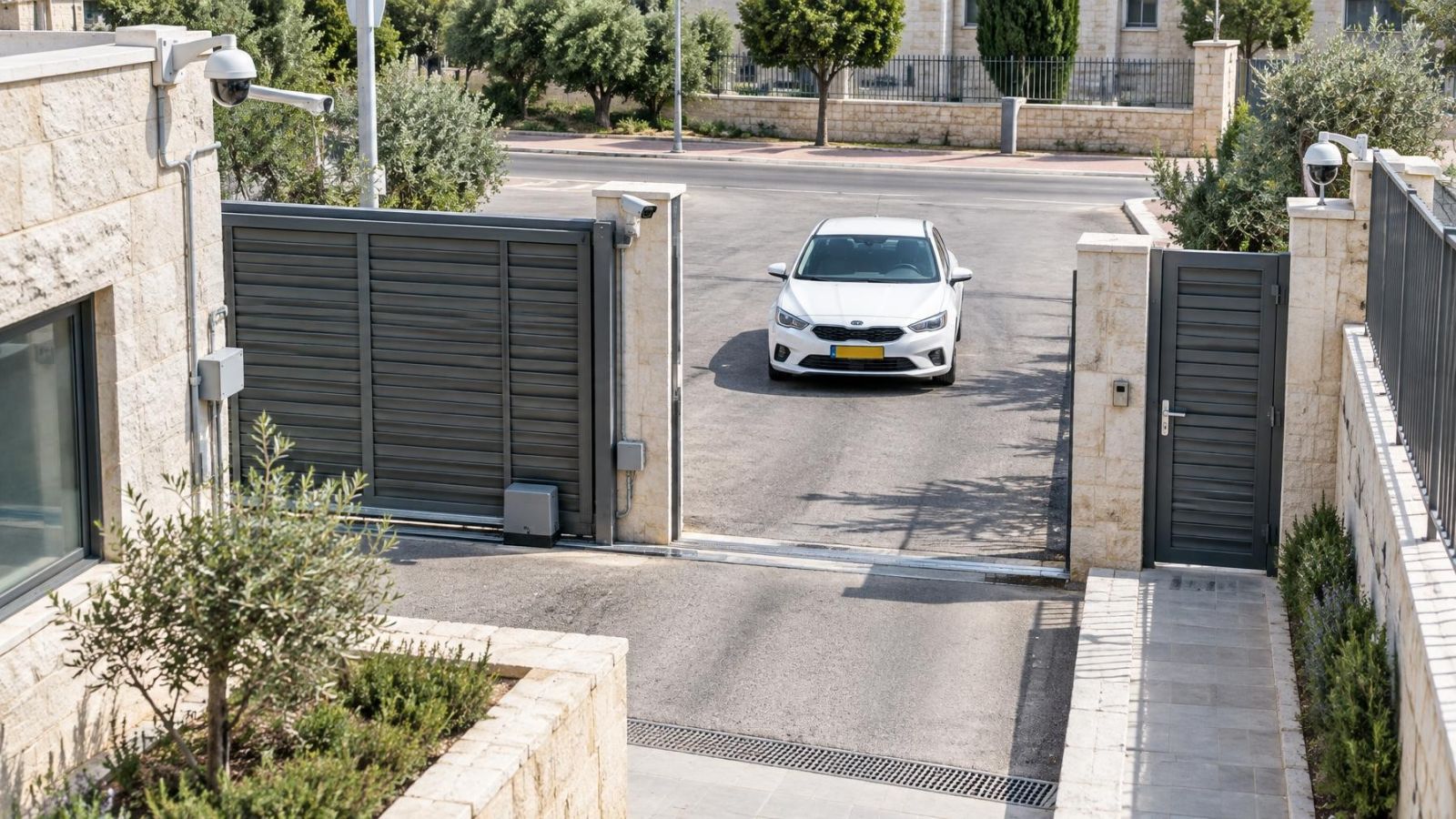
At an Israeli private home, it is often worth separating the pedestrian gate, vehicle entrance and front door into distinct tasks. At a street-facing shop or office, the entrance and service area may need stable views even when another camera overlooks the pavement or delivery zone. The purpose of each view should be written down before deciding how many cameras are needed.
Can One PTZ Replace Fixed Cameras?
One PTZ can replace fixed cameras only when simultaneous recording of their separate views is not required. This is a narrow condition. A PTZ may have the physical range to look at several locations, but its recording still contains only the direction selected at each moment.
Preset positions make movement faster and more repeatable. A camera can return to a gate, parking area or garden path without the operator steering it manually each time. A preset tour can cycle through those positions. However, everything outside the active preset remains unrecorded by that camera until it turns back.
Tracking does not eliminate the problem. Trees, walls, awnings, vehicles and building corners can interrupt the camera's view. A subject moving close to the mounting point may also pass outside a useful tilt angle. At night, uneven illumination or IR reflection from a nearby surface can further complicate tracking.
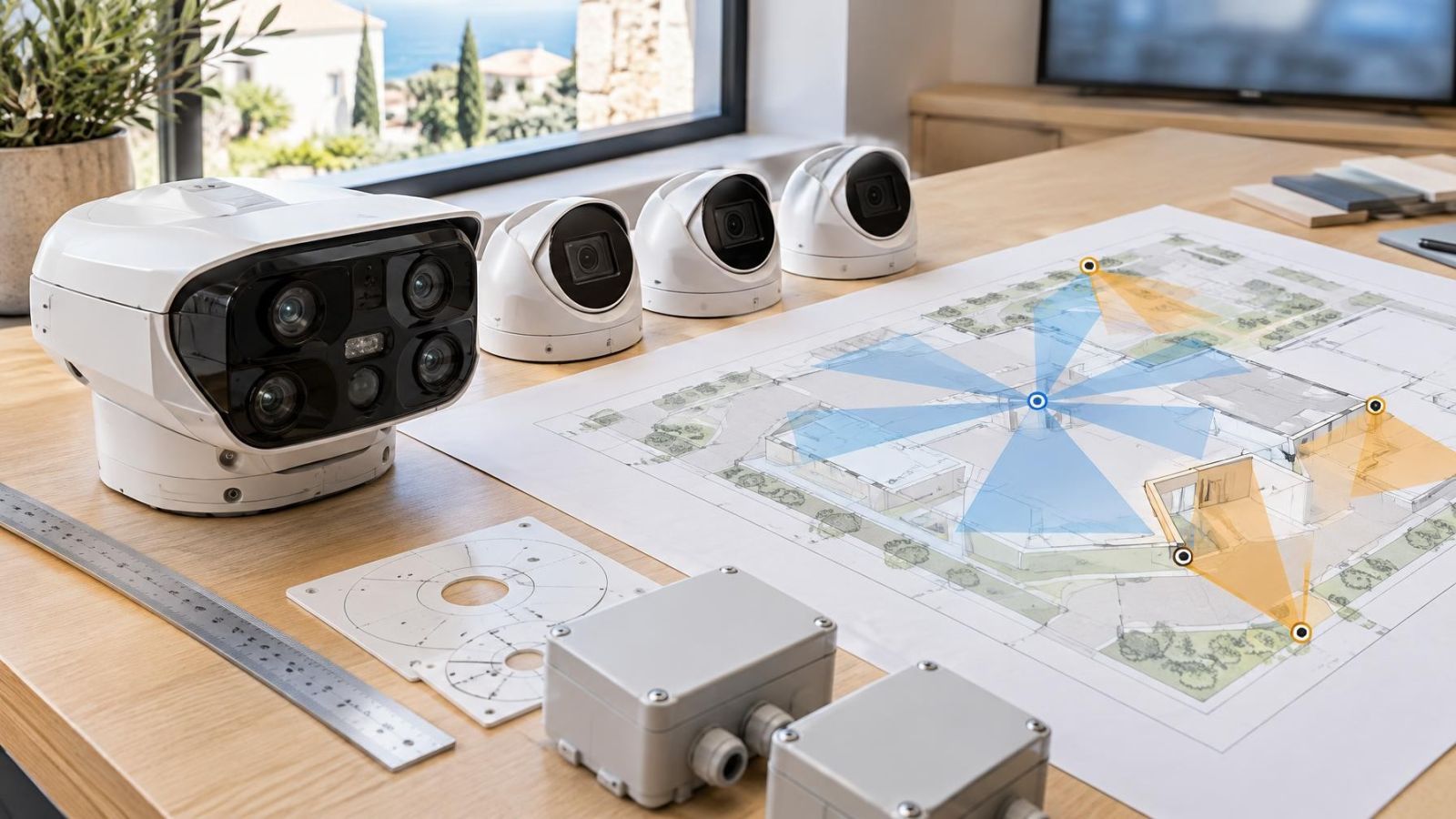
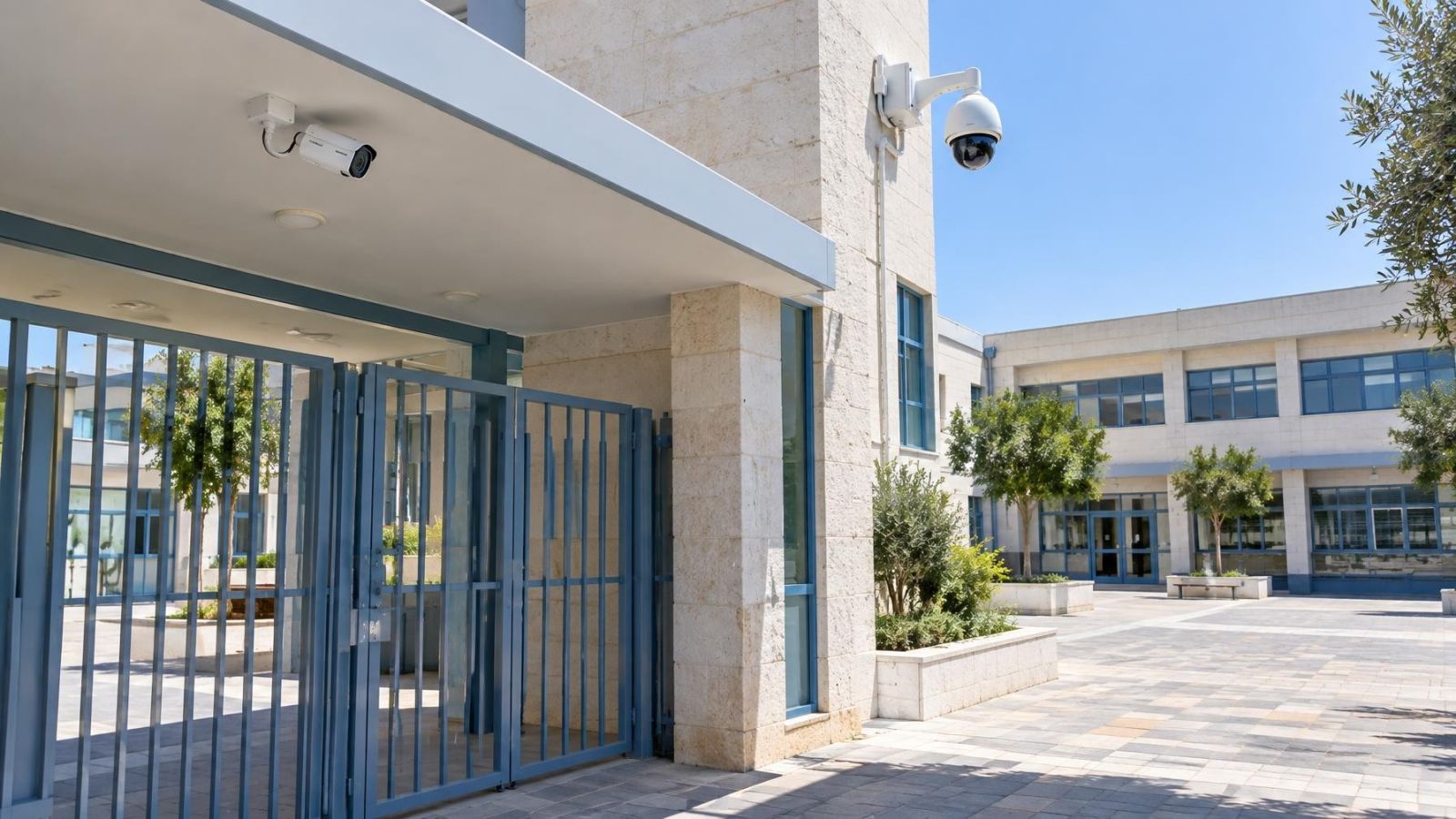
A mixed layout is often the more coherent design. Fixed cameras preserve the views that must not move. A PTZ then provides an overview or closer inspection of an open external area. If the PTZ is turned manually, the fixed cameras continue recording entrances and other priority points.
| Layout | Main strength | Main limitation |
|---|---|---|
| Fixed cameras only | Persistent simultaneous views | No movable optical inspection |
| PTZ only | Flexible direction and optical zoom | Other directions are missed while the camera looks elsewhere |
| Mixed layout | Persistent priority views plus movable observation | Requires deliberate division of tasks between cameras |
Image Quality in Israeli Conditions
Strong sunlight often creates a bright background behind a shaded entrance. A camera exposing for the sky, pavement or sunlit garden may show less detail under a porch or inside a doorway. WDR (wide dynamic range) can help balance bright and dark parts of the frame, but camera positioning remains important. A modest change in angle can sometimes avoid placing the brightest area directly behind the subject.
Glare is especially relevant at metal gates, pale stone walls and street-front glazing. A shop window may reflect the street by day and interior lighting after dark. A gate camera may face low sunlight during part of the day. The proposed view should therefore be checked under different lighting conditions rather than judged from a single daytime image.
Dust gradually reduces contrast and can make night vision look hazy. The effect is often more obvious when the camera's IR illuminator reflects from dirt on the front glass. Exposed housings need practical cleaning access. A camera mounted where it cannot be reached safely is less likely to receive routine attention.
Near the coast, humid and salty air makes sheltered placement valuable even when equipment is intended for outdoor use. Shelter can also reduce direct rain, dust deposits and heat from prolonged sun exposure. It should not obstruct the viewing angle or trap warm air around the housing.
Night lighting should be considered as part of the scene, not only as a camera feature. A bright wall, soffit or plant close to the lens can reflect IR and leave the distant garden darker. At entrances, steady external lighting may produce a more natural image than asking the camera's illuminator to cover both a nearby wall and a distant gate.
Installation and Daily Operation
Mounting height is a compromise. A high camera is harder to reach and can see over some obstructions, but a steep downward angle may show the top of a person's head rather than a useful frontal view. Lower mounting can provide a better angle at a doorway or payment point, provided the camera is positioned sensibly and the housing is protected from accidental contact.
Network and recorder compatibility must be checked as a complete system. An NVR (network video recorder) needs to support the camera's video stream, recording settings and control functions. PoE (power over Ethernet) can carry network data and power on one cable, but the available power must suit the camera, especially when motors, heaters or IR illumination are involved. Existing DVR installations may require a different connection approach.
A PTZ has moving parts and more operational settings than a fixed camera. Presets, home position, movement speed, zoom behaviour and tours need to be configured and tested. The mounting surface must also remain stable while the camera moves. Even small vibration can become noticeable when optical zoom narrows the field of view.
Remote access matters to absent owners, but it should be designed rather than added casually. The connection should use individual accounts, strong authentication and controlled permissions. A VMS (video management software) can provide live viewing, playback and PTZ control from one interface. Where the network supports it, cameras may be separated on a VLAN so that video equipment is managed independently from everyday devices.
Wireless coverage deserves particular attention in homes with reinforced walls, including a mamad, the safe room commonly included in Israeli floor plans. A strong signal in the living room does not guarantee a stable link near an external gate. Fixed cabling is usually the more predictable foundation for cameras that record continuously.
In an apartment building, a shared entrance is also a shared physical space. Cable routes, mounting surfaces, viewing direction and future maintenance may involve the va'ad bayit, the residents' building committee. Coordination is easier when the intended view and installation route are clear before drilling or cabling begins.
Choose by Area and Task
Equipment selection should follow a coverage map, not lead it. Begin with the views that must remain recorded. Then identify any area where movable observation adds practical value. This avoids using a PTZ to compensate for a missing entrance camera or installing fixed cameras without deciding what detail each one must show.
When is a fixed security camera the better default?
A fixed camera is the better default for a door, pedestrian gate, vehicle entrance, corridor, stock access point or payment position. These are defined locations. Their value comes from remaining in view, including when nobody is watching live video.
PTZ oversight is more appropriate for an open garden, yard, parking area or broad frontage where an operator may need to inspect different directions. Optical zoom is useful when the task involves looking more closely at a distant area. It should not be treated as extra recorded detail for parts of the scene the camera was not facing.
- List the entrances, routes and activity points that must remain visible.
- Decide what useful detail is needed at each point and from which direction.
- Place fixed views for every priority area that must not move.
- Identify open spaces where manual control, presets or optical zoom would support a real task.
- Check the complete layout in bright daylight, shade and night lighting before finalising camera positions.
The final choice should reflect monitoring habits. If video is mainly reviewed after an event, stable fixed views usually carry most of the value. If someone regularly watches live video and knows how to operate the controls, PTZ can add flexible inspection. For many homes and small businesses, the soundest answer is not one camera type or the other, but a clear division of work between them.
Key takeaways
- Fixed cameras keep priority views such as entrances, doors and payment points continuously available to the recorder.
- PTZ cameras provide movable observation and optical detail, but they record only the direction in which they are facing.
- Every PTZ movement creates a coverage gap somewhere else unless fixed cameras continue recording the wider area.
- A mixed layout combines persistent fixed views with flexible inspection of open spaces.
- Camera positioning should account for glare, dust, night lighting and the way people will operate the system each day.