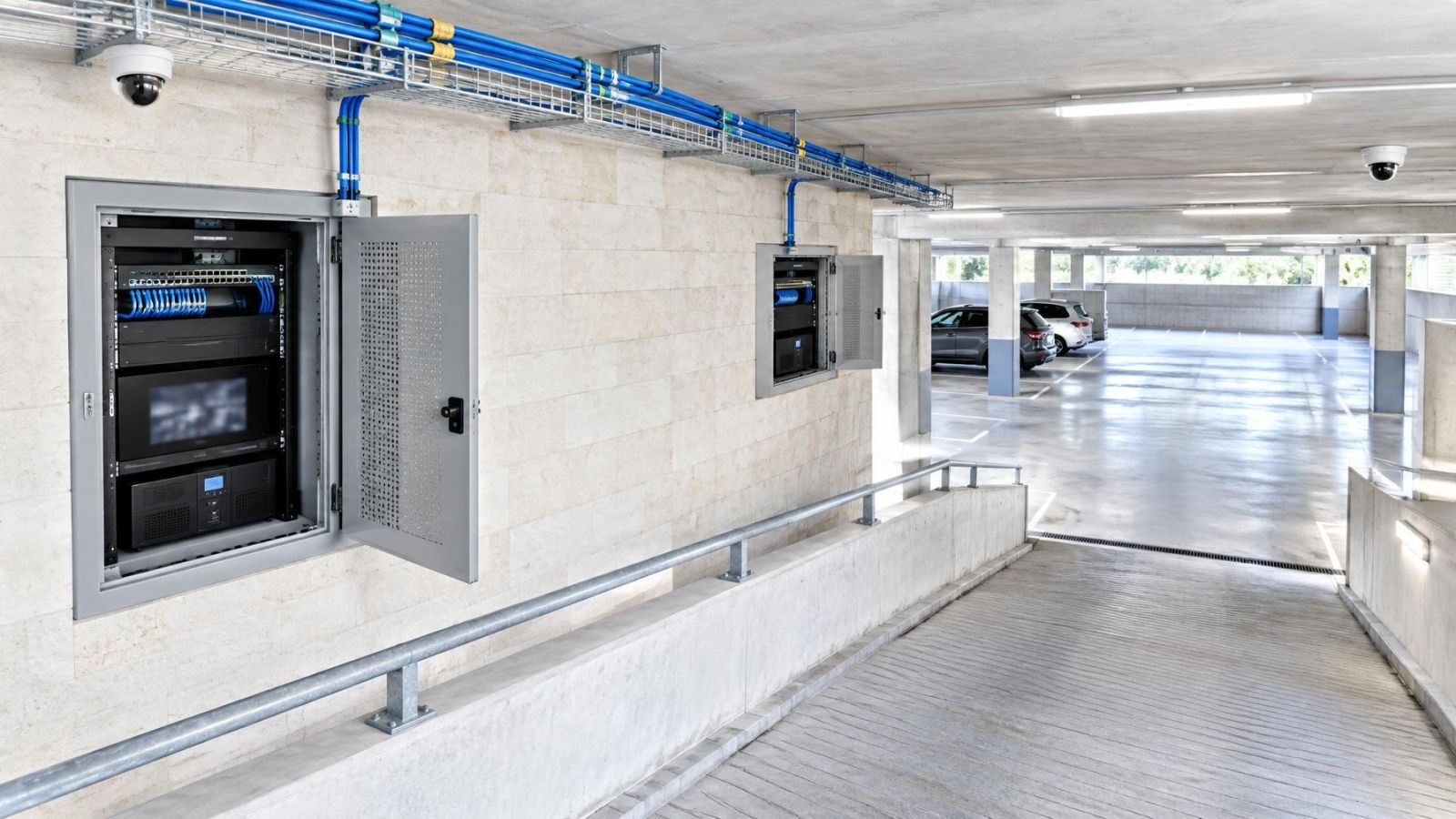
Security Networks & Connectivity
CCTV Network Design: Planning Around Failure Points
Plan the camera network around shared switches, uplinks, power sources and recording paths so each likely fault affects only a defined part of the system.
Category
PoE, switches, cabling, bandwidth, VLANs, remote access and system reliability.
13 articles
Plan the camera network around shared switches, uplinks, power sources and recording paths so each likely fault affects only a defined part of the system.
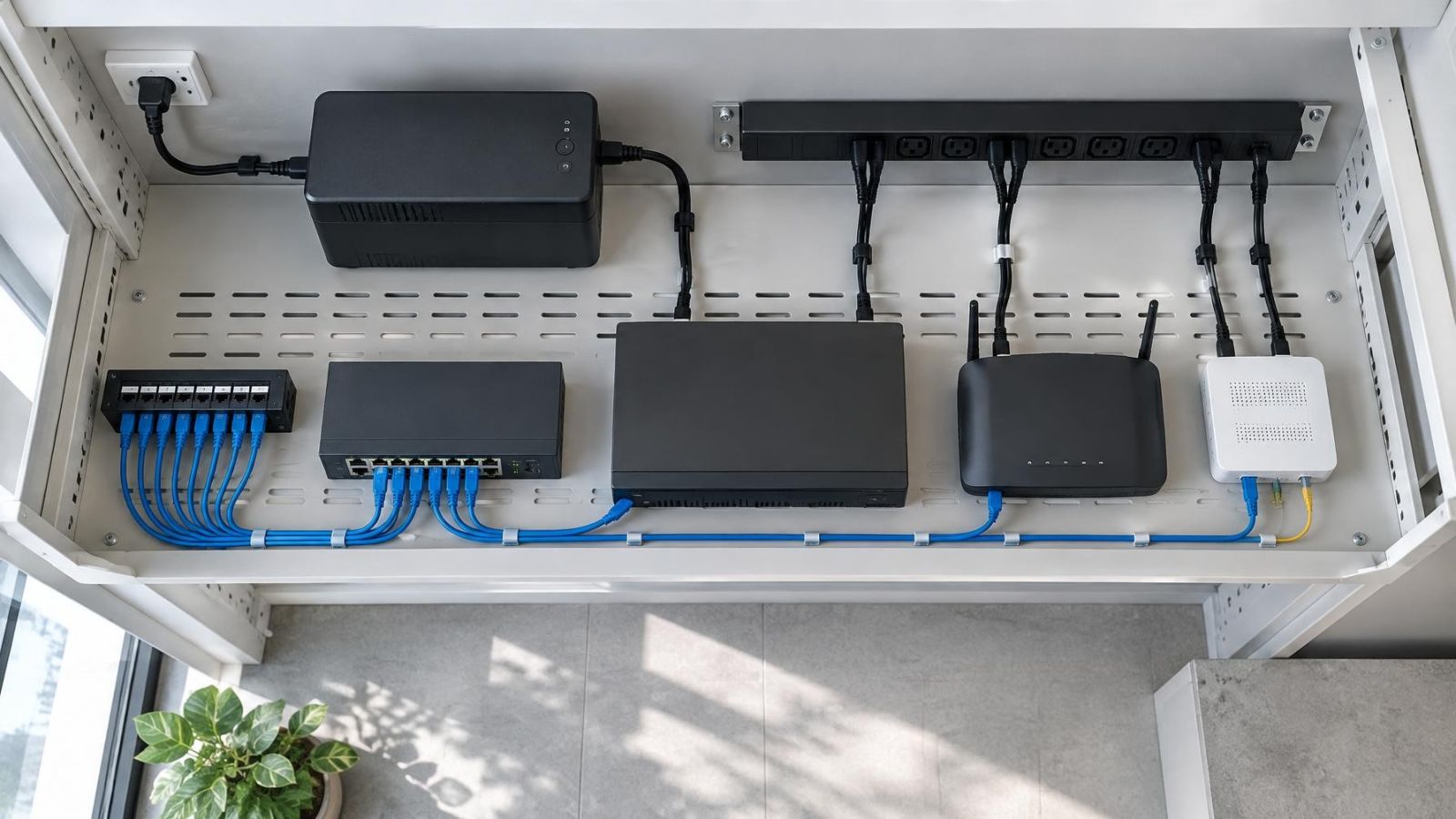
Backup power should cover the cameras’ power source, the recorder and every network device required for the functions you want to retain. Local recording and remote access have different dependencies, so the router and internet terminal may be optional for recording but essential for app access.
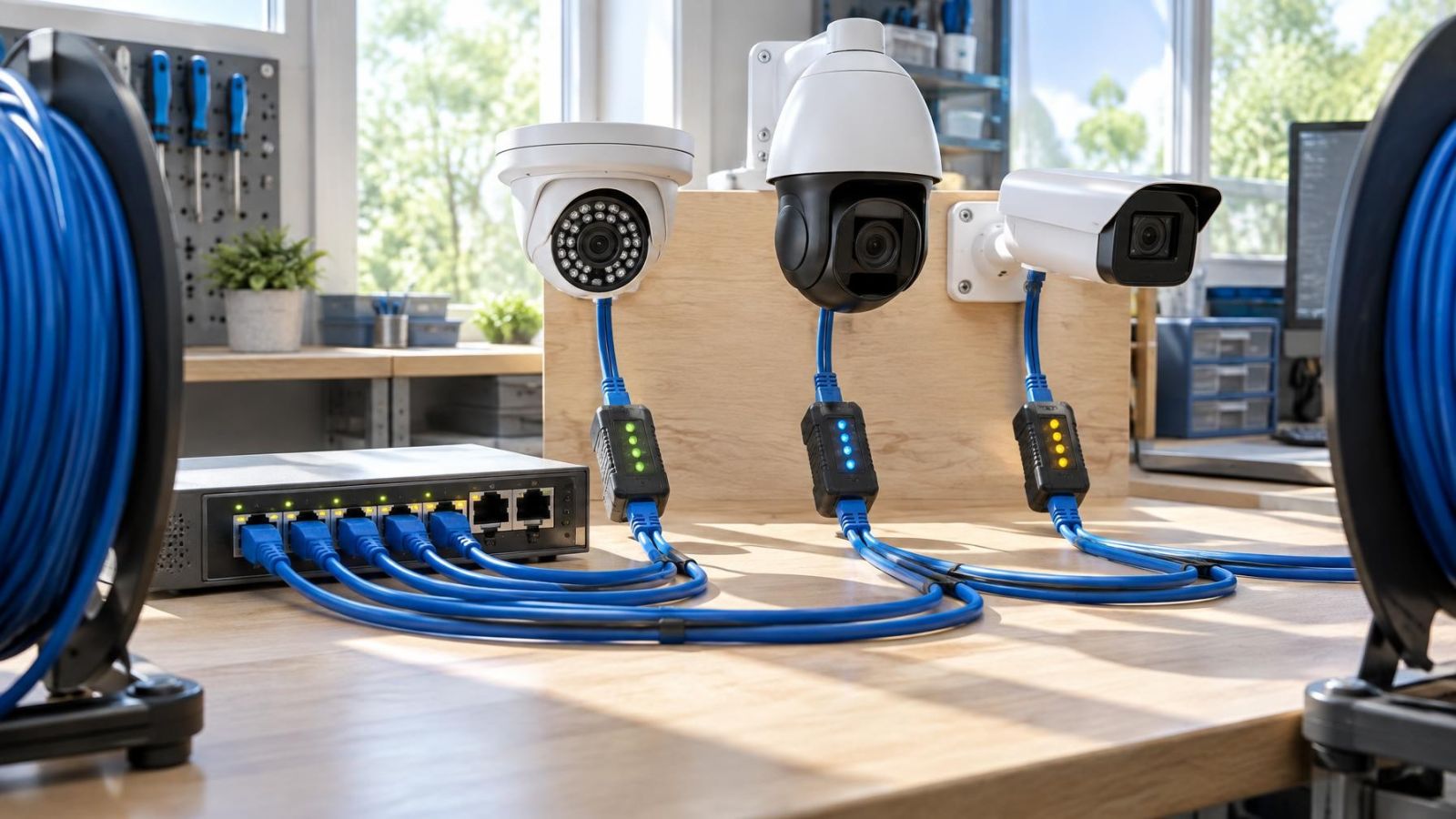
PoE power negotiation allows a camera and power source to establish compatible power delivery before normal operation begins. A reliable installation also requires adequate power per port, enough shared switch capacity and an Ethernet cable path that can carry the required power without excessive loss.
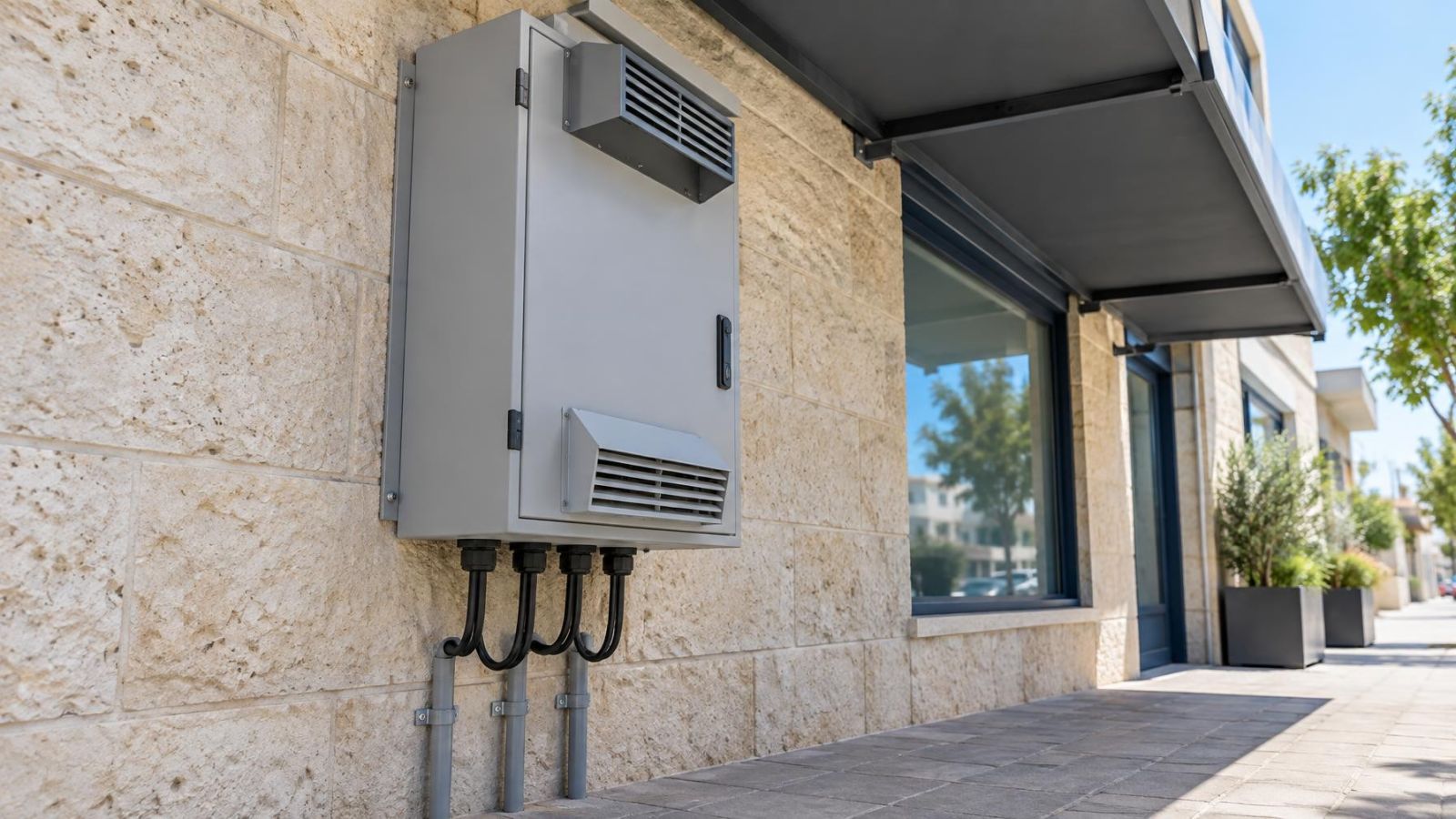
Plan an outdoor network cabinet around permanent shade, the heat produced by its equipment, controlled airflow, sealed bottom cable entries and enough working space for regular maintenance. The right cooling method depends on both the internal heat load and the cabinet’s actual exposure to dust, humidity, rain and irrigation.
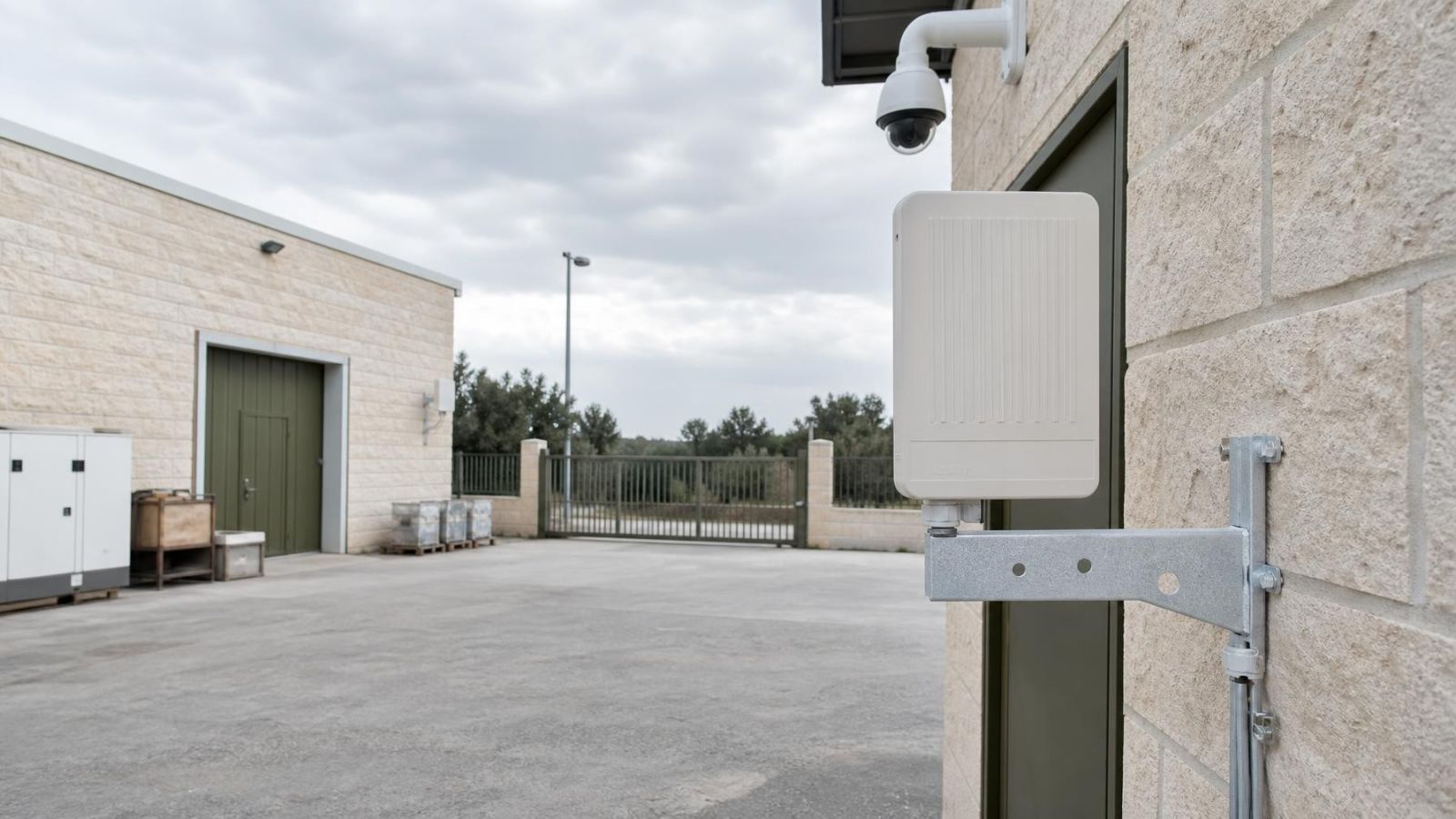
Choose a point-to-point wireless bridge when a gate or detached building needs network access, has local power, has a clear sightline to the main property and lacks a practical cable or fiber route.
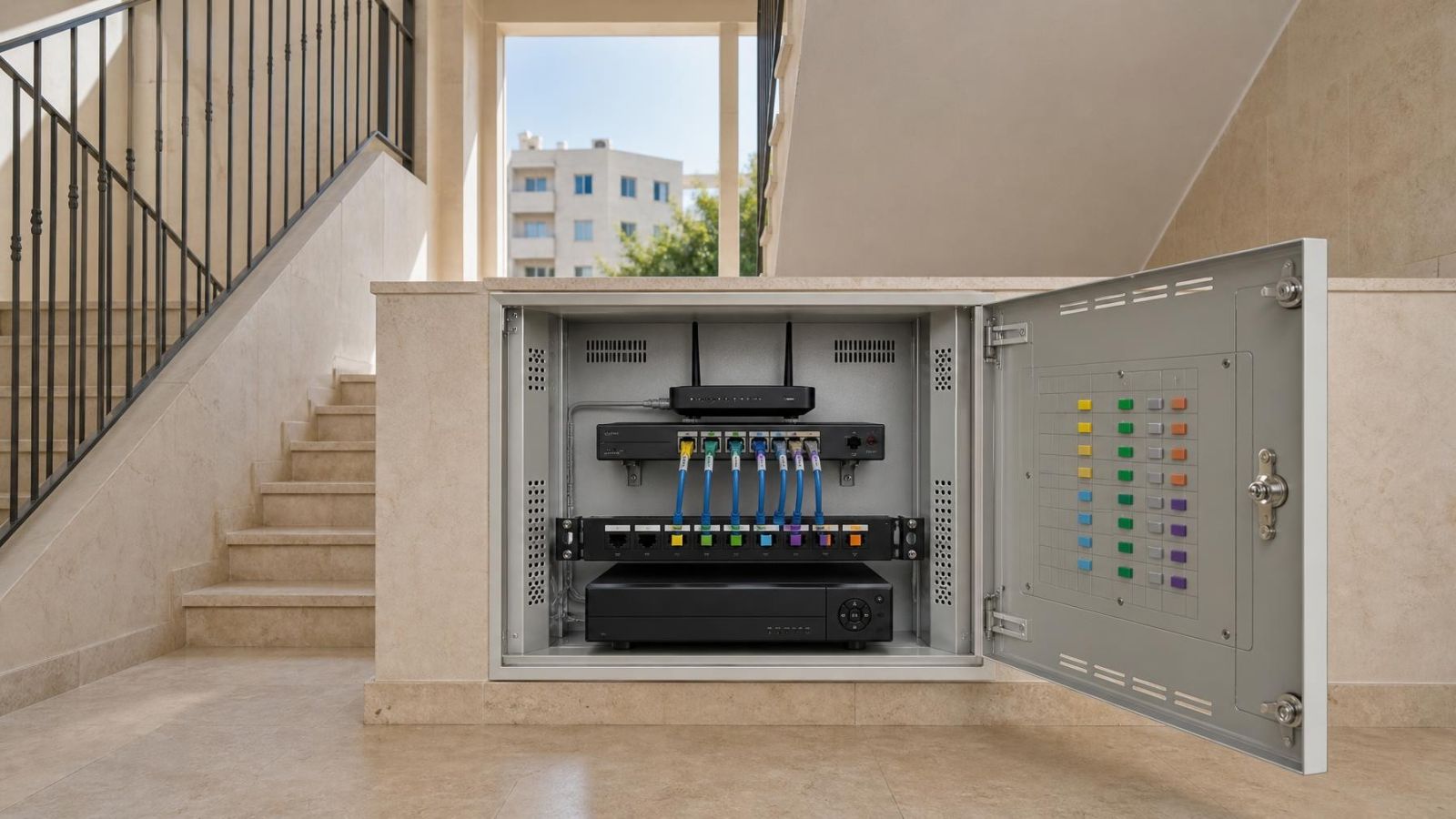
Use DHCP reservations for most router-managed camera networks. They keep local addresses stable while leaving control with the DHCP server. Use manual static addresses when the camera network is isolated or follows a centrally managed address plan that should not depend on the router.
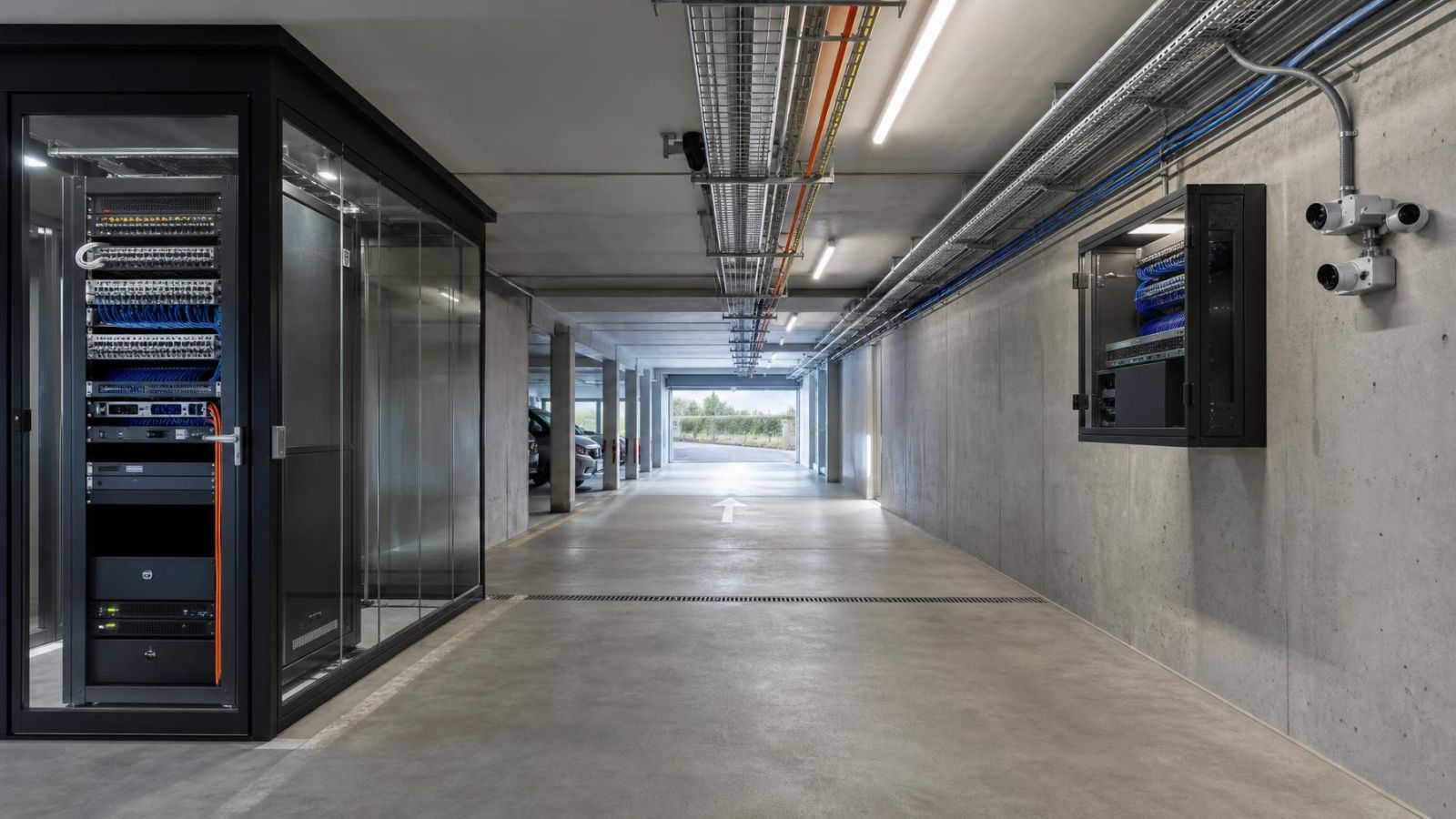
Choose centralised PoE switching when practical home-run cabling and simple maintenance matter most, distributed switching for separated camera groups, or a documented hybrid when the property requires both.
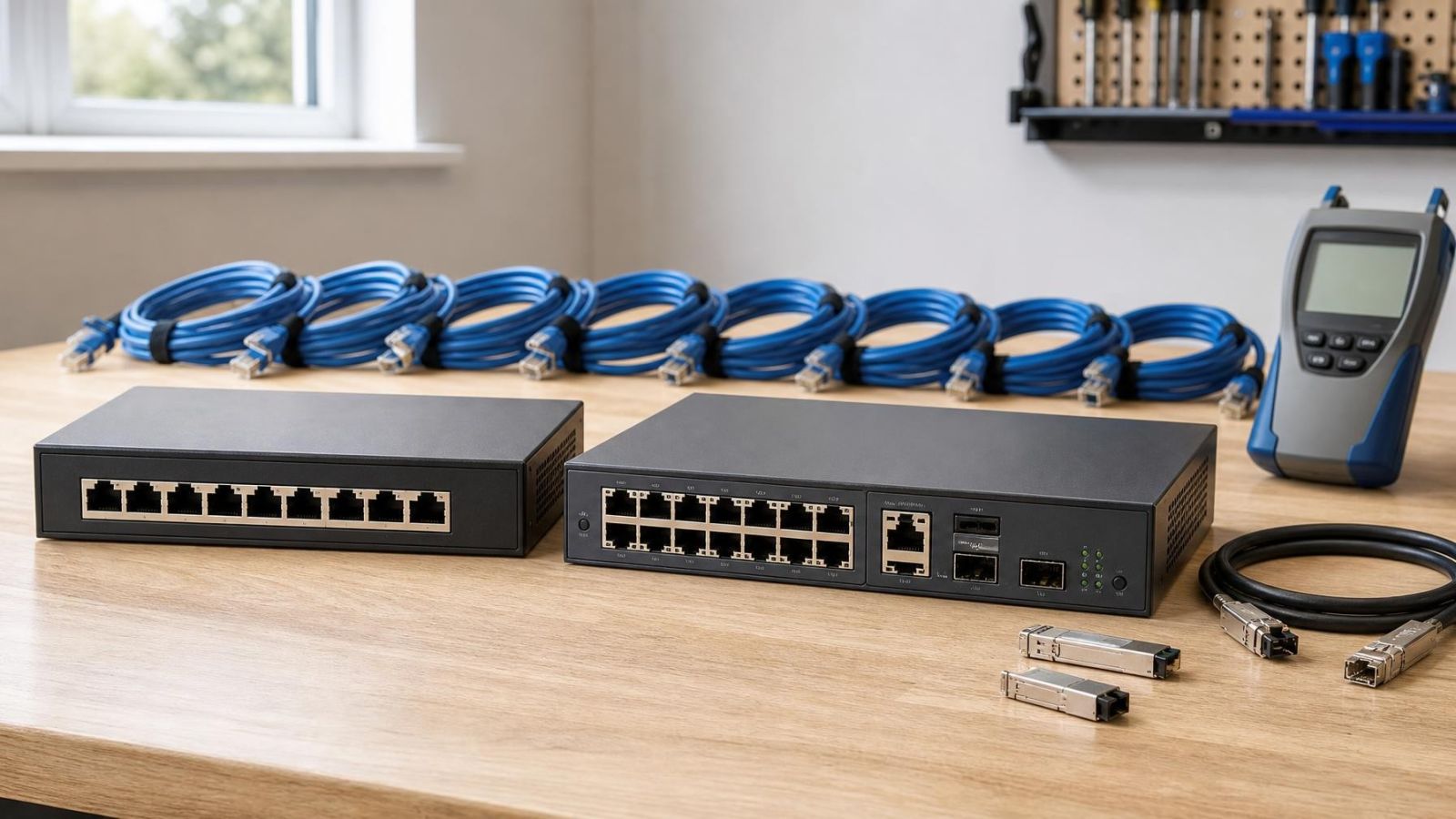
Choose an unmanaged switch for a simple, stable camera network. Choose a managed switch when you need network isolation, port monitoring, remote troubleshooting or flexibility across a more complex property. In either case, confirm PoE capacity, port count and uplink capacity before comparing management features.
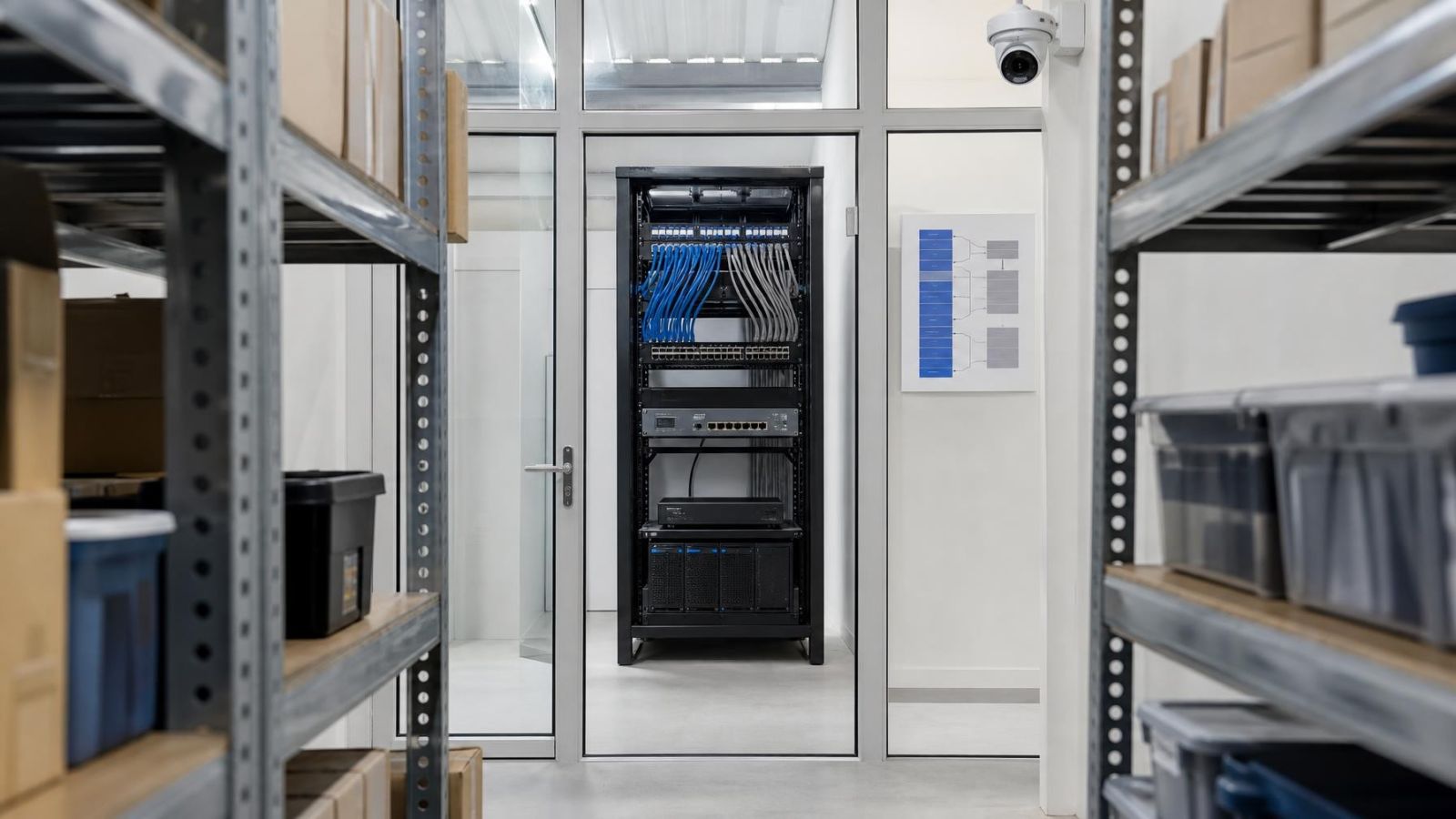
A dedicated camera VLAN is worth the complexity when the system needs controlled access, clear separation from everyday devices or room to expand. It is a poor trade when the installation is small and stable, access requirements are simple, or nobody is prepared to document and maintain the network configuration.
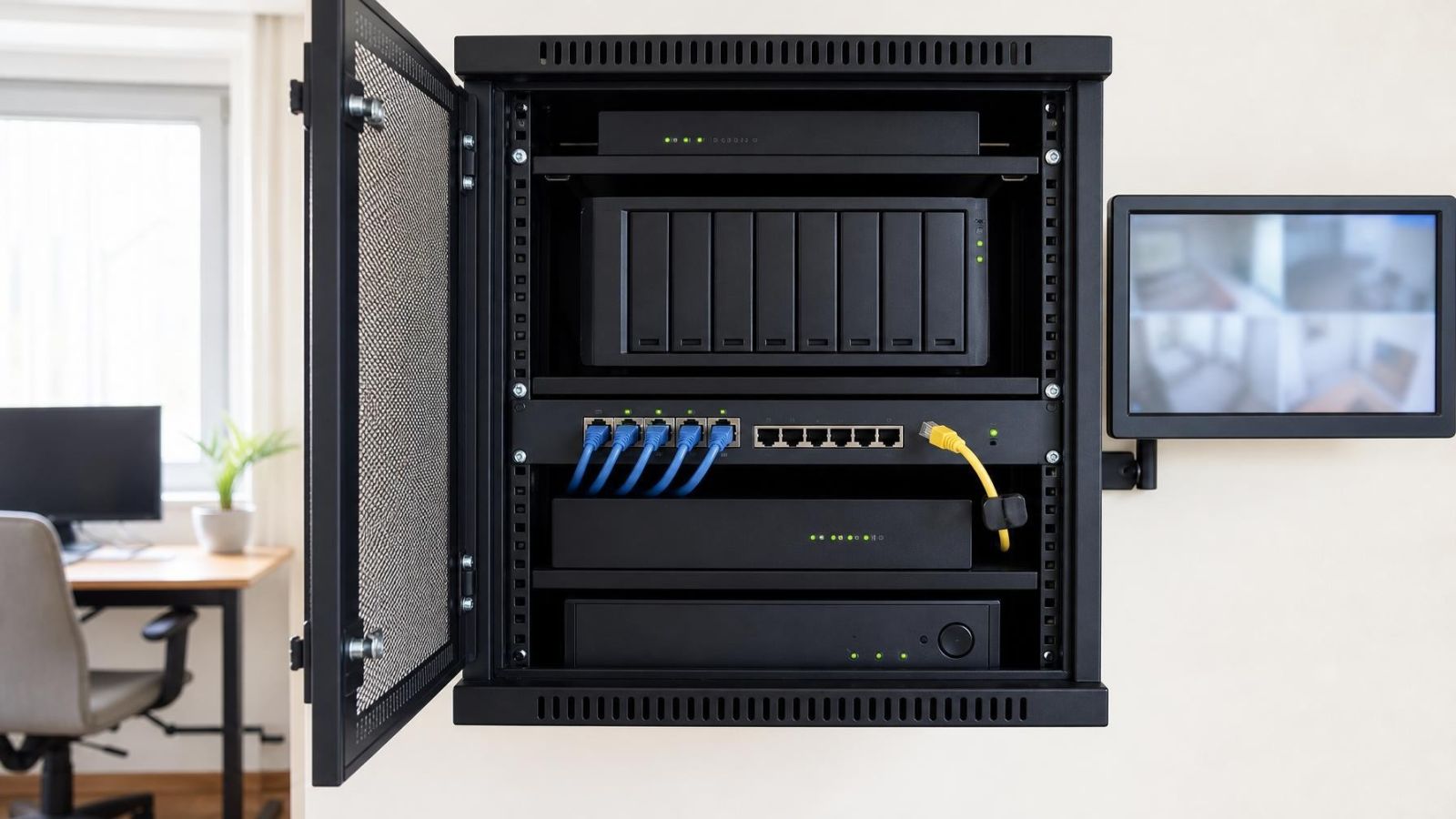
A locally designed camera system can keep recording without internet while its cameras, recorder, storage, local network and power remain available. Remote viewing and off-site alerts usually stop until the connection returns.
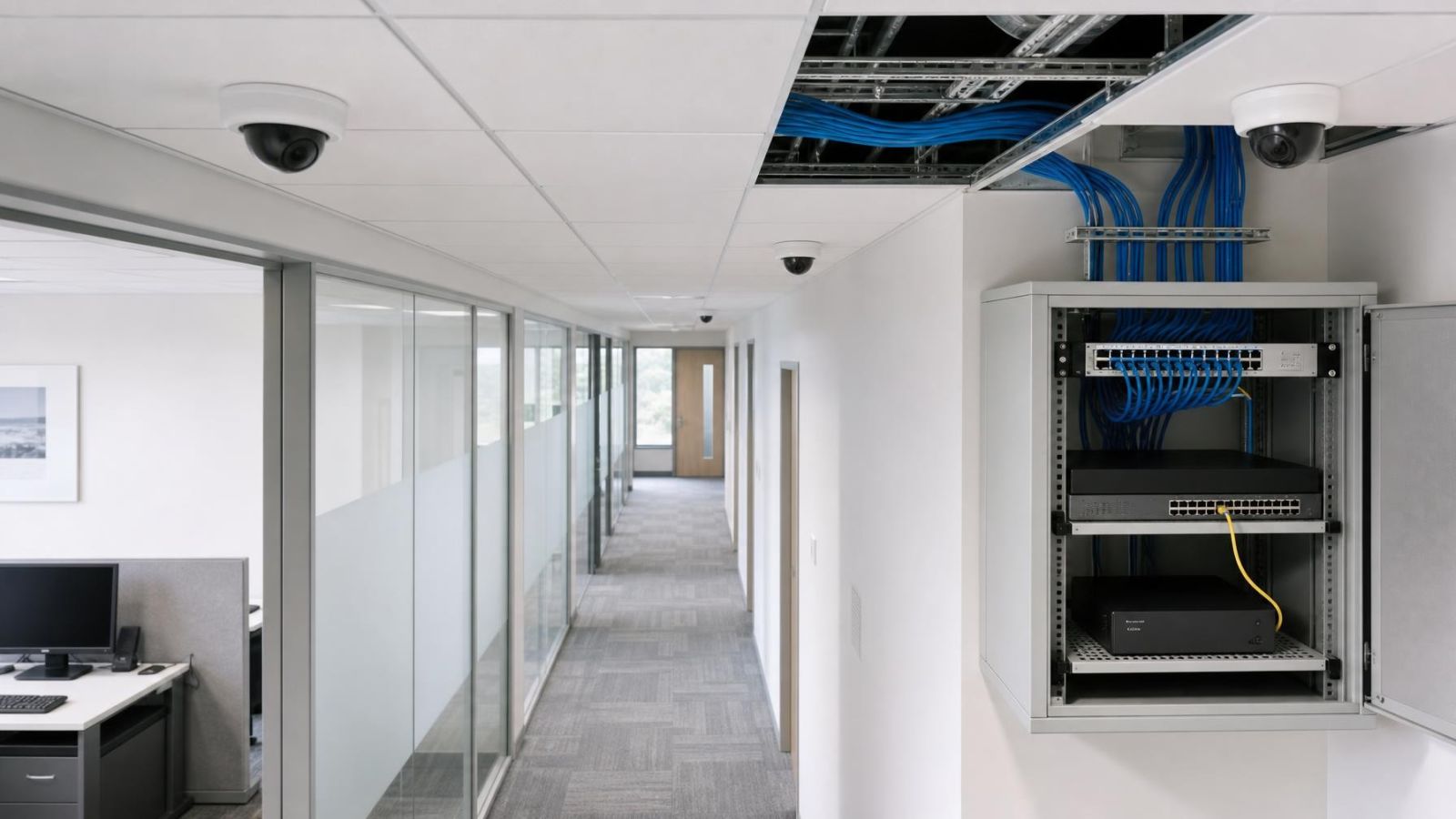
Plan CCTV bandwidth by adding the configured stream bitrates on each shared path, leaving headroom for traffic peaks, and checking the recorder, switch uplinks, wireless segments and internet upload connection separately.
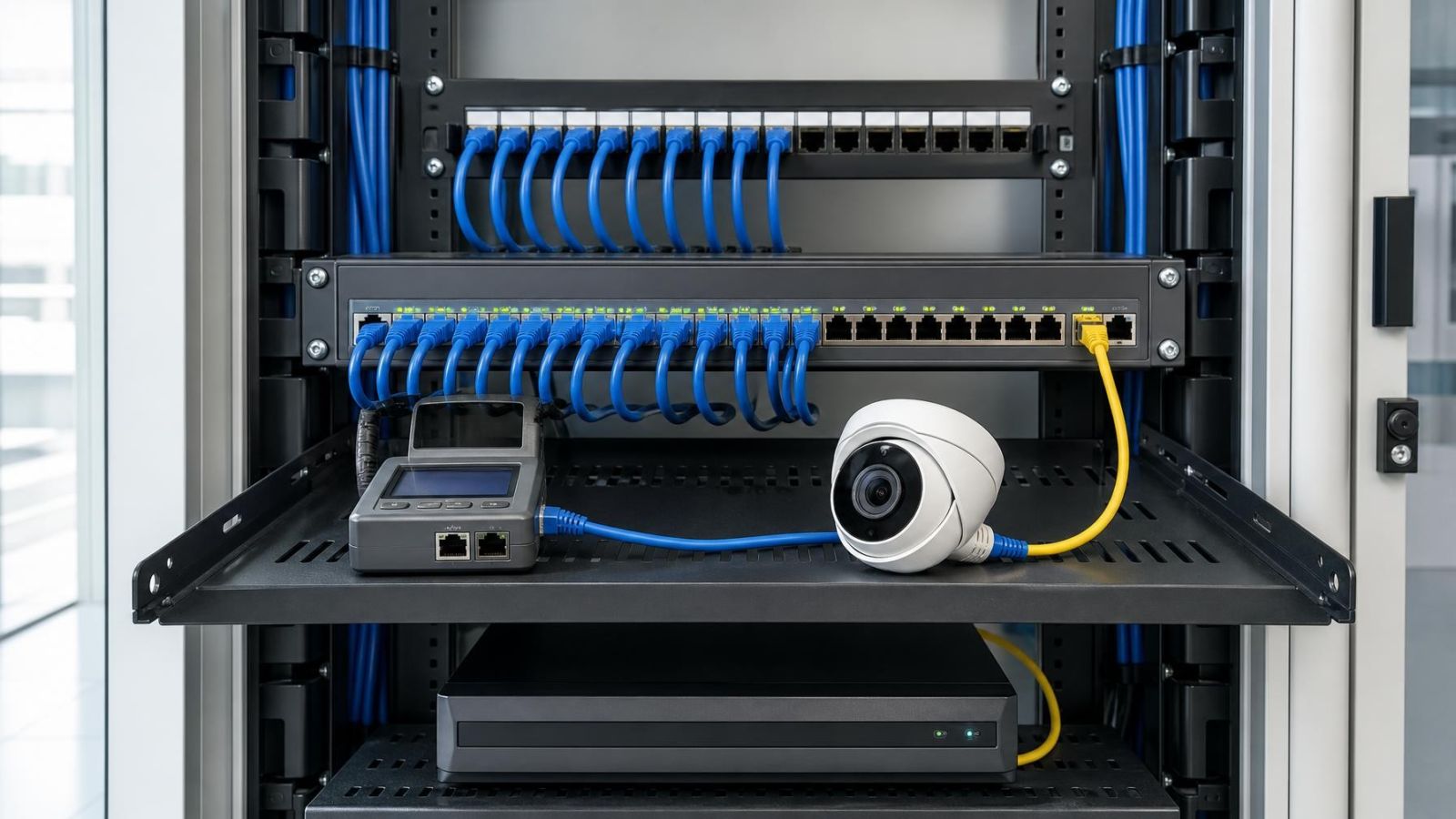
Size a camera PoE switch by checking the required port count, combined maximum camera power, per-port capability, uplink traffic, cable conditions and practical expansion headroom. Empty ports alone do not make a switch expandable.
Answer a few questions and get a scoped quote — or talk to an engineer today.